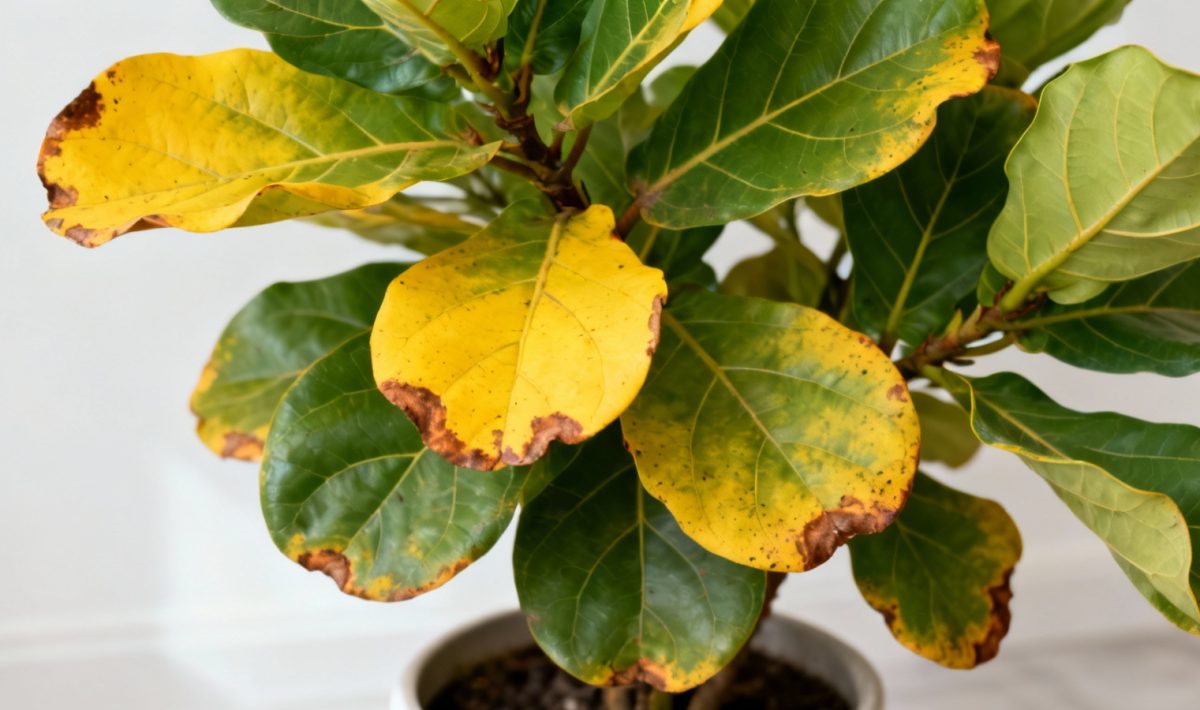
Why are my fiddle-leaf fig leaves turning yellow: causes and solutions
Seeing your beloved fiddle-leaf fig develop yellow leaves can be quite concerning. This common issue affects many plant owners, and understanding the underlying causes is essential for maintaining a healthy plant. Yellow leaves on your fiddle-leaf fig typically signal stress from environmental factors, watering issues, or nutritional deficiencies that need immediate attention.
The environment plays a crucial role in your plant’s overall well-being. Light conditions significantly affect how your fiddle-leaf fig processes nutrients and maintains its vibrant green color. These plants require bright, indirect sunlight for at least six hours daily to thrive properly.
Insufficient lighting forces your plant to work harder, often resulting in yellowing leaves as it struggles to photosynthesize effectively. However, direct sunlight can be equally problematic, causing leaf burn and stress that manifests as yellow patches or spots.
Temperature fluctuations also contribute to leaf yellowing. Fiddle-leaf figs prefer consistent temperatures between 65-75°F (18-24°C). Sudden changes, drafts from air conditioning units, or placement near heating vents can shock your plant and trigger yellowing.
✅ Quick Checklist
Is the soil too wet or too dry?
Is the plant getting 6+ hours of sunlight daily?
Have you fertilized in the last 2 months?
Are there visible pests under the leaves?
Does the pot have adequate drainage?
🔥 FREE
📱
Diagnose your plant in one click!
AI instant diagnosis • Personalized solutions • 50,000+ species
Improper watering practices are among the most common reasons why fiddle-leaf fig leaves turn yellow. Over-watering creates waterlogged soil conditions that prevent roots from accessing oxygen, leading to root rot and subsequent yellowing of leaves.
When you water too frequently or provide excessive amounts, the soil remains saturated for extended periods. This suffocates the root system and impairs the plant’s ability to uptake nutrients properly. Yellow leaves often start from the bottom of the plant and work their way up when over-watering is the culprit.
Conversely, under-watering stresses your plant in different ways. When soil becomes too dry, the plant conserves energy by dropping older leaves, which typically yellow before falling. The key is finding the right balance by checking soil moisture regularly.
Similar to how you might notice reasons for yellowing honeysuckle leaves in outdoor plants, indoor fiddle-leaf figs show stress through leaf discoloration when their water needs aren’t properly met.
Nutritional deficiencies causing yellow leaves
Nutrient deficiencies significantly contribute to yellowing leaves in fiddle-leaf figs. Nitrogen deficiency is particularly common and causes older leaves to yellow first as the plant redirects this essential nutrient to newer growth areas.
Without adequate nitrogen, your plant cannot produce sufficient chlorophyll, the green pigment responsible for the characteristic deep green color of healthy leaves. This deficiency typically develops over time, especially if you haven’t fertilized your plant recently.
Other important nutrients include iron, magnesium, and potassium. Iron deficiency causes yellowing between leaf veins while keeping the veins green, creating a distinctive pattern. Magnesium deficiency also causes yellowing between veins but starts with older leaves first.
Regular fertilization during the growing season (spring and summer) helps prevent these nutritional issues. Use a balanced liquid fertilizer diluted to half strength monthly for best results.
Diseases and pests affecting leaf color
Various diseases and pests can cause yellowing leaves on your fiddle-leaf fig. Fungal infections often develop in overly humid conditions or when water sits on leaves for extended periods. These infections typically start as small spots that gradually expand and turn yellow.
Spider mites, scale insects, and aphids are common pests that feed on plant sap, weakening your fiddle-leaf fig and causing leaves to yellow and drop. These tiny pests often go unnoticed until damage becomes apparent through leaf discoloration.
Just as with other houseplants that experience similar issues, such as causes of yellowing snake plant leaves, early detection and treatment are crucial for preventing widespread damage to your plant.
Regular inspection of your plant, including the undersides of leaves, helps identify pest problems before they become severe. Look for webbing, sticky honeydew, or tiny moving insects as signs of infestation.
✅ Quick Checklist
Is the soil too wet or too dry?
Is the plant getting 6+ hours of sunlight daily?
Have you fertilized in the last 2 months?
Are there visible pests under the leaves?
Does the pot have adequate drainage?
🔥 FREE
📱
Diagnose your plant in one click!
AI instant diagnosis • Personalized solutions • 50,000+ species
Addressing yellow leaves requires a systematic approach to identify and correct the underlying problem. Start by examining your watering routine and ensuring proper drainage in your plant’s pot. Water only when the top inch of soil feels dry to the touch.
Improve lighting conditions by moving your plant closer to a bright window or supplementing with grow lights if natural light is insufficient. Maintain consistent temperatures and protect your plant from drafts and sudden temperature changes.
For nutritional deficiencies, begin a regular fertilization schedule during the growing season. Remove any severely damaged yellow leaves to redirect the plant’s energy toward healthy growth. Clean leaves regularly to prevent dust buildup that can interfere with photosynthesis.
If pest problems are present, treat them immediately with appropriate insecticidal soap or neem oil applications. Quarantine affected plants to prevent spreading to other houseplants in your collection.
Prevention strategies for healthy growth
Preventing yellow leaves is more effective than treating existing problems. Establish consistent care routines that include regular watering schedules, appropriate fertilization, and routine plant inspections for early problem detection.
Monitor environmental conditions carefully, especially during seasonal changes when heating and cooling systems can affect humidity and temperature levels. Use a humidity meter to maintain optimal moisture levels around your plant.
Repot your fiddle-leaf fig every 2-3 years or when it becomes root-bound to ensure adequate space for healthy root development. Choose well-draining potting mix specifically formulated for houseplants to prevent water retention issues.
Keep detailed records of your plant care activities, including watering dates, fertilization schedules, and any changes in plant condition. This information helps identify patterns and adjust care routines accordingly for optimal plant health and vibrant green foliage.
Allan is a lifelong gardening enthusiast who still gets excited when the first seedlings pop up in spring. With a deep love for nature and a hands-in-the-soil approach, he shares practical tips, plant discoveries, and clever tricks picked up over years of digging, planting, and observing. Whether you’re a new gardener or have a shed full of tools, Allan writes like a neighbor who’s always happy to swap cuttings and stories over the fence.
You can find more about Allan’s work on Malt or connect with him on LinkedIn.