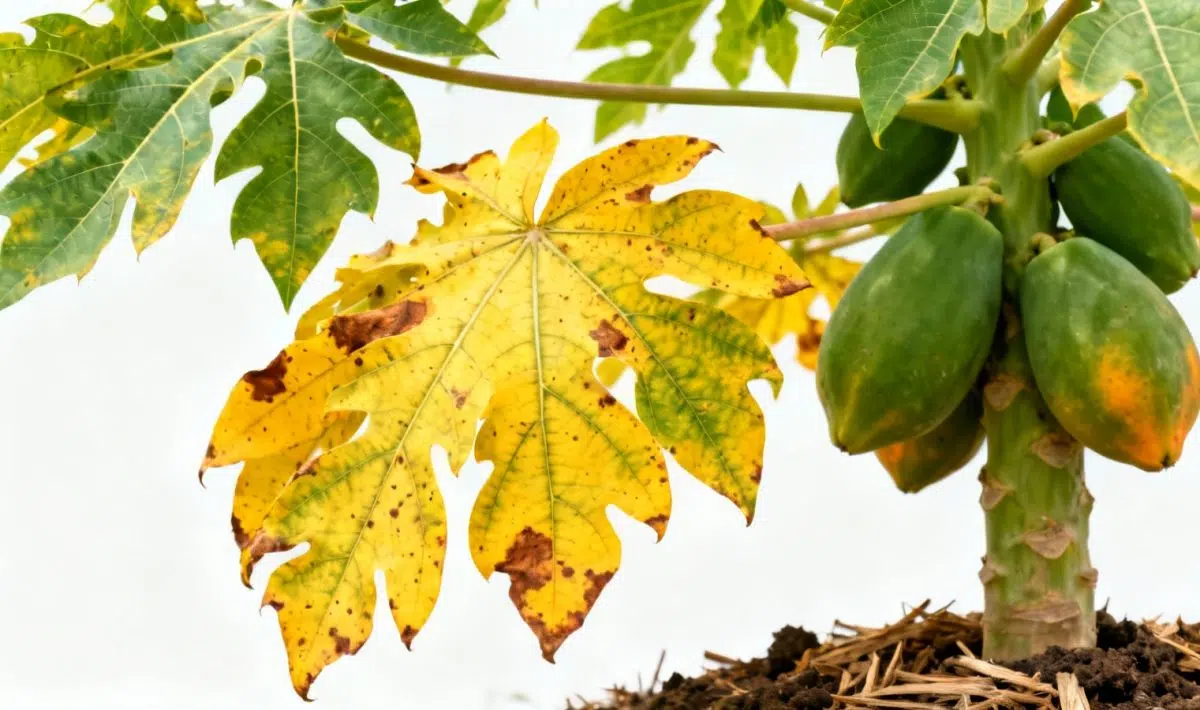
Why are my papaya leaves turning yellow – causes and solutions
Nothing’s quite as frustrating as watching your beautiful papaya tree develop yellow leaves when you’ve been caring for it so diligently. If you’re wondering why your papaya leaves are turning yellow, you’re definitely not alone in this concern. This common issue affects many papaya growers, but the good news is that most causes are completely fixable once you know what to look for.
Papaya plants are surprisingly sensitive to their growing conditions, which is why leaf yellowing can happen so easily. These tropical trees thrive in warm, humid environments with well-draining soil and plenty of sunlight. When any of these key factors get out of balance, your papaya will quickly signal distress through its leaves.
The leaves of a healthy papaya tree should be large, green, and vibrant. They’re naturally quite delicate compared to other fruit trees, which makes them excellent indicators of your plant’s overall health. Fresh, new growth appears regularly at the top of the tree, while older leaves naturally yellow and drop as part of the normal aging process.
✅ Quick Checklist
Is the soil too wet or too dry?
Is the plant getting 6+ hours of sunlight daily?
Have you fertilized in the last 2 months?
Are there visible pests under the leaves?
Does the pot have adequate drainage?
🔥 FREE
📱
Diagnose your plant in one click!
AI instant diagnosis • Personalized solutions • 50,000+ species
Overwatering is by far the most frequent cause of yellow papaya leaves. These plants absolutely hate sitting in waterlogged soil, and their roots will start to rot if the land stays too wet for extended periods. When this happens, the tree can’t absorb nutrients properly, leading to that telltale yellow color spreading across the leaves.
On the flip side, underwatering can also cause yellowing, though it’s less common. If your soil feels completely dry several inches down, your papaya is probably stressed from lack of moisture. The key is finding that sweet spot where the soil stays consistently moist but never soggy.
Nutrient deficiencies show up quickly
Papaya trees are hungry plants that need regular feeding to stay healthy. When they don’t get enough nitrogen, the older leaves will start turning yellow first. This is the plant’s way of moving nutrients from old leaves to support new growth. Similarly, a lack of magnesium causes yellowing between the leaf veins while the veins themselves stay green.
Iron deficiency is another common issue, especially in alkaline soils. This causes the newest leaves to turn yellow while the veins remain green, which is the opposite pattern from magnesium deficiency. Many home gardeners don’t realize how quickly nutrient problems can develop in container-grown papaya plants.
Pests and diseases affecting leaf health
Several pests can cause yellowing leaves on your papaya tree. Spider mites are particularly troublesome in dry conditions, creating tiny yellow spots that eventually merge into larger yellow areas. Aphids also suck plant juices, causing leaves to yellow and curl. Always check the undersides of leaves for these tiny invaders.
Fungal diseases like papaya ring spot virus or anthracnose can also cause yellowing, though these usually come with other symptoms like spots or wilting. These diseases spread quickly in humid conditions with poor air circulation, so proper spacing and pruning are essential for prevention.
How to fix yellowing papaya leaves
Adjusting your watering routine
Start by checking your soil moisture levels regularly. Stick your finger about 2 inches into the soil near your tree – it should feel slightly damp but not wet. If it’s bone dry, you need to water more frequently. If it’s soggy, you need to back off and improve drainage.
For container plants, make sure your pot has multiple drainage holes and use a well-draining potting mix. In garden beds, consider adding compost or sand to heavy clay soils to improve drainage. Water deeply but less frequently, allowing the top inch of soil to dry between waterings.
Providing proper nutrition
Feed your papaya tree with a balanced fertilizer every 4-6 weeks during the growing season. Look for something with equal parts nitrogen, phosphorus, and potassium, plus trace minerals. Organic options like compost or well-aged manure work wonderfully and provide slow-release nutrients.
If you suspect a specific nutrient deficiency, you can use targeted treatments. For nitrogen deficiency, try a high-nitrogen fertilizer or blood meal. For magnesium deficiency, Epsom salt dissolved in water works quickly. Iron deficiency responds well to chelated iron supplements applied to the soil.
Managing pests and diseases
Regular inspection is your best defense against pest problems. Check your papaya leaves weekly, especially the undersides where pests like to hide. If you find aphids or spider mites, try spraying them off with a strong stream of water first.
For persistent pest issues, insecticidal soap or neem oil are effective organic treatments. Apply these in the evening to avoid burning the leaves in direct sunlight. Remember that healthy plants are more resistant to pests, so keeping your papaya well-watered and fed is the best prevention.
Prevention tips for healthy papaya plants
Creating the ideal growing environment
Your papaya tree needs at least 6 hours of direct sunlight daily to stay healthy and productive. In areas with intense afternoon sun, some light shade during the hottest part of the day can actually help prevent leaf stress. Make sure your plant has good air circulation to prevent humidity-related diseases.
Temperature is also crucial – papaya plants struggle when temperatures drop below 60°F or exceed 90°F consistently. If you’re growing papaya in containers, you might need to move them to protect from extreme weather conditions.
Just like with other leafy vegetables, yellowing can indicate similar stress factors. For instance, understanding yellowing cabbage leaves can help you recognize patterns across different plants in your garden.
Soil preparation and maintenance
Start with well-draining soil that’s rich in organic matter. Papaya trees prefer slightly acidic to neutral soil with a pH between 5.5 and 7.0. Test your soil annually and amend as needed with compost or other organic material.
Mulching around your papaya tree helps maintain consistent soil moisture and temperature. Use organic mulch like shredded bark or leaves, keeping it 2-3 inches away from the trunk to prevent rot. This also helps suppress weeds that compete for nutrients.
✅ Quick Checklist
Is the soil too wet or too dry?
Is the plant getting 6+ hours of sunlight daily?
Have you fertilized in the last 2 months?
Are there visible pests under the leaves?
Does the pot have adequate drainage?
🔥 FREE
📱
Diagnose your plant in one click!
AI instant diagnosis • Personalized solutions • 50,000+ species
Sometimes yellowing leaves indicate more serious problems that require extra attention. If you’ve tried adjusting watering and nutrition but the problem persists, it might be time to consult local gardening resources or extension services for specific advice about your growing conditions.
Many flowering plants experience similar yellowing issues due to environmental stress. The patterns you learn from observing your papaya can help with other garden plants too, such as causes of yellowing sweet alyssum leaves which often share common underlying factors.
Remember that some leaf yellowing is completely normal, especially on older leaves at the bottom of the tree. The key is distinguishing between natural aging and stress-related yellowing. Natural yellowing happens gradually and affects older leaves first, while stress-related yellowing often appears suddenly and can affect leaves throughout the tree.
With proper care and attention to these key factors, your papaya tree should recover quickly from most yellowing issues. Keep monitoring your plant’s progress and adjust your care routine as needed. Most papaya trees are quite resilient once their basic needs are met consistently.
Allan is a lifelong gardening enthusiast who still gets excited when the first seedlings pop up in spring. With a deep love for nature and a hands-in-the-soil approach, he shares practical tips, plant discoveries, and clever tricks picked up over years of digging, planting, and observing. Whether you’re a new gardener or have a shed full of tools, Allan writes like a neighbor who’s always happy to swap cuttings and stories over the fence.
You can find more about Allan’s work on Malt or connect with him on LinkedIn.