
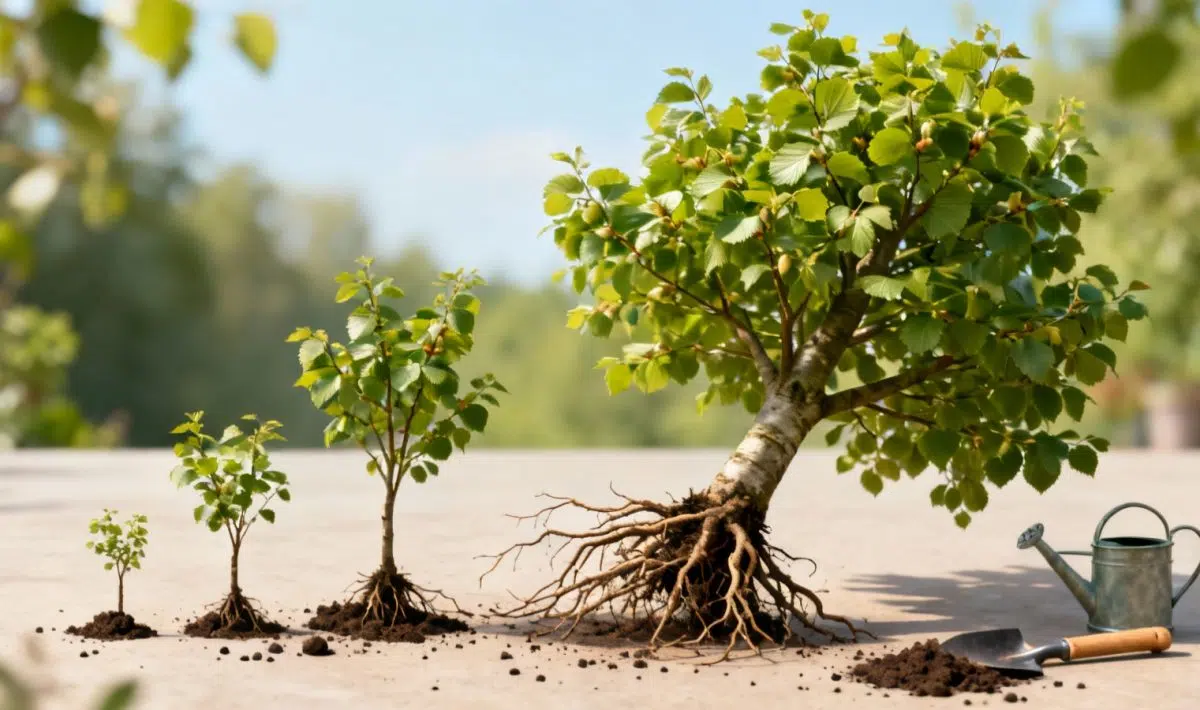
Introduction to the common hornbeam – Carpinus betulus
The common hornbeam (Carpinus betulus) stands out as one of Europe’s most versatile deciduous trees. This robust species adapts beautifully to various garden settings, from formal hedges to specimen plantings. With its distinctive oval leaves and impressive growth rate of up to 40cm per year, the hornbeam has become increasingly popular among gardeners seeking both beauty and functionality.
Native to European forests, this tree thrives across France and beyond, tolerating temperatures down to -25°C. Its marcescent foliage – leaves that turn golden-brown in autumn but remain on the tree through winter – provides year-round interest and privacy. When spring arrives, these old leaves finally drop as fresh green growth emerges.
Key characteristics of Carpinus betulus
The European hornbeam typically reaches 15-20 meters in height with a spread of 12-15 meters when mature. However, this adaptable tree responds well to pruning, making it perfect for hedging applications where height can be controlled. Its distinctive bark develops attractive grey ridges with age, while the branches create a dense, protective canopy.
Growth patterns vary significantly with soil conditions and care. Young trees establish quickly, particularly when planted as bare root stock during dormancy. The oval, doubly-serrated leaves emerge bright green in spring, deepening to rich green through summer before their spectacular autumn transformation. Like many gardeners who appreciate the care tips for common coleus plants, hornbeam enthusiasts value consistent, predictable growth habits.
Soil requirements and adaptability
Carpinus betulus demonstrates remarkable soil tolerance, thriving in both acidic and alkaline conditions. While it prefers well-draining soil, it adapts to clay, loam, and even compacted soils that challenge other species. This flexibility makes it an excellent choice for urban environments where soil quality may vary.
The tree’s resistance to various environmental stresses sets it apart from more sensitive species. It tolerates pollution, salt spray, and drought once established. This hardy nature explains why many French landscapes feature mature hornbeam specimens that have thrived for decades with minimal intervention.
Cultivation and planting options
When selecting Carpinus betulus for your garden, consider the various sizes and ages available. Young plants (2-3 years old) establish quickly and cost less, while mature specimens provide immediate impact. The choice depends on your patience and budget – younger plants often outperform older ones within a few years due to reduced transplant shock.
Bare root plants offer significant advantages over container-grown alternatives. The root system develops more naturally without circling restrictions, leading to stronger, more stable trees. Additionally, bare root stock typically costs less and establishes more successfully when planted during dormancy between November and March.
Hedge and specimen planting
For hedging applications, space plants 60-80cm apart depending on desired density. Young plants (40-60cm) create thick, impenetrable barriers within three years with proper care. Taller specimens (1.5-2m) provide quicker results but require more attention during establishment. Much like those who study growing and caring for guava trees, successful hornbeam cultivation requires understanding specific timing and techniques.
As specimen trees, hornbeams need adequate space for their eventual spread. Plant at least 8-10 meters from buildings and other large trees. Their dense canopy provides excellent shade, making them valuable additions to larger gardens where their full potential can be realized.
Essential care requirements
Water requirements decrease significantly once established, typically after two growing seasons. During the first year, maintain consistent soil moisture without waterlogging. Deep, infrequent watering encourages strong root development better than frequent shallow applications.
Annual evaluation of nutrient needs helps maintain healthy growth. A balanced fertilizer applied in early spring supports vigorous development, while organic mulch provides slow-release nutrients throughout the growing season. The minimum fertilizer requirement makes this an economical choice for large plantings.
Propagation methods and success rates
Carpinus betulus propagates through several methods, each with distinct advantages. Seed propagation requires patience, as germination rates vary from 40-70% depending on seed freshness and treatment. Seeds need cold stratification for 3-4 months before spring sowing, mimicking natural winter conditions.
For faster results, many growers prefer cutting propagation. Semi-hardwood cuttings taken in late summer root successfully with proper attention to humidity and temperature. This method produces plants identical to the parent tree, ensuring consistent characteristics across your planting. Gardeners interested in diverse propagation techniques might also appreciate guide to golden dewdrops care for alternative approaches.
Challenges and solutions in propagation
Competition from other species can hinder young hornbeam establishment. Clear weeds and grass from a 1-meter radius around new plantings to reduce competition for nutrients and water. This simple step dramatically improves survival rates and growth speed.
Soil compaction poses another common obstacle. If planting in heavy clay or previously compacted areas, improve drainage by incorporating compost or sand. Poor drainage kills more young trees than drought, making soil preparation crucial for success.
Monitoring establishment success
Track your hornbeam’s progress through key indicators during the first two years. New growth in spring, leaf color and size, and overall vigor provide clear success signals. Healthy plants show 20-40cm annual growth, depending on age and conditions.
Regular evaluation helps identify problems early. Yellowing leaves might indicate drainage issues, while stunted growth could signal nutrient deficiency or root damage. Early intervention often saves struggling plants and prevents long-term problems. Those familiar with how to care for garden cosmos understand the importance of consistent monitoring for plant health.
Seasonal care and maintenance
Spring brings the year’s most critical care period. Remove any winter damage and apply annual fertilizer before new growth begins. This timing ensures nutrients are available when the tree needs them most for leaf development and root expansion.
Summer maintenance focuses on water management and pest monitoring. While mature hornbeams rarely need supplemental watering, young plants benefit from deep weekly irrigation during dry spells. Watch for aphids on new growth, though these rarely cause serious damage to healthy trees.
Autumn offers the best transplanting window for bare root stock. The tree’s energy focuses on root development rather than leaf production, improving establishment success. This season also provides opportunities to assess overall tree health and plan any necessary interventions for the following year.
Pruning and shaping techniques
Hornbeam responds excellently to pruning, making it ideal for topiary and formal hedging. Prune twice annually for hedges – once in late spring after flowering and again in late summer. This schedule maintains dense growth while preserving the tree’s natural vigor.
For specimen trees, limit pruning to removing dead, damaged, or crossing branches. The tree’s natural form is attractive, and excessive pruning can reduce its characteristic dense branching. Winter pruning works best for structural modifications, while summer trimming controls size and shape. Similar attention to pruning timing benefits other plants, as detailed in tips for caring for Gollum jade.
Long-term benefits and ecological value
Mature Carpinus betulus trees provide substantial environmental benefits beyond their aesthetic appeal. Their dense canopy filters air pollutants while providing habitat for numerous bird species and beneficial insects. The tree’s flowers attract pollinators in spring, while its autumn fruits feed wildlife through winter.
From a practical standpoint, established hornbeams require minimal ongoing care while providing decades of beauty and function. Their resistance to common diseases and pests reduces maintenance costs and chemical applications, making them environmentally responsible choices for sustainable landscapes.
The versatility of this species ensures its continued popularity in European gardens. Whether grown as privacy hedging, specimen trees, or part of mixed plantings, hornbeams adapt to changing garden styles while maintaining their essential character. This adaptability, combined with their proven performance across diverse conditions, makes Carpinus betulus an investment in long-term garden success.

Allan is a lifelong gardening enthusiast who still gets excited when the first seedlings pop up in spring. With a deep love for nature and a hands-in-the-soil approach, he shares practical tips, plant discoveries, and clever tricks picked up over years of digging, planting, and observing. Whether you’re a new gardener or have a shed full of tools, Allan writes like a neighbor who’s always happy to swap cuttings and stories over the fence.
You can find more about Allan’s work on Malt or connect with him on LinkedIn.


