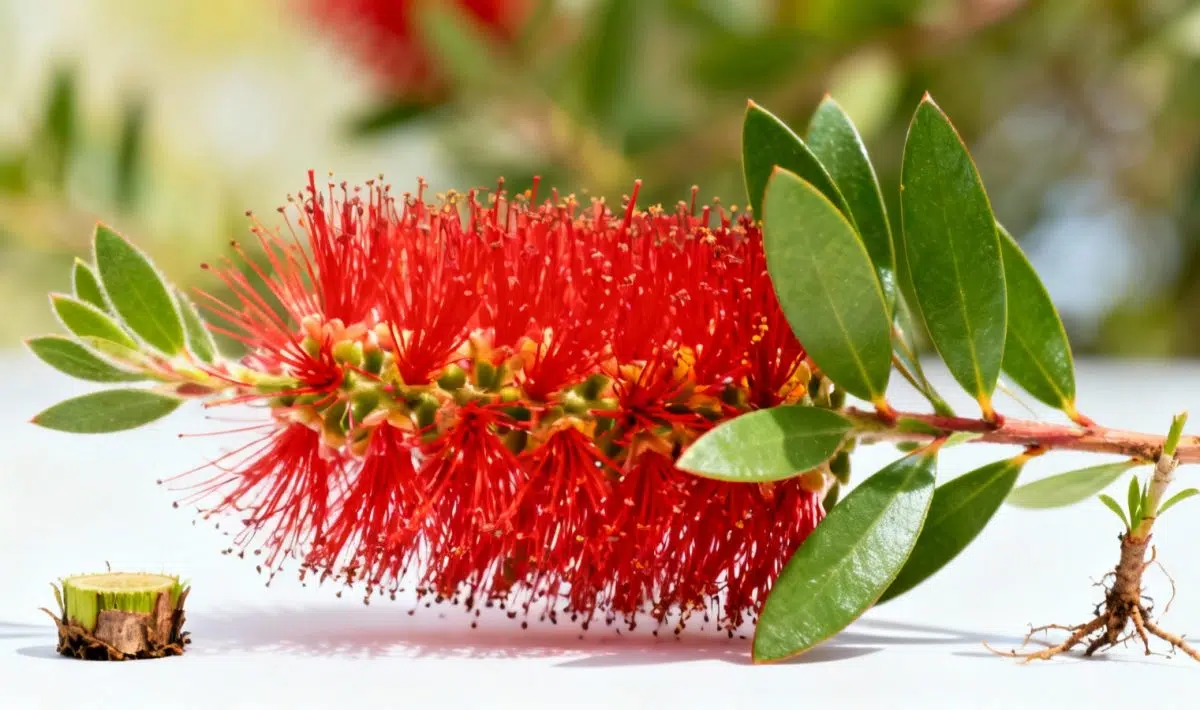
The Crimson Bottlebrush (Callistemon citrinus) stands out as one of the most striking flowering plants you can add to your garden. Originally from Australia’s eastern coasts, this evergreen shrub captures attention with its vibrant red flower spikes that resemble bottle brushes. When you crush the leaves between your fingers, they release a delightful citrus fragrance that adds another sensory dimension to your gardening experience.
This remarkable plant reaches impressive heights of 15-25 feet with a spread of 15-20 feet, making it an excellent choice for creating natural privacy screens or standalone specimen plants. The flowers bloom from spring through summer, producing cylindrical spikes that measure 3-4 inches long. These brilliant red displays attract hummingbirds, butterflies, and other beneficial pollinators to your outdoor space.
Ideal Growing Conditions for Your Bottlebrush
Creating the perfect environment for your Crimson Bottlebrush requires attention to several key factors. The plant thrives in well-draining soil that prevents water from pooling around the roots. Clay soils often prove problematic, so consider amending heavy earth with sand or organic matter to improve drainage capabilities.
Full sun exposure delivers the best flowering results, though the plant tolerates partial shade in warmer climates. Position your bottlebrush where it receives at least six hours of direct sunlight daily. The plant demonstrates remarkable drought tolerance once established, making it suitable for xeriscaping projects or low-maintenance landscapes.
Temperature considerations play a crucial role in successful cultivation. While the Crimson Bottlebrush handles heat exceptionally well, it requires protection from severe frost in colder regions. Gardeners in USDA zones 9-11 can grow this plant outdoors year-round, while those in cooler areas might consider container growing for winter protection.
Watering and Fertilizing Strategies
Proper watering techniques ensure healthy root development and vigorous growth. During the establishment period, typically the first year after planting, provide consistent moisture without oversaturating the soil. Deep, infrequent watering encourages roots to grow downward, creating a more drought-tolerant plant.
Once established, your bottlebrush requires minimal supplemental watering except during extended dry periods. Monitor soil moisture levels by inserting your finger two inches into the ground near the plant base. If the soil feels dry at this depth, it’s time to water thoroughly.
Fertilizing supports robust growth and abundant flowering. Apply a balanced, slow-release fertilizer in early spring as new growth begins. A second application in mid-summer helps sustain flowering through the growing season. Avoid high-nitrogen fertilizers that promote excessive foliage growth at the expense of flowers.
Natural Fertilizing Options
Organic alternatives provide gentle nutrition while improving soil health. Compost worked into the planting area supplies steady nutrients throughout the growing season. Fish emulsion applied monthly during active growth periods delivers excellent results for container-grown specimens.
Propagation Methods That Work
Expanding your bottlebrush collection becomes straightforward once you understand the propagation basics. Semi-hardwood cuttings taken in late summer or early fall offer the highest success rates. Select healthy shoots from the current year’s growth, choosing stems that have begun to firm up but aren’t completely woody.
Prepare cuttings by making clean cuts 4-6 inches long just below a leaf node. Remove the lower leaves, leaving only the top two or three pairs. Dip the cut end in rooting hormone to encourage faster root development. Plant cuttings in a mixture of peat moss and perlite, maintaining consistent moisture until roots form.
Seed propagation presents another viable option, though it requires more patience. Collect seeds from mature capsules that have turned brown and begun opening. Sow fresh seeds in a well-draining seed-starting mix, barely covering them with soil. Maintain warm temperatures between 65-75°F and consistent moisture until germination occurs, typically within 2-4 weeks.
Essential Care and Maintenance
Regular maintenance keeps your Crimson Bottlebrush looking its best throughout the growing season. Pruning immediately after flowering allows you to shape the plant while ensuring next year’s bloom production. Remove spent flower heads to prevent seed formation and redirect energy into new growth.
Light pruning maintains the plant’s natural shape while encouraging bushier growth. For more formal training, similar to techniques used when caring for hardy fuchsia varieties, you can selectively remove branches to create an open, tree-like structure. This approach works particularly well for smaller garden spaces where a more compact form is desired.
Dead-heading spent blooms encourages additional flowering waves throughout the season. Use clean, sharp pruning shears to make cuts just above the next set of leaves or buds. This practice keeps the plant looking tidy while promoting continued bloom production.
Pest and Disease Management
The Crimson Bottlebrush demonstrates remarkable resistance to most common garden pests and diseases. However, occasional issues may arise, particularly in stressed plants or those growing in suboptimal conditions. Scale insects sometimes appear on branches, creating small, waxy bumps along the stems.
Address scale problems early by applying horticultural oil during the dormant season or using insecticidal soap during active growth periods. For organic solutions that work well across different plant types, including methods effective when growing oleander plants successfully, consider introducing beneficial insects like ladybugs that naturally control scale populations.
Landscape Design Applications
The versatility of Crimson Bottlebrush makes it suitable for numerous landscape applications. Use it as a specimen plant where its dramatic flowers create focal points in garden beds. The plant’s upright growth habit makes it excellent for informal hedging or privacy screening along property lines.
Container growing expands possibilities for gardeners with limited space or challenging soil conditions. Large pots accommodate the plant’s root system while allowing flexibility in placement throughout the growing season. This approach proves particularly valuable in areas with harsh winters, enabling you to move plants to protected locations.
The flowering timeline complements other warm-season bloomers beautifully. Pair your bottlebrush with plants that share similar cultural requirements, such as those discussed in tips for growing Capsicum annuum, for cohesive garden designs that thrive under consistent care regimens.
Seasonal Care Calendar
Spring marks the beginning of active growth and the start of your care routine. Apply fertilizer as new growth appears, and begin regular watering if winter rains have been insufficient. This is also the ideal time for transplanting or major pruning projects.
Summer care focuses on maintaining adequate moisture during peak heat periods while monitoring for any stress signs. Continue dead-heading spent blooms to encourage continued flowering. Watch for pest activity, which tends to increase during warmer months.
Fall preparation involves reducing watering frequency as growth slows and temperatures cool. This is the optimal time for taking cuttings for propagation. In colder climates, begin planning winter protection strategies for outdoor plants.
Winter care varies significantly based on your climate zone. In frost-free areas, the plant continues growing slowly and may even produce occasional flowers. Colder regions require protection measures such as wrapping or moving container plants to sheltered locations. The maintenance approach can be similar to methods used for guidelines for evergreen azalea care in terms of winter protection strategies.
Troubleshooting Common Issues
Poor flowering often results from insufficient sunlight or excessive nitrogen fertilization. Move plants to sunnier locations when possible, or reduce nitrogen inputs to encourage bloom production over foliage growth. Young plants may take 2-3 years to reach full flowering potential.
Leaf yellowing typically indicates watering issues, either too much or too little moisture. Adjust your watering schedule based on soil conditions and weather patterns. Ensure drainage remains adequate, particularly during rainy seasons when oversaturation becomes problematic.
Stunted growth suggests nutrient deficiencies or root-bound conditions in container plants. Apply appropriate fertilizers and consider repotting container specimens that have outgrown their current homes. Fresh soil provides renewed nutrition and space for continued root development.
Allan is a lifelong gardening enthusiast who still gets excited when the first seedlings pop up in spring. With a deep love for nature and a hands-in-the-soil approach, he shares practical tips, plant discoveries, and clever tricks picked up over years of digging, planting, and observing. Whether you’re a new gardener or have a shed full of tools, Allan writes like a neighbor who’s always happy to swap cuttings and stories over the fence.
You can find more about Allan’s work on Malt or connect with him on LinkedIn.