How much sunlight does common yew need for Mediterranean gardens
The common yew, known scientifically as Taxus baccata, stands out as one of the most adaptable evergreen trees you can grow in your garden. Understanding how much sunlight does common yew need is crucial for ensuring healthy growth and longevity. This remarkable plant offers flexibility that many gardeners appreciate, thriving in various light conditions from deep shade to partial sun.
Light requirements for common yew across different garden settings
Common yew demonstrates exceptional shade tolerance, making it an ideal choice for gardens with varying light conditions. Young plants naturally thrive in low-light environments, requiring as little as 5-8% of full daylight. This characteristic allows them to establish successfully under mature trees or in north-facing garden areas where other plants might struggle.
In sunny locations, mature yew trees can handle direct sunlight well, though they may experience some photoinhibition during intense summer months. The key lies in understanding that these plants adapt their growth patterns based on available light. In brighter conditions, they develop denser foliage and more compact growth, while in shade, they tend to grow more openly with longer branches reaching toward available light sources.
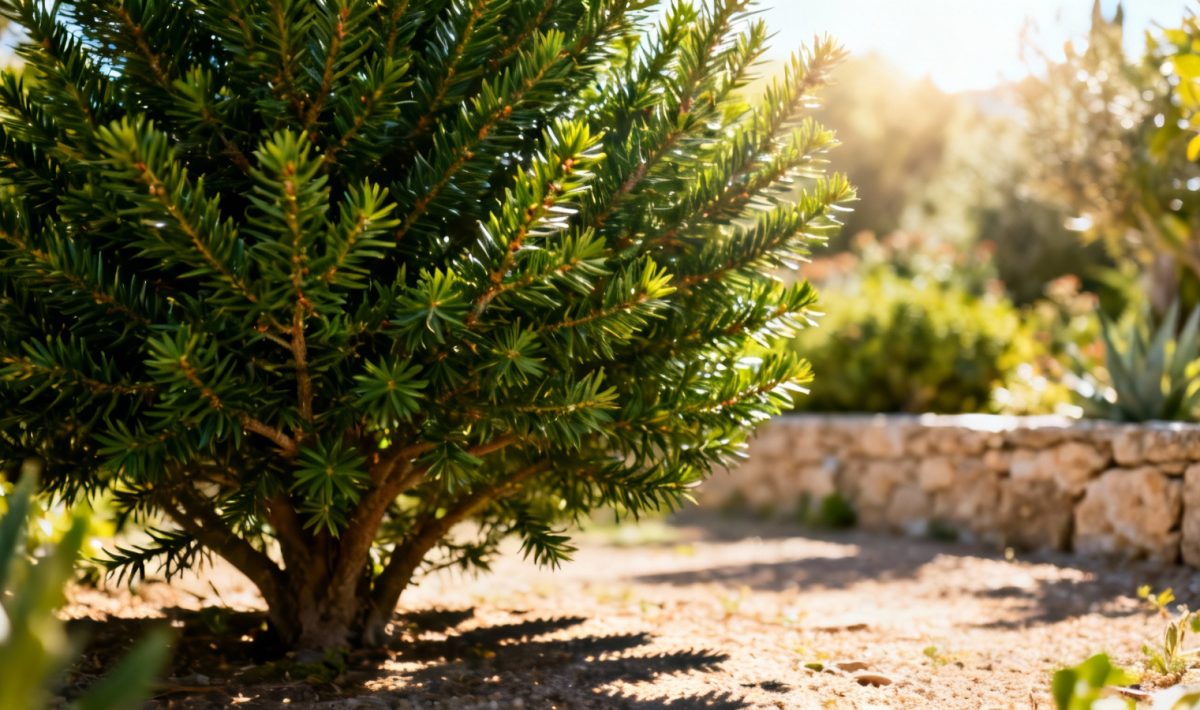
For Mediterranean gardens specifically, partial shade often provides the optimal balance. This positioning protects the plant from harsh afternoon sun while ensuring adequate light for photosynthesis. Consider placing your yew where it receives morning sun but afternoon shade, particularly in regions with intense summer heat.
Sunny garden placement strategies
When planting common yew in sunny areas, morning light exposure works best for established plants. Direct sunlight helps maintain the plant’s natural dark green color and encourages denser growth patterns. However, you should monitor for signs of stress during peak summer months, such as yellowing needles or reduced growth vigor.
Companion planting can enhance your yew’s performance in sunny locations. Just as understanding sunlight needs for vibrant zinnia blooms helps create colorful garden displays, knowing which plants thrive alongside yew in bright conditions creates harmonious garden designs. Consider pairing with other sun-tolerant evergreens or drought-resistant perennials.
Shade garden applications
Shaded gardens benefit tremendously from common yew’s natural shade tolerance. These areas often challenge gardeners looking for year-round structure, but yew provides exactly that solution. The plant’s ability to photosynthesize efficiently in low light makes it perfect for woodland gardens or areas beneath large trees.
In deep shade, growth rates slow considerably, but the plant remains healthy and maintains its attractive form. This slower growth actually benefits many garden designs, requiring less frequent pruning while providing consistent structure. Similar to how optimal sunlight for healthy selfheal varies by location, yew adapts its metabolism to match available light conditions.
Soil conditions that influence light needs
Soil quality directly affects how well common yew utilizes available sunlight. Well-draining soil allows the plant to maximize photosynthetic efficiency, while waterlogged conditions can stress the plant regardless of light levels. The root system needs adequate oxygen to support the energy demands of photosynthesis.
Clay soils with good drainage work well for yew, providing steady moisture without waterlogging. Sandy soils drain quickly but may require additional organic matter to retain sufficient moisture during dry periods. The plant’s ability to process sunlight effectively depends on this balance between drainage and moisture retention.
Improving soil structure for better growth
Adding compost or well-aged manure improves soil structure and helps yew plants make better use of available light. Organic matter increases the soil’s water-holding capacity while maintaining good drainage. This creates optimal root zone conditions that support efficient photosynthesis regardless of light intensity.
Mulching around the base helps maintain consistent soil moisture and temperature. A 2-3 inch layer of organic mulch protects the shallow root system and reduces water stress during sunny periods. This simple practice significantly improves the plant’s ability to tolerate varying light conditions throughout the growing season.
Seasonal light considerations and plant development
Common yew’s light requirements change throughout the year, with spring and fall offering ideal growing conditions in most climates. During these seasons, moderate sunlight levels promote steady growth without causing heat stress. Winter months require little additional consideration, as the plant’s growth naturally slows regardless of light availability.
Young plants show remarkable adaptability to changing light conditions as they mature. Research indicates that seedlings and small plants thrive with 5-8% of full daylight, while larger specimens benefit from 25-50% of full sun exposure. This progression allows gardeners to transplant yews from shaded nursery locations to their permanent garden positions gradually.
Understanding these developmental patterns helps with long-term garden planning. Much like how sunlight requirements for St. John’s wort inform placement decisions, knowing yew’s changing needs guides successful cultivation strategies.
Comparing with other garden plants
When planning your garden layout, consider how yew’s light requirements complement other plants. While sunlight for healthy strawberry plants typically demands full sun exposure, yew provides structure and backdrop in partially shaded areas. This versatility makes it an excellent foundation plant for mixed gardens.
Tree fruits like ideal sunlight for guava fruiting require intense light for optimal production, while yew serves admirably in the understory or as a transition between sunny and shaded garden zones. Large shade trees such as sunlight needs for sweetgum growth create the perfect conditions for yew establishment underneath their canopy.
Practical tips for optimal yew placement
When selecting the perfect spot for your common yew, observe your garden’s light patterns throughout the day. Morning sun with afternoon shade often provides the ideal balance, especially in warmer climates. This positioning allows the plant to photosynthesize effectively during cooler morning hours while avoiding stress from intense midday heat.
Consider the mature size of your yew when planning placement. These slow-growing plants can eventually reach 15-20 feet tall and wide, though regular pruning maintains smaller sizes easily. Placing them where they have room to spread naturally reduces maintenance needs while ensuring adequate light reaches all parts of the plant.
Regular monitoring helps you adjust care practices based on your specific growing conditions. Signs of insufficient light include elongated growth, sparse foliage, and pale green coloring. Excessive light stress appears as yellowing needles, particularly on the sunny side of the plant, or stunted growth during summer months.
The beauty of common yew lies in its remarkable adaptability to various light conditions, making it an invaluable addition to nearly any garden design. Whether you need structure in a shaded woodland garden or want an evergreen anchor in a partially sunny border, this versatile plant delivers consistent performance. By understanding its light preferences and matching them to your garden’s conditions, you can enjoy decades of reliable beauty from this exceptional evergreen.
Allan is a lifelong gardening enthusiast who still gets excited when the first seedlings pop up in spring. With a deep love for nature and a hands-in-the-soil approach, he shares practical tips, plant discoveries, and clever tricks picked up over years of digging, planting, and observing. Whether you’re a new gardener or have a shed full of tools, Allan writes like a neighbor who’s always happy to swap cuttings and stories over the fence.
You can find more about Allan’s work on Malt or connect with him on LinkedIn.