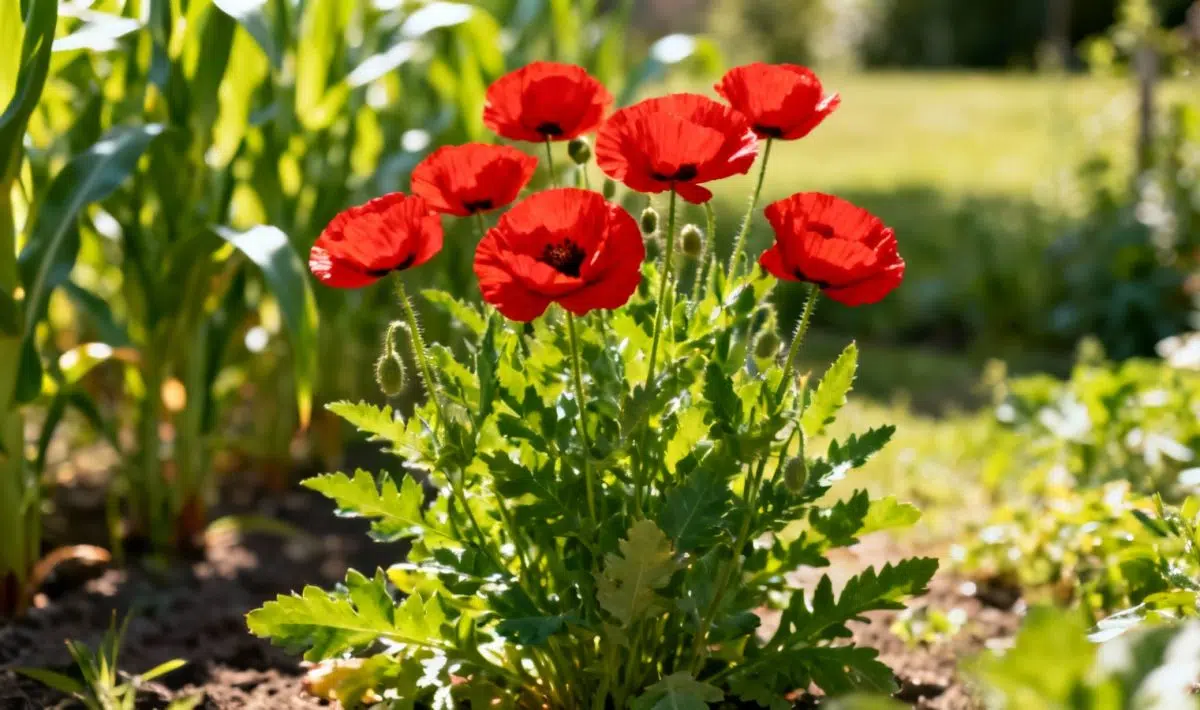
Corn poppies are absolutely stunning flowers that can transform any garden with their vibrant red petals. However, getting the sunlight requirements right is crucial for these beautiful blooms to thrive. These hardy annuals need specific lighting conditions to produce their characteristic papery flowers that dance in the breeze.
The good news is that corn poppies are relatively easy to grow when you understand their basic needs. They prefer full sun exposure and will reward you with an abundance of bright red flowers when planted in the right location. Much like other sun-loving plants, understanding these requirements will help you select the best seeds for your garden conditions.
When planning your garden layout, it’s worth considering how different plants have varying light needs. For example, while researching optimal growing conditions, you might also want to learn about sunlight requirements for pineapple plants if you’re planning a diverse garden with fruit options alongside your flowers.
Optimal sun exposure for healthy growth
Corn poppies thrive best with 6 to 8 hours of direct sunlight daily. This full sun requirement ensures proper photosynthesis and helps the plant develop strong stems that can support the delicate flower heads. Without adequate sunlight, you’ll notice weaker growth and fewer blooms, which is disappointing after carefully selecting your seeds.
The morning sun is particularly beneficial for these flowers, as it helps dry any dew quickly and prevents fungal issues. Afternoon sun continues to provide the energy these plants need for robust growth and vibrant flower production. When you’re happy with the selected location, you’ll find that corn poppies are quite forgiving and adaptable to various garden conditions.
Proper sun exposure also affects the intensity of the red color in the petals. Well-lit plants typically produce more vivid flowers with better color saturation. This is why many gardeners are very satisfied when they see the difference that optimal sunlight makes to their flower displays.
Evaluating your garden’s sun patterns
Before planting, spend a few days observing your garden to identify the sunniest spots. Track how sunlight moves across different areas throughout the day, noting any shadows cast by trees, buildings, or fences. This observation will help you choose the perfect location for your corn poppy seeds.
Consider that sun patterns change with the seasons, so what’s sunny in spring might be shaded by summer foliage. Plan accordingly and select areas that receive consistent sunlight throughout the growing season. Many successful gardeners create simple sun maps of their gardens to track these patterns effectively.
Soil and drainage considerations with sunlight
While sunlight is crucial, corn poppies also need well-draining soil to prevent root problems. Full sun areas often have warmer, drier soil, which these Mediterranean natives actually prefer. The combination of good drainage and ample sunlight creates ideal growing conditions for healthy plants.
Sandy or loamy soils work best, as they warm up quickly in the sun and don’t retain excess moisture. If your soil is heavy clay, consider improving drainage by adding organic matter or creating raised beds. The fast-draining soil combined with good sun exposure will keep your plants healthy and blooming prolifically.
Interestingly, different plants have varying tolerance for soil moisture alongside their light requirements. Just as ideal sunlight for watermelon growth involves specific soil conditions, corn poppies benefit from this careful balance of light and drainage.
Planting tips for maximum sun exposure
When sowing your seeds, avoid planting them too close to taller plants that might cast shadows as they grow. Space your corn poppies appropriately to ensure each plant receives its share of sunlight. Good spacing also promotes air circulation, which complements the benefits of full sun exposure.
Plant your seeds in early spring when the soil can be worked but while cool weather still prevails. This timing allows the plants to establish strong root systems before the intense summer heat arrives. The seller recommendations often emphasize this timing for best results.
Seasonal sunlight variations and adaptations
Corn poppies are cool-season annuals that actually prefer the strong sunlight of late spring and early summer. They tend to struggle in the intense heat of midsummer, even with adequate sunlight. Understanding this seasonal preference helps you time your plantings perfectly.
In regions with very hot summers, some light afternoon shade can actually be beneficial to extend the blooming period. However, morning and early afternoon sun remain essential for proper growth and flower development. This slight modification of the full-sun rule can help in challenging climates.
The communication between plant needs and environmental conditions becomes clearer as you gain experience. Just as herbs like sunlight needs of spearmint plants require specific light conditions, corn poppies will clearly show you when their needs are being met through vigorous growth and abundant blooms.
Companion planting with sun requirements in mind
Choose companion plants that have similar sunlight needs to create harmonious garden beds. Low-growing annuals and perennials that won’t shade your poppies work well as neighbors. This careful selection ensures all plants in the area receive adequate light.
Avoid planting corn poppies near large shrubs or fast-growing perennials that might overwhelm them. The goal is to create a balanced garden where each plant can access the sunlight it needs. Many gardeners find that mixing different flower types with similar requirements creates stunning displays.
Maximizing bloom production through proper lighting
With optimal sunlight, corn poppies will produce flowers for several weeks, providing continuous color in your garden. The key is maintaining consistent light exposure throughout their relatively short growing season. Well-positioned plants often surprise gardeners with their prolific blooming.
Deadheading spent flowers encourages continued blooming, but only if the plants are receiving adequate sunlight to fuel new flower production. This simple maintenance task, combined with proper sun exposure, extends the flowering period significantly.
Consider the broader context of your garden’s ecosystem when planning light exposure. Different flowering plants and ornamentals may have varying requirements, much like how light requirements for Japanese meadowsweet differ from annual flowers, creating opportunities for diverse garden designs.
Troubleshooting common sunlight-related issues
If your corn poppies appear leggy or produce few flowers, insufficient sunlight is often the culprit. These symptoms indicate the plants are stretching toward available light sources. Moving them to a sunnier location or reducing nearby shade often solves these problems quickly.
Pale or weak-looking plants may also signal inadequate light exposure. Healthy corn poppies in proper sunlight display vibrant green foliage and sturdy stems. The condition of your plants provides clear feedback about whether their sunlight needs are being met.
Planning your garden layout for optimal results
Create a garden design that maximizes sunlight exposure for your corn poppies while considering the overall aesthetic. Group plants with similar light requirements together to simplify maintenance and ensure everyone thrives. This approach also makes watering and care more efficient.
Remember that successful gardening involves understanding each plant’s unique requirements. Whether you’re growing flowers, vegetables, or ornamental plants, proper light exposure forms the foundation of healthy growth. Even trees and shrubs like sunlight needs for oriental arborvitae require specific consideration for optimal placement.
Document your garden’s performance each season to refine your planting strategies. Take notes about which areas produce the best corn poppy displays and use this information for future planning. This ongoing observation will help you become more successful with each growing season.
Final recommendations for corn poppy success
Start with quality seeds from a reputable source and plant them in the sunniest available location with good drainage. Monitor your plants’ progress and adjust care as needed based on their response to the growing conditions. With proper sunlight and basic care, you’ll enjoy beautiful red flowers that self-seed for future years.
Remember that gardening is a learning process, and each season brings new insights. The combination of adequate sunlight, proper timing, and good garden practices will reward you with spectacular corn poppy displays that bring joy throughout their blooming period.
Allan is a lifelong gardening enthusiast who still gets excited when the first seedlings pop up in spring. With a deep love for nature and a hands-in-the-soil approach, he shares practical tips, plant discoveries, and clever tricks picked up over years of digging, planting, and observing. Whether you’re a new gardener or have a shed full of tools, Allan writes like a neighbor who’s always happy to swap cuttings and stories over the fence.
You can find more about Allan’s work on Malt or connect with him on LinkedIn.