
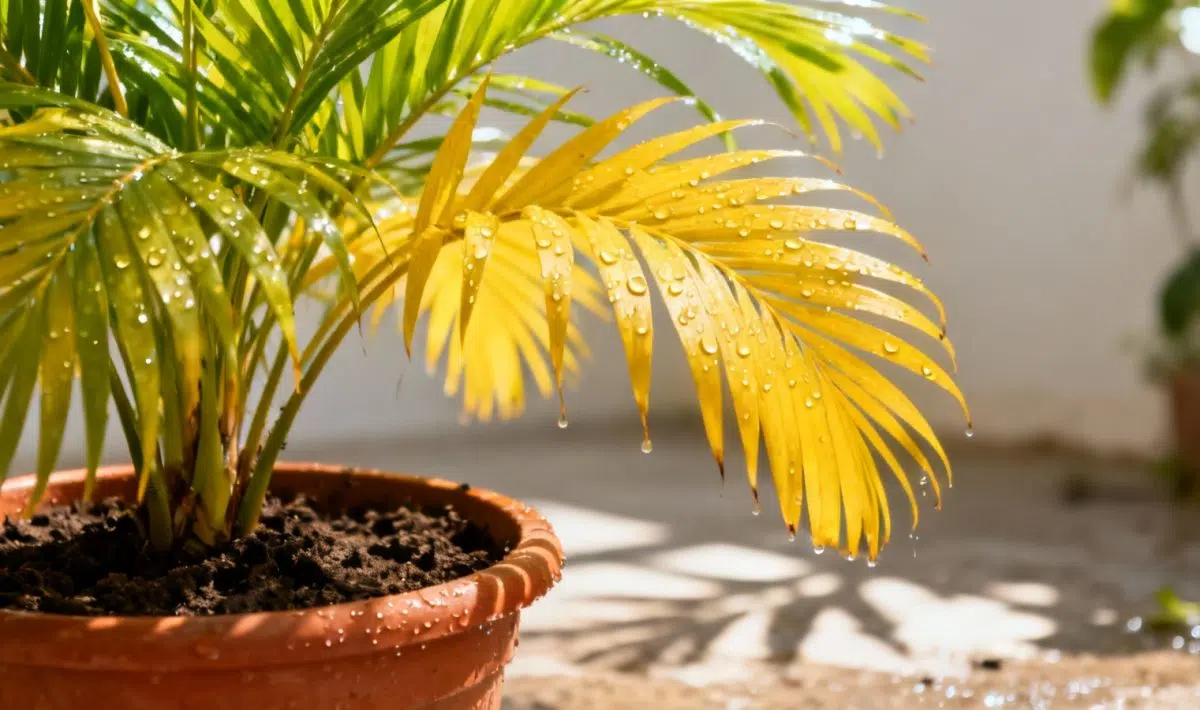
Understanding your yellow butterfly palm’s water needs
The yellow butterfly palm, also known as Dypsis lutescens or Areca palm, has specific water requirements that differ from other houseplants. This beautiful tropical plant thrives when you maintain consistent moisture levels without overwatering. Understanding these needs is crucial for maintaining a healthy palm that will grace your home with its elegant fronds.
Your palm’s water requirements depend on several factors including pot size, soil type, humidity levels, and seasonal changes. The key is finding that sweet spot where the soil remains slightly moist but never waterlogged. This balance ensures your plant gets the hydration it needs while preventing root rot, which can be fatal for these stunning plants.
Recognizing the signs of proper hydration
A well-hydrated yellow butterfly palm displays vibrant green fronds that stand upright with a healthy sheen. The soil feels slightly damp when you insert your finger about an inch deep, but it’s not soggy or muddy. You’ll notice steady growth during the growing season, with new fronds emerging regularly from the center of the plant.
Conversely, an underwatered palm shows brown, crispy leaf tips and edges, while the fronds may appear droopy or wilted. The soil becomes dry and hard, pulling away from the edges of the pot. On the other hand, overwatering creates yellow leaves that feel soft and mushy, often accompanied by a musty smell from the soil that indicates root rot.
The importance of soil quality and drainage
Proper soil composition plays a vital role in your watering schedule success. Your yellow butterfly palm needs well-draining soil that retains some moisture but allows excess water to flow through easily. A quality potting mix combined with perlite or coarse sand creates the ideal growing medium for these plants.
Drainage holes in your pot are absolutely essential for preventing water accumulation at the bottom. Without proper drainage, even the most careful watering schedule can lead to root problems. Many plant enthusiasts make the mistake of using decorative pots without holes, which often results in plant health issues that could have been easily avoided.
Just like maintaining a proper watering schedule for Norfolk Island pines, your butterfly palm requires attention to these fundamental growing conditions. The soil should dry out partially between waterings, typically allowing the top two to three inches to become dry before your next watering session.
Seasonal watering adjustments for optimal growth
During the growing season from spring through early fall, your yellow butterfly palm requires more frequent watering as it actively produces new growth. You’ll typically water every seven to ten days, depending on environmental conditions like temperature and humidity levels in your home.
Summer months often demand more attention because higher temperatures and increased daylight hours cause faster water evaporation from both the soil and the plant’s leaves. You may need to check the soil more frequently during this time, sometimes watering twice per week if conditions are particularly warm and dry.
Winter care and reduced watering
Winter brings a natural slowdown in growth for most houseplants, including your butterfly palm. During these months, you’ll reduce watering frequency to perhaps once every two weeks or even less, depending on your home’s heating system and humidity levels.
Central heating can create very dry conditions that may require you to increase humidity around your plant rather than simply watering more often. Consider using a humidifier or placing a water tray near your palm to maintain adequate moisture in the air without oversaturating the soil.
Practical watering techniques for success
The finger test remains the most reliable method for determining when to water your yellow butterfly palm. Simply insert your index finger into the soil up to about two inches deep. If the soil feels dry at this depth, it’s time to water thoroughly until you see water draining from the bottom holes.
When watering, use room temperature water to avoid shocking the roots with cold or hot liquid. Pour slowly and evenly around the base of the plant, allowing the water to soak in gradually rather than rushing through the soil too quickly.
Similar to optimal watering for oleander plants, consistency is key with your butterfly palm care routine. Establish a regular checking schedule so you never forget to monitor your plant’s needs, but always rely on soil moisture rather than calendar dates to determine actual watering times.
Adjusting frequency based on pot size
Smaller pots dry out much faster than larger containers, which means you’ll need to water more frequently if your palm is in a compact pot. A palm in a six-inch pot might need water twice weekly during summer, while the same plant in a ten-inch container could go a full week between waterings.
Larger pots hold more soil volume, which retains moisture longer and provides a more stable environment for root development. However, they also take longer to dry out completely, so you must be extra careful not to water too frequently when using bigger containers.
Just as you would consider pot size when planning proper watering for porcelainflowers, your butterfly palm’s container directly impacts your watering schedule and overall plant health.
Common watering mistakes to avoid
One of the most frequent errors is watering on a strict schedule without checking soil moisture first. Environmental conditions change throughout the year, and your plant’s water needs fluctuate accordingly. Always test the soil before adding more water to prevent overwatering issues.
Another mistake involves using cold water directly from the tap, which can shock the sensitive root system. Allow water to reach room temperature before watering, or use lukewarm water that feels comfortable to your touch.
Many plant owners also forget about water quality, using heavily chlorinated tap water that can harm their plants over time. If possible, use filtered water or let tap water sit overnight to allow chlorine to evaporate before using it on your palm.
Monitoring and adjusting your approach
Keep track of your watering frequency and note how your plant responds to different schedules. You might discover that your specific environment requires slight adjustments from general recommendations. Some homes with excellent air circulation dry out faster, while others with high humidity stay moist longer.
Pay attention to seasonal changes in your home’s environment as well. Air conditioning in summer and heating in winter both affect humidity levels and soil drying rates. Adjust your watering frequency accordingly to maintain optimal growing conditions year-round.
Remember that techniques used for watering tips for healthy gladiolus blooms can often be adapted for other plants, including the principle of deep, thorough watering followed by allowing proper drying time between sessions.
Creating the perfect watering routine
Establishing a successful watering routine for your yellow butterfly palm requires patience and observation. Start by checking the soil every few days until you understand how quickly it dries in your specific environment. This initial monitoring period helps you develop an intuitive sense of your plant’s needs.
Document your watering dates and note any changes in your plant’s appearance or growth rate. This record-keeping helps you identify patterns and make informed adjustments to improve your care routine over time.
With consistent attention and proper technique, your yellow butterfly palm will reward you with lush, tropical beauty that transforms any indoor space. The key lies in understanding that successful watering isn’t about following rigid schedules, but rather about responding to your plant’s actual needs as they change throughout the seasons.

Allan is a lifelong gardening enthusiast who still gets excited when the first seedlings pop up in spring. With a deep love for nature and a hands-in-the-soil approach, he shares practical tips, plant discoveries, and clever tricks picked up over years of digging, planting, and observing. Whether you’re a new gardener or have a shed full of tools, Allan writes like a neighbor who’s always happy to swap cuttings and stories over the fence.
You can find more about Allan’s work on Malt or connect with him on LinkedIn.


