How often should you water your Venus flytrap for healthy growth
Caring for your Venus flytrap requires understanding one crucial element: proper watering. These fascinating carnivorous plants have unique needs that differ significantly from your typical houseplant. Getting the watering schedule right can mean the difference between a thriving plant and one that struggles to survive.
Venus flytraps naturally grow in nutrient-poor, boggy environments where the soil stays consistently moist. This means your plant craves constant humidity around its roots, but not the kind of standing water that would drown other plants. The key lies in maintaining that delicate balance between wet and waterlogged.
During the growing season from spring through early fall, you should water your Venus flytrap every 2-3 days. However, this frequency isn’t set in stone – it depends on your specific growing conditions. Factors like temperature, humidity, pot size, and soil composition all play a role in determining the exact schedule your plant needs.
Seasonal watering adjustments
Your Venus flytrap’s water requirements change dramatically with the seasons. During active growing months, the plant works hard to produce new traps and catch prey, requiring more consistent moisture. You’ll notice the soil drying out faster as the plant actively absorbs water for its metabolic processes.
Winter brings a completely different story. Your Venus flytrap enters dormancy, much like deciduous trees losing their leaves. During this rest period, reduce watering to once per week or even less frequently. The plant’s reduced activity means it needs far less water to survive those cold months.
Spring marks the awakening period when your plant begins showing new growth. This transitional time requires careful observation – gradually increase watering frequency as you see fresh green traps emerging from the center of the plant.
Water quality makes all the difference
Not all water sources are created equal when it comes to Venus flytraps. These plants evolved in mineral-poor environments, making them extremely sensitive to the chemicals found in tap water. Chlorine, fluoride, and dissolved minerals can quickly damage or kill your plant over time.
Rainwater stands out as the best option for watering your Venus flytrap. It’s naturally soft, free from harmful chemicals, and mimics what the plant would receive in its native habitat. Collect rainwater in clean containers and store it for those dry spells when nature doesn’t provide.
Distilled water serves as an excellent alternative when rainwater isn’t available. You can find it at most grocery stores, and while it requires a small investment, your plant’s health makes it worthwhile. Reverse osmosis water also works well, providing the pure water your Venus flytrap craves.
Recognizing the signs your plant needs water
Learning to read your Venus flytrap’s signals helps you maintain optimal watering practices. The soil surface should feel slightly moist to the touch – never bone dry, but not soggy either. Stick your finger about an inch into the growing medium to check moisture levels below the surface.
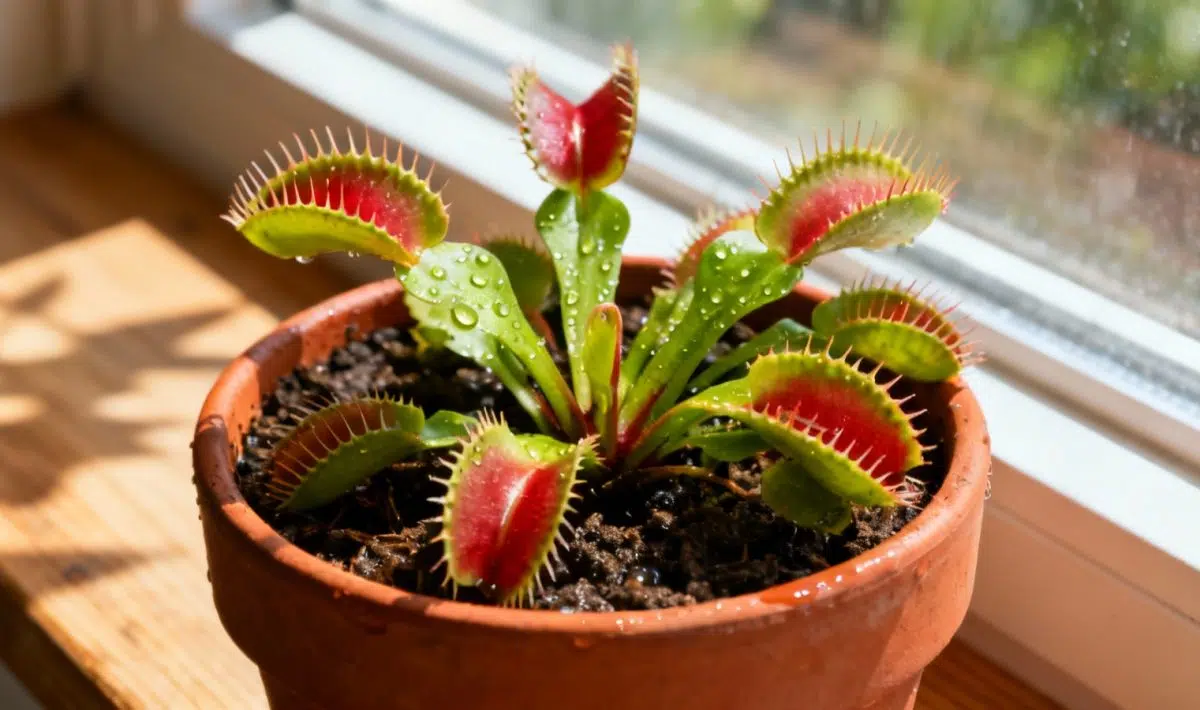
Visual cues from the plant itself tell an important story. Healthy traps maintain their vibrant green color with bright red interiors when grown in good light. When your plant becomes stressed from insufficient water, you’ll notice the traps losing their color and appearing somewhat deflated or limp.
The growing medium provides another helpful indicator. Sphagnum moss, commonly used for Venus flytraps, should maintain its fluffy texture when properly hydrated. As it dries out, the moss becomes compressed and changes from bright green to a duller brown color.
Mastering the tray method
The water tray method offers the most reliable way to maintain consistent moisture for your Venus flytrap. Place your pot in a shallow dish and add water until it reaches about halfway up the pot’s drainage holes. This setup allows the plant to absorb water as needed through capillary action.
Refill the tray when the water level drops, typically every 2-3 days during active growth periods. The beauty of this system lies in its self-regulating nature – your plant takes what it needs when it needs it. However, don’t let water sit stagnant for weeks, as this can lead to bacterial problems.
During dormancy, reduce the water level in the tray or remove it entirely for short periods. Just like other plant care routines, such as the watering frequency for loquat trees, seasonal adjustments are crucial for optimal health.
Common watering mistakes to avoid
Many new Venus flytrap owners fall into the trap of treating their plant like a typical houseplant. Watering from above might seem natural, but it can wash away the plant’s natural enzymes and disturb the delicate balance within the traps. Always water from below using the tray method.
Overwatering ranks as one of the most common fatal mistakes. While Venus flytraps love moisture, they still need some air circulation around their roots. Constantly soggy conditions lead to root rot and bacterial infections that can quickly kill your plant.
Using the wrong type of water causes slow but steady decline. Many people don’t realize that their tap water contains chemicals and minerals that gradually poison their Venus flytrap. Similar to how ideal rosemary watering schedule requires attention to water quality, your carnivorous plant demands pure water sources.
Environmental factors affecting watering needs
Temperature plays a major role in determining how often your Venus flytrap needs water. Higher temperatures increase evaporation rates, meaning you’ll need to water more frequently during hot summer days. Conversely, cooler temperatures slow evaporation and reduce the plant’s water uptake.
Humidity levels in your growing environment directly impact watering frequency. If you’re growing your plant indoors where central heating or air conditioning creates dry conditions, expect to water more often. Outdoor plants benefit from natural humidity fluctuations that help regulate their water needs.
Pot size and material affect water retention significantly. Smaller pots dry out faster and require more frequent attention, while larger containers hold moisture longer. Plastic pots retain water better than terracotta, which allows evaporation through the pot walls.
Just as watering tips for arborvitae plants vary with growing conditions, your Venus flytrap’s needs will change based on its specific environment. Monitor these factors and adjust accordingly.
Professional tips for optimal hydration
Experienced growers often use a combination of methods to ensure their Venus flytraps receive perfect hydration. During peak growing season, they might use the tray method while supplementing with light misting on particularly hot days. This approach mimics the plant’s natural bog environment more closely.
Creating a humid microclimate around your plant helps reduce water stress. Group several plants together or place a humidity tray nearby to increase local moisture levels. This technique proves especially valuable for indoor growing where air circulation might be limited.
Monitoring your plant’s response to different watering schedules helps you fine-tune your approach. Keep notes about watering frequency, environmental conditions, and plant response. Over time, you’ll develop an intuitive understanding of your Venus flytrap’s needs.
Remember that consistency matters more than perfection. Like managing coriander watering guidelines, establishing a reliable routine helps your plant thrive. Your Venus flytrap will adapt to your care schedule as long as you provide clean water and maintain appropriate moisture levels throughout the growing season.
Allan is a lifelong gardening enthusiast who still gets excited when the first seedlings pop up in spring. With a deep love for nature and a hands-in-the-soil approach, he shares practical tips, plant discoveries, and clever tricks picked up over years of digging, planting, and observing. Whether you’re a new gardener or have a shed full of tools, Allan writes like a neighbor who’s always happy to swap cuttings and stories over the fence.
You can find more about Allan’s work on Malt or connect with him on LinkedIn.