
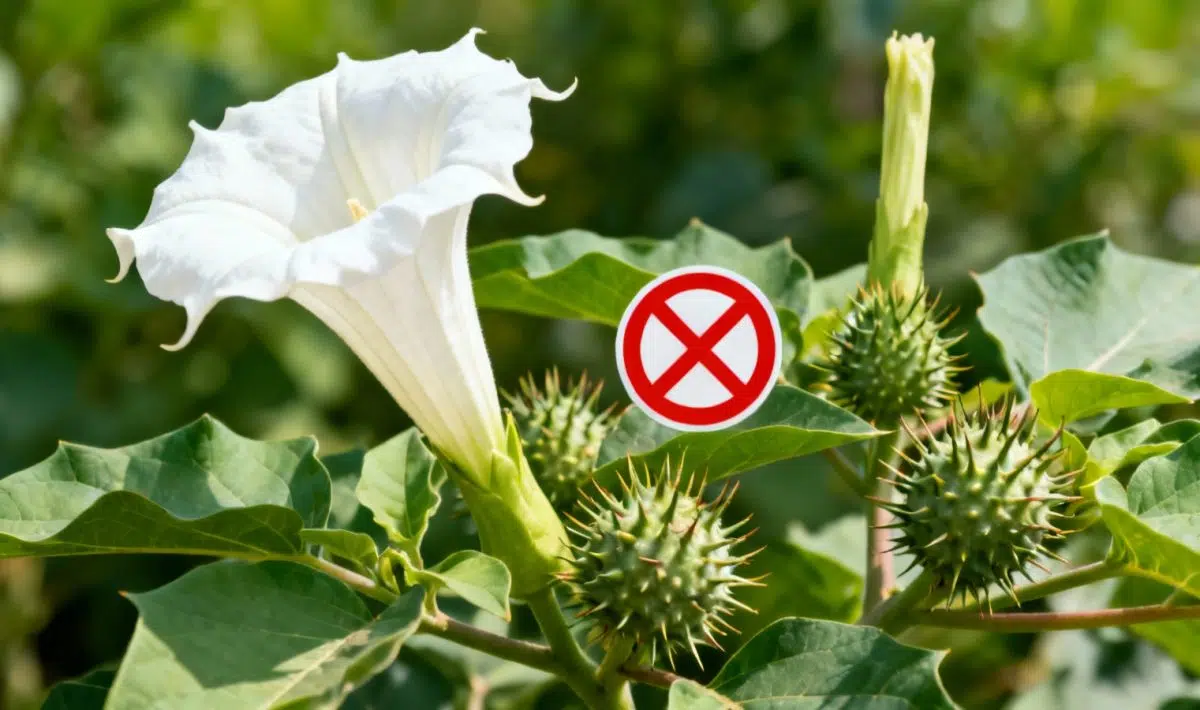
When it comes to understanding dangerous plants in our environment, Jimsonweed – Datura stramonium stands out as one that demands serious attention. This toxic annual herb from the Solanaceae family has spread far beyond its native American origins, becoming a significant concern for farmers, gardeners, and anyone working with plants. With its distinctive foul odor and aggressive growth habits, this species can reach heights of 30 cm to 2 meters and poses real risks to both humans and animals.
Understanding Datura stramonium characteristics and identification
The botanical features of this plant make it relatively easy to identify once you know what to look for. The sturdy stem branches out in an umbrella-like pattern, supporting large oval leaves that can grow quite substantial in size. These leaves have deeply serrated edges with irregular lobes and long petioles, giving the plant a somewhat wild appearance.
What makes this species particularly striking are its flowers – either white or violet blooms measuring 3-6 cm across that appear solitary and upright. The flowering period typically occurs during summer months, making this the prime time for identification. After flowering, the plant produces distinctive spiny capsules that stand erect, each capable of containing an enormous number of seeds.
The seed production of this plant is truly remarkable and concerning. A single healthy specimen can produce up to 100 capsules, with each capsule holding between 500 to 2,000 graines. In optimal conditions, one plant might generate up to 30,000 graines, explaining why this species spreads so aggressively across agricultural lands and disturbed soils.
Chemical composition and toxicity risks
The danger of Datura stramonium lies in its chemical makeup. The plant contains tropane alkaloids comprising 0.2-0.5% of its dry weight, with scopolamine making up about one-third and atropine/hyoscyamine accounting for two-thirds of these compounds. These substances affect the nervous system and can cause severe intoxication symptoms.
Understanding the risks associated with this plante helps prevent accidental poisoning. Symptoms of intoxication include hallucinations, delirium, rapid heartbeat, dilated pupils, and in severe cases, respiratory depression. Children and domestic animals are particularly vulnerable due to their smaller body weight and tendency to explore plants through taste.
The confusion with other species in the Solanaceae family poses additional risks. Many people mistake this toxic plant for harmless varieties, leading to dangerous situations. Proper identification becomes crucial for preventing accidental consumption or contact, especially in agricultural settings where multiple plant species coexist.
Agricultural impact and control measures
This invasive species shows a strong preference for nitrogen-rich soils, thriving in fresh, loamy, and clay-silica conditions commonly found in agricultural areas. It aggressively competes with summer cultures like corn, soybeans, and sunflowers, reducing crop yields and contaminating harvests.
For farmers dealing with contaminated fields, several control strategies prove effective. Mechanical removal before seed production prevents future infestations, though proper protective equipment is essential due to the plant’s toxicity. The use of appropriate herbicides can also help manage established populations, but timing and application methods require careful consideration.
Prevention remains the best approach in agriculture. Regular field monitoring during the growing season allows for early detection and removal. Understanding that graines can remain dormant in soil for several years emphasizes the importance of long-term management strategies rather than one-time treatments.
Safe handling and propagation considerations
While discussing propagation might seem counterintuitive for such a dangerous plant, understanding its reproductive cycle helps in developing effective control strategies. The black, ridged graines measuring 2.9-4.2 mm in length remain viable in soil for extended periods, germinating when conditions become favorable.
When dealing with this species in any capacity, safety must be the primary concern. Always wear gloves and protective clothing when handling any part of the plant, and never allow children or pets near areas where it grows. For those managing botanical collections or research facilities, strict containment protocols prevent accidental spread.
If you’re interested in cultivating other, safer plants for your garden, you might learn about guava care and culture which offers a much more rewarding and risk-free growing experience. Similarly, those looking for colorful foliage options can discover how to care for coleus as a beautiful alternative to potentially dangerous plants.
Environmental management and prevention strategies
The widespread distribution of this invasive espèce across France and other regions requires coordinated management efforts. Local authorities often implement monitoring programs to track populations and prevent establishment in new areas. Understanding its preferred habitat helps predict where new infestations might occur.
For property owners discovering this plant on their land, immediate action prevents larger problems. Document the location, remove the entire plant including roots while wearing protective equipment, and monitor the area for new growth. Proper disposal involves burning or deep burial rather than composting, which could spread viable graines.
Garden enthusiasts seeking attractive flowering plants have many safer alternatives. Consider options like explore the care of golden dewdrops for beautiful blooms without the associated risks, or find tips for garden cosmos propagation for colorful, safe additions to your landscape.
Recognition and emergency response
Quick recognition of this toxic species can prevent serious health incidents. The combination of large, deeply-toothed feuilles, white or purple trumpet-shaped fleurs, and spiny fruit capsules makes identification relatively straightforward. The plant’s distinctive foul odor when crushed provides another identifying characteristic.
In cases of suspected intoxication, immediate medical attention is crucial. Contact poison control centers and provide as much information as possible about the plant and exposure circumstances. Never attempt home remedies, as the alcaloides involved require professional medical management.
For those maintaining plant collections, understand Gollum jade plant care offers a fascinating succulent option that poses no toxicity risks while still providing unique botanical interest for indoor or outdoor cultivation.
Long-term monitoring and community awareness
Effective management of this invasive plante requires ongoing vigilance and community involvement. Regular monitoring of agricultural areas, vacant lots, and disturbed soils helps detect new populations before they become established. Educational programs for farmers, gardeners, and the general public increase awareness and improve identification skills.
The persistence of graines in soil means that areas previously infested require monitoring for several growing seasons. Weather conditions, soil disturbance, and seasonal changes can trigger germination of dormant seeds, leading to unexpected appearances of new plants in previously cleared areas.
Understanding the classification and botanical relationships of this species within the broader Solanaceae family helps researchers and land managers develop more effective control strategies. Continued research into biological control methods and improved detection techniques offers hope for better management of this challenging invasive plant in the future.

Allan is a lifelong gardening enthusiast who still gets excited when the first seedlings pop up in spring. With a deep love for nature and a hands-in-the-soil approach, he shares practical tips, plant discoveries, and clever tricks picked up over years of digging, planting, and observing. Whether you’re a new gardener or have a shed full of tools, Allan writes like a neighbor who’s always happy to swap cuttings and stories over the fence.
You can find more about Allan’s work on Malt or connect with him on LinkedIn.


