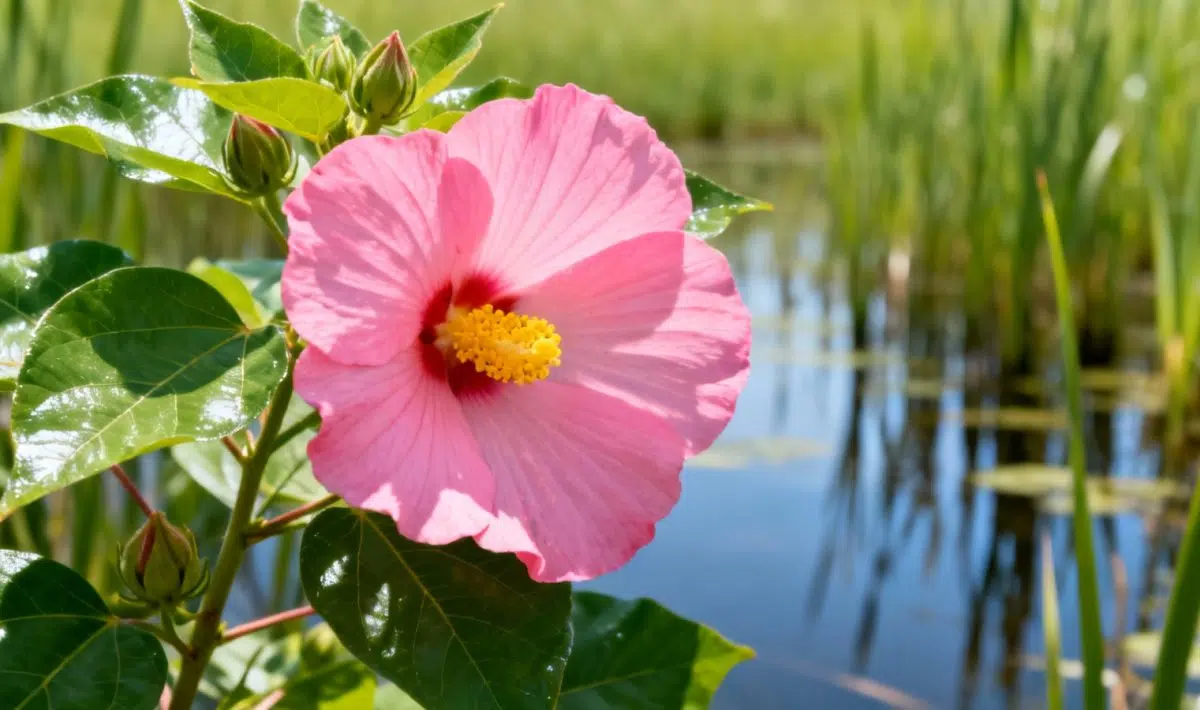
Understanding the Swamp Rose Mallow – Hibiscus moscheutos
The Swamp rose mallow – Hibiscus moscheutos stands out as one of North America’s most spectacular native perennials. This remarkable marsh hibiscus produces dinner-plate sized flowers that can reach up to 20 cm in diameter, making quite the statement in any garden setting. Originally thriving in wetlands across the eastern United States, this robust plant has adapted beautifully to cultivated gardens while maintaining its wild charm.
What makes this hibiscus truly special is its rapid growth rate once it emerges from winter dormancy. The plant can grow up to 2.5 cm per day during peak season, quickly reaching heights between 1.2 to 2 meters. The large, heart-shaped leaves create an impressive backdrop for the show-stopping blooms that appear from midsummer through autumn.
Physical Characteristics and Varieties
The swamp rose mallow displays remarkable diversity in its flower colors and forms. You’ll find varieties producing blooms in pristine white, deep crimson, soft pink, and striking bicolor combinations. Some cultivars even feature dark burgundy foliage that provides stunning contrast against the vibrant flowers.
The plant’s structure is equally impressive, with sturdy stems that support the large blooms effectively. However, these delicate petals can be damaged by strong winds, so choosing a somewhat protected location proves beneficial. The extensive root system allows the plant to thrive in consistently moist conditions while tolerating brief dry spells.
Optimal Growing Conditions
Success with hibiscus moscheutos begins with understanding its natural habitat preferences. This marsh native absolutely loves moisture and will reward you with abundant blooms when planted in consistently damp soil. Unlike many garden plants that suffer in wet conditions, this species actually thrives when its roots have access to plenty of water.
Full sun exposure remains critical for maximum flowering potential. The plant requires at least six hours of direct sunlight daily to produce its spectacular display. In partial shade, you’ll notice significantly fewer blooms and less vigorous growth. The soil should be rich, organic, and well-draining despite staying consistently moist.
Soil Preparation and Planting
Before planting your swamp rose mallow, enrich the soil with plenty of compost or well-rotted manure. The plant appreciates a slightly acidic to neutral pH between 6.0 and 7.0. If your garden doesn’t naturally retain moisture well, consider creating a depression or planting near a water feature where the soil stays consistently damp.
Spring or early fall provides the best planting windows. Space plants about 1 to 1.5 meters apart to accommodate their mature spread. The dramatic growth habit makes these plants excellent specimen choices or stunning additions to naturalistic pond edges and rain gardens.
Watering and Fertilization Needs
Consistent moisture ranks as the most critical care requirement for healthy hibiscus plants. During the growing season, maintain soil moisture similar to what you’d find in a natural marsh environment. This doesn’t mean waterlogged conditions, but rather consistently damp soil that never fully dries out.
For fertilization, apply a balanced, slow-release fertilizer in early spring as new growth emerges. A second application in mid-summer will support continued blooming through the fall season. Organic options like fish emulsion or compost tea work wonderfully and align with the plant’s natural growing conditions.
Seasonal Care Considerations
Understanding the plant’s natural cycle helps with proper care timing. The swamp rose mallow completely dies back to ground level each winter, which is perfectly normal. Don’t panic when you see no signs of life in early spring – this species emerges quite late, sometimes not until May in cooler climates.
Once growth begins, it happens quickly and dramatically. Just like when learning about care tips for Confederate roses, patience during the early season pays off with spectacular results later. Cut back the dead stems in late winter or early spring to make room for new growth.
Propagation Methods and Seed Starting
Growing swamp rose mallow from seed offers an economical way to establish multiple plants in your garden. The large seeds germinate reliably when given proper treatment. Start by scarifying the hard seed coat with sandpaper or a file, then soak seeds in warm water for 24 hours before planting.
Sow seeds indoors 8-10 weeks before the last expected frost date. Use a seed-starting mix and maintain soil temperature around 20-22°C for best germination rates. Seedlings typically emerge within 1-2 weeks under optimal conditions. Similar techniques work well for other rose species, and you can find detailed guidance on dog rose cultivation that applies similar principles.
Division and Vegetative Propagation
Mature clumps can be divided in early spring before new growth appears. Use a sharp spade to cut through the crown, ensuring each division has both roots and growing points. This method preserves the exact characteristics of named varieties, unlike seed propagation which may produce variable results.
Root cuttings taken in late fall also provide another propagation option. Cut 5-7 cm sections of thick roots and plant them horizontally in moist potting mix. Keep warm and consistently moist through winter, and new plants will emerge in spring.
Common Challenges and Solutions
While generally pest-resistant, swamp rose mallow can occasionally attract aphids or spider mites during hot, dry weather. Regular water spraying helps prevent mite infestations, while beneficial insects usually keep aphid populations in check naturally.
Leaf spot diseases sometimes appear in humid conditions with poor air circulation. Ensure adequate spacing between plants and avoid overhead watering when possible. Most disease issues resolve naturally without intervention when plants receive proper care.
Winter Protection and Hardiness
The plant’s hardiness extends to USDA zones 4-9, tolerating temperatures down to -20°C with proper protection. Apply a thick layer of mulch over the root zone after the first hard frost kills back the top growth. This insulation helps protect the crown from freeze-thaw cycles that can damage dormant plants.
In marginal zones, consider growing plants in large containers that can be moved to protected areas during extreme cold snaps. The container approach also works well for gardeners wanting to enjoy these spectacular blooms on patios or decks.
Landscape Applications and Design Ideas
The dramatic scale and bold flowers of hibiscus moscheutos make it ideal for creating focal points in large garden spaces. Plant them as specimens near water features, where their natural habitat preferences align perfectly with available growing conditions. The late-season blooms provide valuable color when many other perennials are fading.
Consider pairing swamp rose mallow with other moisture-loving plants like astilbe, ligularia, or cardinal flower for extended seasonal interest. The tall growth habit works well at the back of borders, while the spectacular blooms can be appreciated from quite a distance.
Complementary Plantings
When planning companion plantings, think about seasonal succession and complementary growth habits. Early-blooming bulbs provide spring interest while the hibiscus slowly emerges. Ferns and hostas offer textural contrast to the bold hibiscus foliage. Just as with selecting tips for growing tea roses, consider bloom timing and maintenance needs when choosing neighbors.
Native sedges and rushes create naturalistic plantings that support local wildlife while providing year-round structure. The combination works especially well in rain gardens or bioswales where consistent moisture creates ideal growing conditions for all plants involved.
Harvesting and Using Seeds
Allow some flowers to develop into seed pods if you want to collect seeds for future propagation. The large, brown pods split open when mature, releasing numerous dark seeds. Collect pods just as they begin to split for the best quality seeds.
Store collected seeds in cool, dry conditions, and they’ll remain viable for several years. This self-sufficiency in seed production makes establishing large naturalised plantings quite affordable over time. The process shares similarities with other garden crops, and you might find guidelines for cucumber propagation helpful for understanding general seed handling principles.
Ecological Benefits
Beyond their ornamental value, swamp rose mallows provide significant ecological benefits. The large flowers attract butterflies, bees, and hummingbirds throughout their extended blooming period. The dense growth habit offers nesting sites for small birds, while the seeds provide food for finches and other seed-eating species.
Native plant enthusiasts particularly appreciate this species for its dual role as both spectacular ornamental and valuable wildlife habitat. The plant’s ability to thrive in challenging wet sites makes it invaluable for erosion control along waterways and in areas where other plants struggle to establish.
Seasonal Timeline and Maintenance Schedule
Creating a maintenance calendar helps ensure optimal plant performance throughout the growing season. In early spring, remove old stems and apply fresh mulch around emerging shoots. Mid-spring brings the first signs of new growth, which accelerates rapidly as soil temperatures warm.
Summer care focuses on consistent watering and monitoring for any pest issues. The spectacular blooming period requires minimal intervention – just deadheading spent flowers to encourage continued blooming. Fall maintenance includes collecting seeds if desired and preparing plants for winter dormancy. Understanding these seasonal rhythms helps with planning, much like tracking apricot tree care throughout the year.
This remarkable native hibiscus truly deserves a place in more gardens, especially those with moisture-retentive soils or water features. The spectacular late-summer display provides unmatched drama when many other plants are winding down for the season. With proper care and suitable growing conditions, swamp rose mallow will reward gardeners with years of stunning blooms and valuable wildlife habitat.
Allan is a lifelong gardening enthusiast who still gets excited when the first seedlings pop up in spring. With a deep love for nature and a hands-in-the-soil approach, he shares practical tips, plant discoveries, and clever tricks picked up over years of digging, planting, and observing. Whether you’re a new gardener or have a shed full of tools, Allan writes like a neighbor who’s always happy to swap cuttings and stories over the fence.
You can find more about Allan’s work on Malt or connect with him on LinkedIn.