
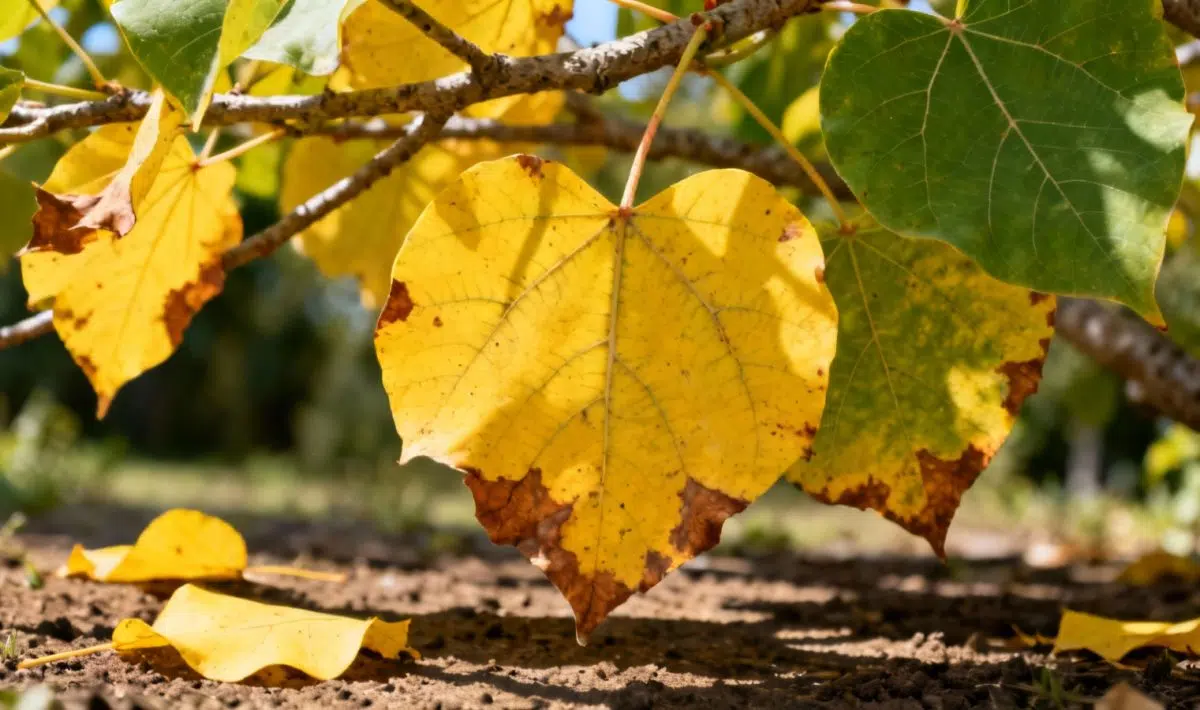
Seeing your beautiful northern catalpa’s leaves turning yellow can be quite concerning, especially when this magnificent tree is known for its stunning white flowers and large heart-shaped foliage. However, yellowing leaves are actually a common issue that most catalpa owners face at some point. Understanding the underlying causes will help you restore your tree’s vibrant green appearance and ensure its long-term health.
Understanding leaf yellowing in northern catalpa trees
Yellow leaves on your northern catalpa typically indicate that something is disrupting the plant’s normal processes. This condition, known as chlorosis, occurs when leaves cannot produce enough chlorophyll – the green pigment essential for photosynthesis. When this happens, the yellow pigments that were always present become visible as the green fades away.
The timing of yellowing can provide valuable clues about the underlying problem. Early yellowing in spring or summer often suggests stress factors, while natural yellowing in late summer or early fall is part of the tree’s preparation for dormancy. Most healthy catalpas begin their natural color change in September, but premature yellowing in June or July should raise concern.
Interestingly, this yellowing phenomenon isn’t unique to catalpas. Many plants experience similar issues, such as the causes of yellow leaves in snake plants , though the specific causes may vary between species.
Primary causes of yellowing catalpa leaves
Improper watering is one of the most common reasons why catalpa leaves turn yellow. These trees prefer consistent moisture but cannot tolerate waterlogged conditions. When the soil remains too wet for extended periods, the roots cannot access oxygen, leading to root rot and subsequent leaf yellowing.
Conversely, drought stress also causes yellowing, particularly during hot summer months. Catalpas have large leaves that lose significant amounts of water through transpiration, so they require adequate soil moisture to maintain their vibrant green color. The key is finding the right balance – soil that drains well but retains enough moisture during dry spells.
✅ Quick Checklist
- Is the soil too wet or too dry?
- Is the plant getting 6+ hours of sunlight daily?
- Have you fertilized in the last 2 months?
- Are there visible pests under the leaves?
- Does the pot have adequate drainage?
Diagnose your plant in one click!
AI instant diagnosis • Personalized solutions • 50,000+ species
Nutrient deficiencies
Northern catalpas are heavy feeders that require adequate nutrition to maintain their impressive foliage and support their abundant white flower clusters. Nitrogen deficiency is the most common nutritional cause of yellowing leaves, typically starting with older leaves at the bottom of the tree before progressing upward.
Iron deficiency creates a distinctive pattern where leaves turn yellow but the veins remain green, a condition called interveinal chlorosis. This often occurs in alkaline soils where iron becomes unavailable to the plant, even though it may be present in the soil. Magnesium deficiency also causes yellowing that begins between the leaf veins but tends to affect older leaves first.
Pests and diseases
Several pests can cause catalpa leaves to yellow, including aphids, spider mites, and catalpa sphinx moth caterpillars. These insects feed on leaf tissues or sap, weakening the plant and causing yellowing as a stress response. Fungal diseases such as verticillium wilt or leaf spot can also trigger yellowing, often accompanied by brown spots or wilting.
Root diseases are particularly problematic because they affect the tree’s ability to absorb water and nutrients, leading to widespread yellowing throughout the canopy. These issues are more common in poorly drained soils or areas with excessive moisture.
Seasonal factors affecting catalpa health
Spring establishment period
Early spring can be a challenging time for northern catalpas, particularly young trees that are still establishing their root systems. During this period, the tree allocates significant energy toward producing new growth and preparing for its spectacular bloom season. If conditions aren’t optimal, stress can manifest as early leaf yellowing.
Temperature fluctuations in spring can also stress catalpas, as they prefer consistent warmth for healthy growth. Late frosts can damage new foliage, leading to yellowing or browning of affected leaves. This is particularly common in areas where spring weather is unpredictable.
Summer stress period
The summer months, particularly June through August, represent the most critical period for catalpa health. During these hot months, the tree must balance maintaining its large leaves with supporting flower and seed pod development. Inadequate water during this period almost inevitably leads to yellowing leaves.
Heat stress becomes particularly problematic when temperatures consistently exceed 85°F (29°C), especially if accompanied by low humidity or strong winds. Under these conditions, even well-watered trees may show signs of stress through leaf yellowing or wilting.
Solutions and prevention strategies
Proper watering techniques
Establishing a consistent watering schedule is crucial for preventing yellow leaves on your catalpa. Deep, infrequent watering works better than frequent shallow watering, as it encourages deep root development and helps the tree become more drought-tolerant over time.
During the growing season, provide approximately 1-2 inches of water per week, adjusting based on rainfall and temperature. In hot, dry periods, you may need to increase this amount. Always water at the base of the tree rather than overhead to reduce disease risk and ensure water reaches the root zone efficiently.
Nutritional support
Regular fertilization helps prevent nutrient-related yellowing in catalpa trees. Apply a balanced fertilizer (such as 10-10-10) in early spring before new growth begins, and consider a second application in mid-summer for young or stressed trees. Organic options like compost or well-aged manure provide slow-release nutrients and improve soil structure.
For iron deficiency, apply chelated iron according to package directions, preferably in spring when the tree is actively growing. Mulching around the base of the tree helps retain moisture and provides slow-release nutrients as it decomposes.
✅ Quick Checklist
- Is the soil too wet or too dry?
- Is the plant getting 6+ hours of sunlight daily?
- Have you fertilized in the last 2 months?
- Are there visible pests under the leaves?
- Does the pot have adequate drainage?
Diagnose your plant in one click!
AI instant diagnosis • Personalized solutions • 50,000+ species
Pest and disease management
Regular inspection of your catalpa’s leaves, particularly the undersides, helps catch pest problems early before they cause significant yellowing. Remove any affected leaves promptly and dispose of them away from the tree to prevent disease spread.
For natural pest control, encourage beneficial insects like ladybugs and lacewings that feed on aphids and other harmful pests. Insecticidal soap or neem oil can effectively control most common catalpa pests without harming beneficial insects when applied correctly.
Similar yellowing issues occur in other plants as well, such as yellowing leaves on wintercreeper plants , demonstrating that proper diagnosis and treatment are essential regardless of the species involved.
When to take action
Not all yellowing requires immediate intervention, but certain signs indicate the need for prompt action. If yellowing occurs during the active growing season (May through August), affects young leaves, or is accompanied by wilting, brown spots, or pest activity, you should investigate and address the underlying cause quickly.
However, some yellowing is completely normal, particularly in fall when the tree prepares for dormancy. Northern catalpas naturally begin their color change in late August or September, starting with older leaves. This natural process doesn’t require any intervention and actually indicates a healthy tree responding appropriately to seasonal changes.
Monitor your tree’s overall health rather than focusing solely on leaf color. A catalpa with good branch structure, normal growth patterns, and successful flowering is likely healthy even if some leaves show yellowing. The key is distinguishing between natural processes and genuine health concerns that require your attention.

Allan is a lifelong gardening enthusiast who still gets excited when the first seedlings pop up in spring. With a deep love for nature and a hands-in-the-soil approach, he shares practical tips, plant discoveries, and clever tricks picked up over years of digging, planting, and observing. Whether you’re a new gardener or have a shed full of tools, Allan writes like a neighbor who’s always happy to swap cuttings and stories over the fence.
You can find more about Allan’s work on Malt or connect with him on LinkedIn.


