
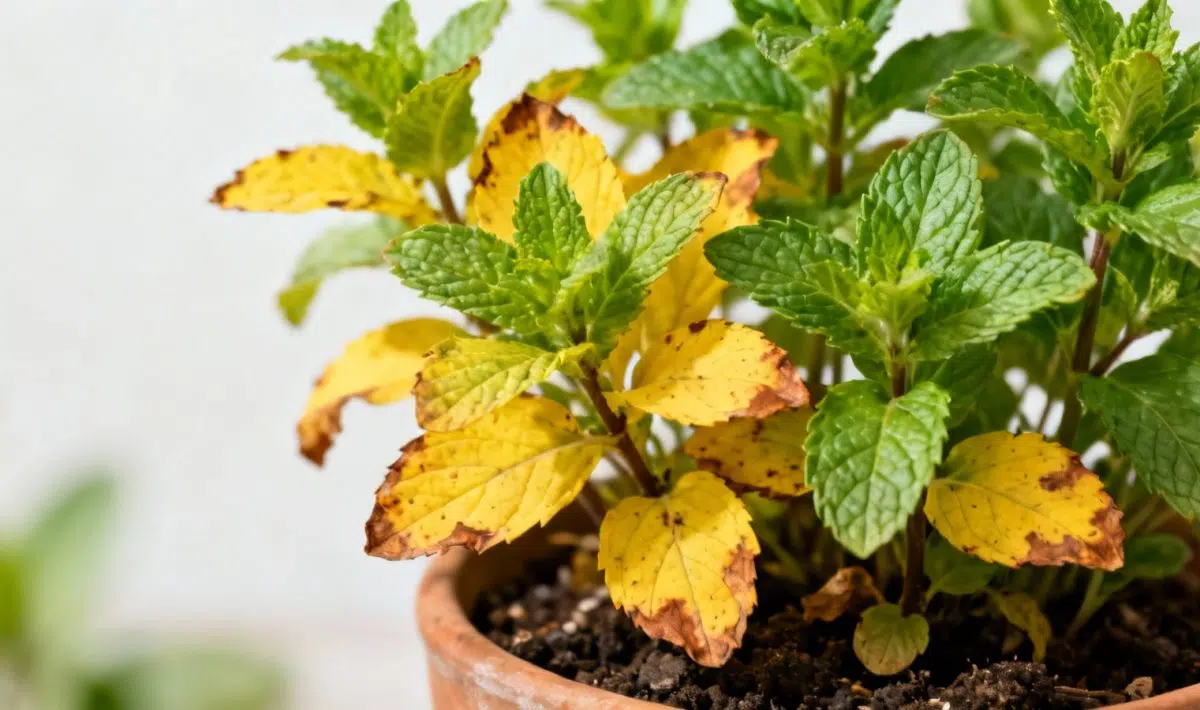
Nothing’s more frustrating than watching your beautiful spearmint plants develop yellow leaves just when you’re ready to harvest fresh mint for your favorite recipes. This common issue affects countless gardeners, but the good news is that most causes are completely fixable once you know what to look for.
Yellow leaves on spearmint typically signal that your plants are trying to tell you something important about their growing conditions. Whether it’s a watering problem, nutrient deficiency, or environmental stress, understanding these signals is the first step toward bringing your mint back to its vibrant green state.
Common causes of yellowing spearmint leaves
Several factors can cause your spearmint leaves to turn yellow, and identifying the right one is crucial for effective treatment. Let’s explore the most frequent culprits that affect mint plants worldwide.
Watering issues – too much or too little
Water management is absolutely critical for healthy mint plants. Overwatering is actually more dangerous than underwatering when it comes to spearmint care. When soil stays constantly wet, roots can’t breathe properly, leading to root rot and yellowing leaves that start from the bottom of the plant.
On the flip side, drought stress also causes yellowing, but typically affects the entire plant more uniformly. The key is finding that sweet spot where soil stays consistently moist but never waterlogged. Check soil moisture by sticking your finger about two inches deep – it should feel slightly damp but not soggy.
✅ Quick Checklist
- Is the soil too wet or too dry?
- Is the plant getting 6+ hours of sunlight daily?
- Have you fertilized in the last 2 months?
- Are there visible pests under the leaves?
- Does the pot have adequate drainage?
Diagnose your plant in one click!
AI instant diagnosis • Personalized solutions • 50,000+ species
Nutrient deficiencies affecting leaf color
Nitrogen deficiency is the most common nutrient issue that causes yellowing in mint plants. When plants lack sufficient nitrogen, they start pulling this essential nutrient from older leaves to support new growth, causing the lower leaves to turn yellow first.
However, other nutrients can also play a role. Iron deficiency typically causes yellowing between leaf veins while the veins themselves stay green, creating a distinctive pattern. Magnesium deficiency shows up as yellowing that starts at leaf edges and moves inward. These patterns can help you identify exactly what your spearmint needs for optimal growth.
Light and environmental stress factors
Spearmint loves bright, indirect sunlight but struggles in extreme conditions. Too much direct afternoon sun can actually scorch leaves, causing them to yellow and eventually brown. Conversely, insufficient light weakens plants and makes them more susceptible to disease and pest issues.
Temperature fluctuations also stress mint plants significantly. Sudden cold snaps or heat waves can trigger yellowing as plants struggle to adapt. Indoor plants are particularly sensitive to drafts from air conditioning or heating vents, which can create similar stress responses.
Natural solutions for healthier spearmint
The beauty of mint care lies in using gentle, natural methods that work with your plants’ natural processes. These approaches not only solve current problems but also prevent future issues from developing.
Proper watering techniques for mint plants
Establishing a consistent watering routine is fundamental for preventing yellowing leaves. Water your spearmint deeply but less frequently, allowing the top inch of soil to dry out between waterings. This encourages deep root growth while preventing the waterlogged conditions that lead to root problems.
Morning watering is ideal because it gives plants time to absorb moisture before the heat of the day. Use room-temperature water when possible, as cold water can shock roots and contribute to stress-related yellowing.
Organic fertilization methods
Compost tea makes an excellent natural fertilizer for mint plants. Simply steep finished compost in water for 24-48 hours, then strain and dilute the liquid by half before applying. This gentle approach provides nutrients gradually without the risk of burning roots with synthetic fertilizers.
Fish emulsion is another fantastic organic option that provides both nitrogen and trace minerals. Apply every 2-3 weeks during the growing season, following package directions for dilution rates. These natural products feed beneficial soil organisms while nourishing your mint plants.
Prevention strategies for long-term plant health
Creating the right growing environment from the start prevents most yellowing issues before they begin. Focus on establishing good drainage, appropriate lighting, and healthy soil conditions right from planting.
Optimal growing conditions for spearmint
Choose containers with drainage holes or amend garden beds with organic matter to improve drainage. Mint thrives in slightly acidic to neutral soil (pH 6.0-7.0) that’s rich in organic matter. Adding compost annually helps maintain soil structure and provides slow-release nutrients.
Position your spearmint where it receives morning sun and afternoon shade, especially in hot climates. This mimics the plant’s natural woodland edge habitat and reduces stress from intense heat. Similar yellowing issues can affect other garden plants, as seen in causes of yellowing honeysuckle leaves and solutions for yellowing pomegranate leaves, making proper growing conditions essential across different species.
Regular maintenance and monitoring
Weekly inspections help you catch problems early when they’re easiest to fix. Look for changes in leaf color, new growth patterns, and signs of pests or disease. Remove any yellowing leaves promptly to redirect energy into healthy growth and prevent potential disease spread.
Pinching flowers as they appear keeps energy focused on leaf production and prevents the plant from becoming woody. This simple maintenance step extends your harvest season and keeps plants vigorous throughout the growing period.
✅ Quick Checklist
- Is the soil too wet or too dry?
- Is the plant getting 6+ hours of sunlight daily?
- Have you fertilized in the last 2 months?
- Are there visible pests under the leaves?
- Does the pot have adequate drainage?
Diagnose your plant in one click!
AI instant diagnosis • Personalized solutions • 50,000+ species
When to take immediate action
Some yellowing situations require prompt intervention to save your plants. If you notice rapid yellowing accompanied by wilting, soft stems, or a foul smell from the soil, you’re likely dealing with root rot and need to act quickly.
Repot affected container plants immediately, removing all damaged roots and replanting in fresh, well-draining soil. For garden plants, improve drainage around the root zone and reduce watering frequency until the plant recovers.
Severe nutrient deficiencies also warrant immediate attention. If yellowing is widespread and accompanied by stunted growth, apply a balanced liquid fertilizer at quarter strength weekly until you see improvement, then switch to monthly feeding.
Remember that healthy spearmint should have vibrant green leaves and vigorous growth throughout the growing season. With proper care and attention to these key factors, you can enjoy abundant harvests of fragrant, flavorful mint for months to come. The satisfaction of nurturing these wonderful plants back to health makes every effort worthwhile.

Allan is a lifelong gardening enthusiast who still gets excited when the first seedlings pop up in spring. With a deep love for nature and a hands-in-the-soil approach, he shares practical tips, plant discoveries, and clever tricks picked up over years of digging, planting, and observing. Whether you’re a new gardener or have a shed full of tools, Allan writes like a neighbor who’s always happy to swap cuttings and stories over the fence.
You can find more about Allan’s work on Malt or connect with him on LinkedIn.


