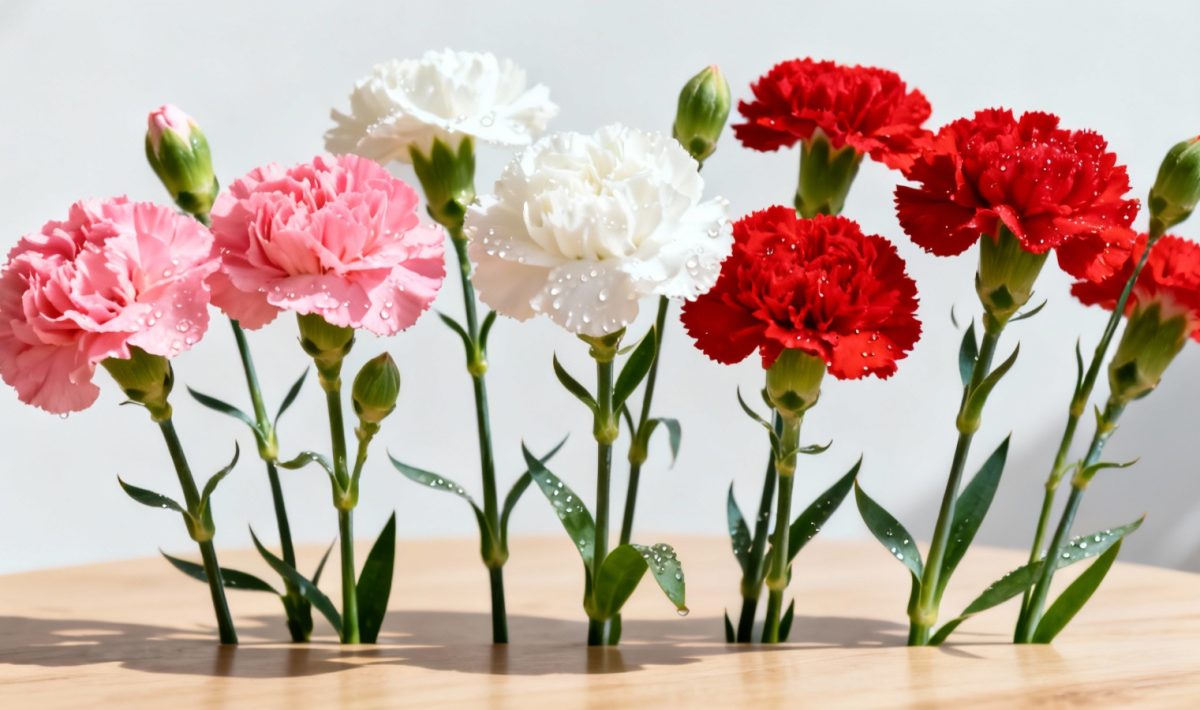
Understanding Carnation Varieties and Their Unique Characteristics
Carnations, scientifically known as Dianthus caryophyllus, are among the most beloved flowers in gardens worldwide. These remarkable plants offer an incredible diversity of varieties, each with distinct characteristics that make them suitable for different growing conditions. The name derives from the Greek words “dios” meaning divine and “anthos” meaning flower, truly reflecting their special place in horticulture.
Modern carnation varieties include standard types reaching 60-80 cm in height, spray carnations with multiple blooms per stem, and dwarf varieties perfect for containers. Their flowers display an impressive range of colors including red, pink, white, yellow, and even bi-colored forms. The petals typically feature serrated edges that give carnations their distinctive ruffled appearance.
These hardy perennials are characterized by their blue-green, narrow linear foliage and sturdy stems with pronounced nodes. Much like how gardeners appreciate care tips for garlic mustard plants for their resilience, carnations demonstrate exceptional adaptability to various growing conditions while maintaining their ornamental value throughout extended blooming periods.
Essential Care Requirements for Successful Carnation Cultivation
Proper carnation care begins with understanding their fundamental needs for sunlight, soil, and water. These Mediterranean natives thrive in full sun locations receiving at least 6-8 hours of direct sunlight daily. However, in extremely hot climates, some afternoon shade can prevent heat stress and extend flowering periods.
Soil preparation plays a crucial role in carnation cultivation success. The ideal growing medium should be well-draining with a slightly alkaline pH between 6.0-7.0. Sandy loam soils work exceptionally well, though carnations can adapt to various soil types provided drainage remains excellent. Poor drainage leads to root rot, one of the most common problems affecting these plants.
Watering requires a balanced approach – carnations need consistent moisture but cannot tolerate waterlogged conditions. Water deeply but infrequently, allowing soil to dry slightly between applications. This technique encourages deep root development and reduces disease susceptibility. During peak growing season, weekly watering typically suffices unless weather conditions are particularly dry.
Nutrient Management and Fertilization
Carnations benefit from regular feeding throughout their growing season. A balanced fertilizer with equal parts nitrogen, phosphorus, and potassium works well for established plants. Apply fertilizer every 4-6 weeks during active growth, reducing frequency as temperatures drop in autumn.
Organic matter incorporation improves soil structure and provides slow-release nutrients. Compost, well-aged manure, or leaf mold mixed into the planting area creates an ideal foundation for healthy carnation growth. This approach mirrors successful techniques used in growing Japanese pieris successfully, where soil amendment proves essential for optimal plant development.
Propagation Methods and Techniques
Carnation propagation offers several reliable methods, with cuttings being the most popular choice for maintaining specific varieties. This technique ensures new plants retain all characteristics of their parent, including flower color, form, and growth habits.
Taking cuttings requires selecting healthy, non-flowering shoots approximately 4-6 inches long. Remove lower leaves and dip cut ends in rooting hormone before placing in a well-draining propagation medium. A mixture of perlite and peat moss provides excellent drainage while maintaining necessary moisture levels.
Seed propagation represents another viable option, particularly for species varieties rather than hybrids. Seeds should be sown in early spring, either directly in garden beds or started indoors 8-10 weeks before the last frost date. This method requires patience as seedlings may take longer to establish compared to cutting-propagated plants.
Advanced Propagation Considerations
Professional growers often employ micropropagation techniques for large-scale production, though this method requires specialized equipment and expertise. Division of established clumps provides another propagation avenue, particularly effective for perennial carnation varieties that have developed multiple crowns.
Successful propagation timing coincides with active growth periods in spring or early autumn. Just as careful attention to environmental conditions benefits tips for caring for Dieffenbachia during propagation, carnations require consistent temperature and humidity during their rooting phase.
Common Challenges and Solutions
Carnation cultivation occasionally presents challenges that require proactive management. Fungal diseases such as fusarium wilt and rust can affect plants, particularly in humid conditions with poor air circulation. Prevention through proper spacing, adequate ventilation, and avoiding overhead watering proves more effective than treating established infections.
Pest management focuses on common issues including aphids, thrips, and spider mites. Regular inspection allows early detection and intervention before populations become problematic. Beneficial insects often provide natural control when gardens maintain diverse plantings that support predatory species.
Temperature fluctuations can stress carnations, particularly during transition seasons. Mulching around plants helps moderate soil temperature while conserving moisture. This protective approach works similarly to methods used in how to care for common persimmons where temperature stability contributes significantly to plant health.
Maximizing Flowering Performance
Encouraging abundant carnation blooms requires strategic care practices throughout the growing season. Deadheading spent flowers redirects plant energy into new bud production rather than seed development. This simple maintenance task can extend flowering periods significantly while maintaining plant appearance.
Pinching growing tips on young plants promotes bushier growth and increased flower production. This technique works particularly well with spray carnation varieties where multiple blooms per stem create impressive displays. Regular pinching during early growth stages establishes strong plant architecture that supports heavy flower loads.
Environmental optimization includes ensuring adequate air circulation while protecting plants from strong winds that might damage tall stems. Staking taller varieties prevents breakage and maintains upright growth, essential for cut flower production. The attention to structural support parallels care requirements for essential care for golden pothos where proper support systems enhance overall plant performance.
Seasonal Care and Maintenance
Carnation care varies throughout the year, requiring adjusted approaches for each season. Spring activities include dividing overcrowded clumps, applying fresh mulch, and beginning regular fertilization schedules. This period also represents the ideal time for taking cuttings as plants enter active growth phases.
Summer maintenance focuses on consistent watering, deadheading, and pest monitoring. Heat stress prevention becomes crucial in warmer climates, sometimes requiring temporary shade during extreme temperatures. Regular harvesting of cut flowers encourages continued production while providing beautiful indoor arrangements.
Autumn preparations include reducing watering frequency, allowing plants to gradually enter dormancy in colder climates. Hardy varieties benefit from light mulching for winter protection, though excessive coverage can promote crown rot in wet conditions. This seasonal approach ensures carnations remain healthy and productive year after year, providing gardeners with reliable flowering performance and endless enjoyment of these magnificent flowers.
Allan is a lifelong gardening enthusiast who still gets excited when the first seedlings pop up in spring. With a deep love for nature and a hands-in-the-soil approach, he shares practical tips, plant discoveries, and clever tricks picked up over years of digging, planting, and observing. Whether you’re a new gardener or have a shed full of tools, Allan writes like a neighbor who’s always happy to swap cuttings and stories over the fence.
You can find more about Allan’s work on Malt or connect with him on LinkedIn.