
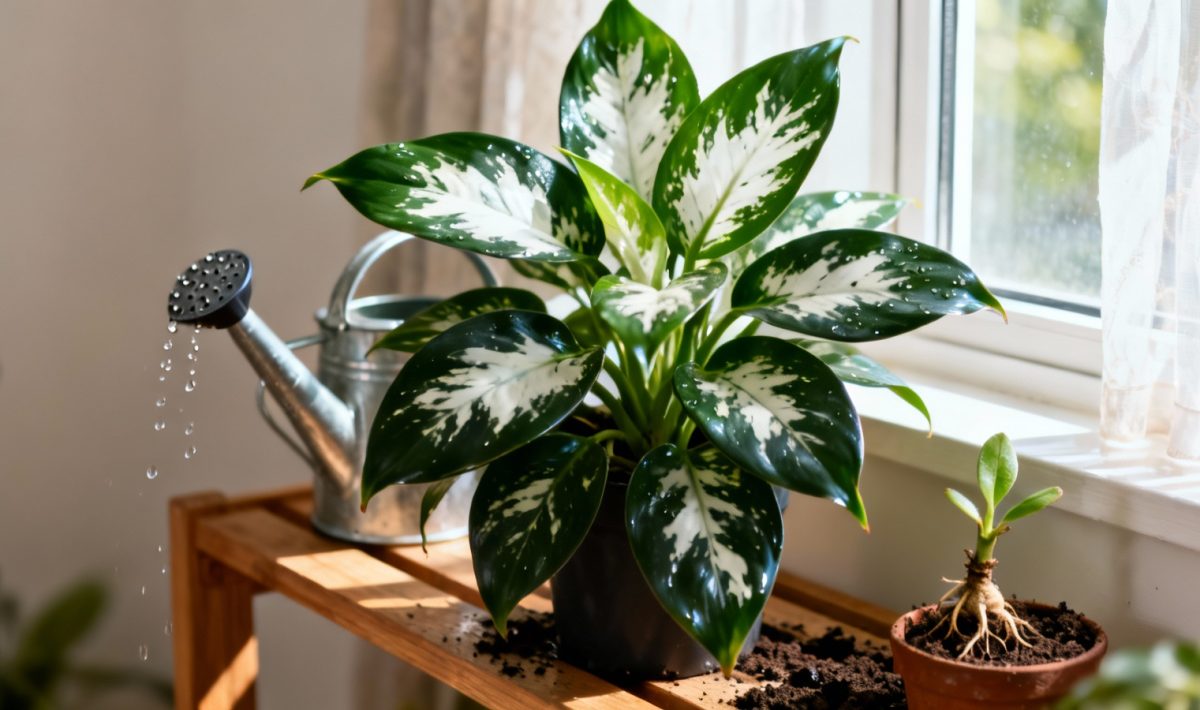
The Chinese evergreen, scientifically known as Aglaonema commutatum, has become one of the most beloved houseplants for good reason. This stunning tropical beauty brings vibrant foliage and remarkable resilience to any indoor space. Whether you’re a complete beginner or an experienced plant parent, understanding the proper care for this remarkable plant will reward you with years of lush, colorful growth.
Characteristics of the Chinese evergreen
Aglaonema commutatum stands out with its striking variegated leaves that showcase patterns in green, silver, and sometimes pink or cream. The plant typically reaches 12 to 24 inches in height when grown in a pot, making it perfect for tabletops or floor displays. Its thick, glossy leaves measure 6 to 10 inches long and emerge from sturdy stems that create a beautiful bushy appearance.
The foliage remains persistent throughout the year, earning its common name as an evergreen. Each leaf displays unique patterns that make every plant slightly different from the next. The growth rate is moderate, meaning you’ll see steady progress without the plant quickly outgrowing its space.
One important consideration is that Chinese evergreens are toxic to both humans and pets if ingested. The plant contains calcium oxalate crystals that can cause mouth irritation and digestive upset. Keep your Aglaonema in a safe location away from curious children and animals.
Optimal growing conditions for healthy plants
Chinese evergreens thrive in bright, indirect light conditions. Direct sunlight can scorch their beautiful leaves, while too little light may cause the vibrant patterns to fade. Place your plant near a north-facing window or a few feet away from east or west-facing windows for the best results.
These plants appreciate warm temperatures between 65°F and 80°F year-round. They’re quite sensitive to cold, so avoid placing them near drafty windows, air conditioning vents, or exterior doors. Humidity levels around 40-50% keep the leaves looking their best, though they can tolerate average household humidity.
The right soil mixture makes all the difference for your Aglaonema. Use a well-draining potting mix that contains peat moss or coconut coir. The soil should hold some moisture while allowing excess water to drain freely. A standard houseplant potting mix works well, or you can create your own blend with equal parts peat, perlite, and regular potting soil.
Good drainage is absolutely essential to prevent root rot. Ensure your pot has drainage holes, and consider adding a layer of small stones at the bottom. Just like care tips for oleander plants, proper drainage prevents most common problems.
Watering and maintenance essentials
Watering your Chinese evergreen correctly is crucial for its health and longevity. The key is to water thoroughly when the top inch of soil feels dry to the touch. This typically means watering every 7-10 days during the growing season and less frequently in winter.
When you do water, pour slowly until water begins to drain from the bottom holes. Allow the excess water to drain completely before returning the plant to its decorative pot or saucer. Never let your Aglaonema sit in standing water, as this quickly leads to root rot and other serious problems.
Spring and summer are the ideal times for fertilizing your Chinese evergreen. Use a balanced, water-soluble fertilizer diluted to half strength once a month during these active growing seasons. Avoid fertilizing in fall and winter when the plant’s growth naturally slows down.
Regular maintenance keeps your plant looking its absolute best. Wipe the leaves gently with a damp cloth every few weeks to remove dust and allow better light absorption. Remove any yellow or damaged leaves by cutting them at the base with clean scissors. This practice, similar to techniques used when growing cucumbers successfully in your garden, promotes healthier overall growth.
Propagation methods and techniques
Propagating your Chinese evergreen allows you to create new plants and share them with friends. The most reliable method is division, which works best when repotting an established plant in spring. Carefully remove the plant from its pot and gently separate the root system into sections, ensuring each division has both roots and stems.
Stem cutting is another effective propagation technique. Cut a healthy stem with at least two nodes, place it in water, and wait for roots to develop over 2-3 weeks. Once the roots reach about an inch long, transplant the cutting into moist potting mix. Keep the soil consistently moist but not waterlogged while the new plant establishes itself.
You can also try leaf cutting propagation, though this method requires more patience. Cut a healthy leaf with a portion of the stem attached and place it in water or directly in moist soil. Success rates vary, but with consistent care, you may see new growth after several weeks.
Young plants need extra attention during their first few months. Keep them in bright, indirect light and maintain consistent moisture levels. Avoid fertilizing newly propagated plants for at least 6-8 weeks to prevent root burn. Much like caring for other tropical houseplants such as the care guide for Philodendron ‘Birkin’, patience and consistency yield the best results.
Common problems and solutions
Yellow leaves often indicate overwatering or poor drainage. Check the soil moisture and adjust your watering schedule accordingly. Brown leaf tips usually mean low humidity or fluoride in tap water. Try using filtered water and increase humidity around the plant with a pebble tray or humidifier.
Pest issues occasionally arise, particularly with spider mites, mealybugs, or aphids. Inspect your plant regularly and treat any infestations immediately with insecticidal soap or neem oil. Quarantine affected plants to prevent spreading to other houseplants.
Leggy growth happens when plants don’t receive enough light. Move your Aglaonema to a brighter location or supplement with grow lights. Prune back long stems to encourage bushier growth and maintain the plant’s attractive shape.
Understanding these solutions helps maintain healthy plants, whether you’re caring for Chinese evergreens or other tropical species like how to care for Monstera obliqua. Consistent observation and quick action prevent most serious problems.
Seasonal care adjustments
Chinese evergreens benefit from slight care adjustments throughout the year. During spring and summer, increase watering frequency as the plant actively grows and may need water every 5-7 days. This is also the best time for repotting if the plant has outgrown its current container.
Fall and winter require a more restrained approach. Reduce watering to every 10-14 days and stop fertilizing completely. The plant’s metabolism slows during shorter days and cooler temperatures. Monitor humidity levels more closely during winter when indoor heating can dry out the air significantly.
Consider rotating your plant quarterly to ensure even growth on all sides. This simple practice, beneficial for many houseplants including those detailed in guides about growing southern magnolia trees, prevents lopsided development and maintains an attractive shape.
Advanced care tips for thriving plants
Temperature consistency plays a crucial role in Chinese evergreen health. Avoid placing plants near heat sources, cold windows, or areas with frequent temperature fluctuations. A consistent environment promotes steady growth and vibrant leaf coloration.
Repotting every 2-3 years refreshes the soil and provides room for growth. Choose a pot only slightly larger than the current one, as Chinese evergreens prefer being somewhat rootbound. Fresh potting mix provides renewed nutrients and better drainage.
Air circulation benefits your plant’s overall health while preventing fungal issues. Ensure good airflow around your Aglaonema without creating cold drafts. A small fan on low speed can improve air movement in stuffy rooms. These principles apply to many indoor plants, including the techniques used for tips for growing hardy fuchsia in appropriate climates.
With proper care and attention, your Chinese evergreen will reward you with years of beautiful foliage and steady growth. Remember that consistency in watering, appropriate lighting, and regular maintenance are the keys to success. These resilient plants make excellent choices for anyone wanting to bring tropical beauty indoors while enjoying a relatively low-maintenance houseplant experience.

Allan is a lifelong gardening enthusiast who still gets excited when the first seedlings pop up in spring. With a deep love for nature and a hands-in-the-soil approach, he shares practical tips, plant discoveries, and clever tricks picked up over years of digging, planting, and observing. Whether you’re a new gardener or have a shed full of tools, Allan writes like a neighbor who’s always happy to swap cuttings and stories over the fence.
You can find more about Allan’s work on Malt or connect with him on LinkedIn.


