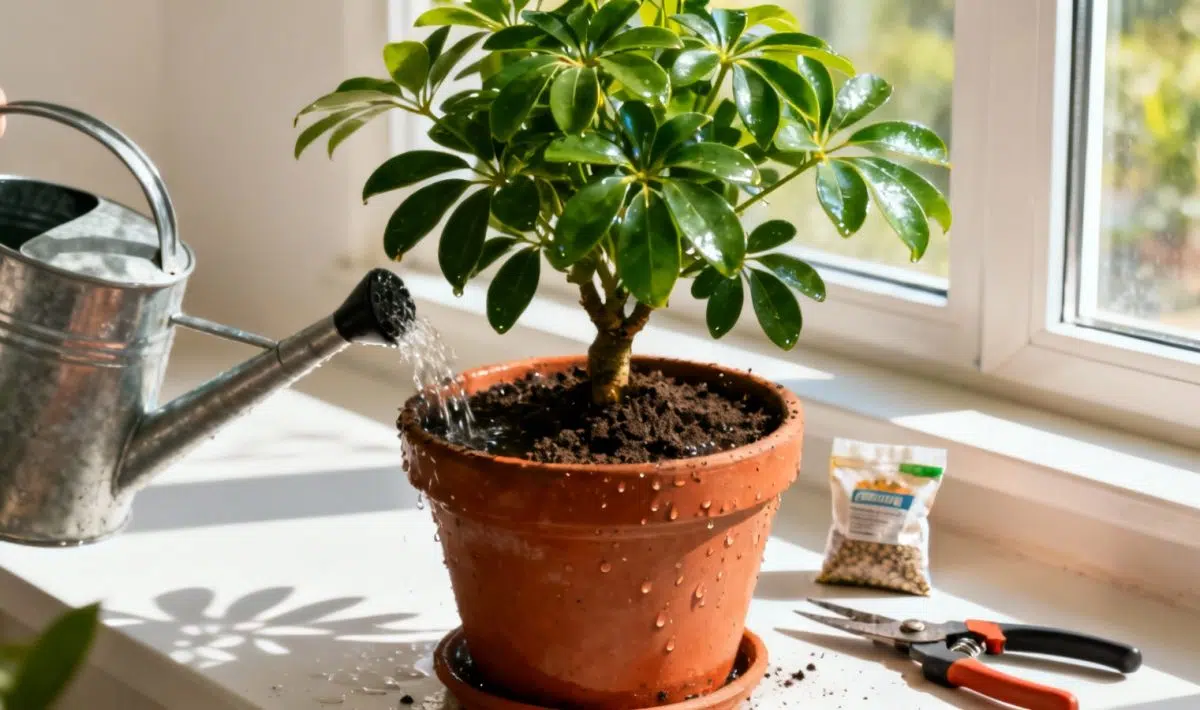
Dwarf umbrella tree care: watering, light requirements and growing tips
The Schefflera arboricola, commonly known as the dwarf umbrella tree, has become one of the most beloved houseplants for good reason. This tropical beauty brings a touch of elegance to any indoor space with its glossy, umbrella-shaped leaf clusters that seem to dance in the light. What makes this plant particularly special is its forgiving nature – it’s practically designed for busy plant parents who want lush greenery without the stress.
This compact version of the umbrella tree typically reaches 3-6 feet indoors, making it perfect for corner spaces or as a statement piece. The distinctive palmate leaves grow in clusters of 7-9 leaflets, creating that characteristic umbrella appearance that gives the plant its common name. Each leaf gleams with a natural sheen that catches light beautifully throughout the day.
Native to Taiwan and southern China, this tropical plant has adapted remarkably well to indoor conditions. The stems develop a woody appearance as the plant matures, giving it an almost tree-like structure that adds architectural interest to your space. Growth tends to be most vigorous during spring and summer months when conditions are optimal.
What’s fascinating about the Schefflera is its ability to adapt its growth pattern based on available space and light. In bright conditions, it develops a fuller, bushier appearance, while lower light encourages more upward growth as the plant reaches for available illumination.
Essential watering and humidity needs
Getting the watering schedule right is crucial for healthy Schefflera growth. The golden rule is to allow the top inch of soil to dry between waterings – typically every 7-10 days during the growing season. However, rather than sticking rigidly to a schedule, it’s better to check the soil moisture regularly by sticking your finger into the potting mix.
During winter months, reduce watering frequency as the plant’s growth slows and water needs decrease. Overwatering is one of the most common mistakes, leading to root rot and yellowing leaves. The plant prefers thorough, deep watering sessions rather than frequent light sprinklings that only wet the surface.
While Scheffleras tolerate average household humidity levels, they appreciate a bit more moisture in the air. You can increase humidity by placing the pot on a pebble tray filled with water or grouping it with other plants. Just like when you learn about Madagascar dragon tree care, maintaining proper humidity helps prevent leaf drop and keeps the foliage looking its best.
Optimal growing conditions and placement
Bright, indirect light is the sweet spot for Schefflera arboricola. Place it near an east or west-facing window where it receives plenty of filtered sunlight without the harsh midday rays that could scorch the leaves. Too little light results in leggy growth and pale foliage, while too much direct sun can cause leaf burn.
Temperature consistency is important for healthy growth. These plants thrive in temperatures between 65-75°F (18-24°C) and don’t appreciate sudden temperature fluctuations. Keep your Schefflera away from heating vents, air conditioning units, and drafty windows that could stress the plant.
The beauty of this plant lies in its adaptability – it can tolerate lower light conditions better than many tropical houseplants, though growth will be slower. This makes it an excellent choice for offices or rooms with north-facing windows where other plants might struggle.
Soil and fertilizer requirements
A well-draining potting mix is essential for healthy root development. Standard houseplant potting soil works perfectly, but you can improve drainage by adding perlite or bark chips. The key is ensuring water doesn’t sit around the roots, which can quickly lead to problems.
During the growing season (spring through early fall), feed your Schefflera monthly with a balanced liquid fertilizer diluted to half strength. Over-fertilizing can cause rapid, weak growth that’s more susceptible to pests and diseases. In winter, reduce or eliminate fertilizing as the plant’s growth naturally slows.
Propagating Schefflera arboricola is surprisingly straightforward and rewarding. The best time to take cuttings is during spring or early summer when the plant is actively growing. Look for healthy stems with several leaf nodes – these will become your new plants.
Cut 4-6 inch segments from healthy stems, making sure each cutting has at least two leaf nodes. Remove the lower leaves to prevent rot, leaving just the top cluster. You can root these cuttings in water or directly in moist potting mix – both methods work well.
Water propagation allows you to watch root development, which typically takes 2-4 weeks. Once roots reach about an inch long, transplant into small pots with fresh potting soil. Keep the newly potted plants in bright, indirect light and maintain consistent moisture while they establish.
Another propagation method involves air layering, which works particularly well for larger, mature plants. This technique allows you to create new plants while keeping the parent plant intact, perfect for those who want to expand their collection without sacrificing their original specimen.
Common problems and solutions
Yellowing leaves often indicate watering issues – either too much or too little water. Check the soil moisture and adjust your watering schedule accordingly. If the soil feels constantly wet, reduce watering frequency and ensure proper drainage. Dry, crispy soil calls for more consistent watering.
Leaf drop is another common concern, usually caused by environmental stress such as sudden temperature changes, drafts, or inadequate light. Once you address the underlying cause, the plant typically recovers quickly and produces new growth.
Spider mites can occasionally become problematic, especially in dry indoor conditions. Regular misting and wiping the leaves with a damp cloth helps prevent infestations. If you notice fine webbing or stippled leaves, treat immediately with insecticidal soap or neem oil.
Scale insects may also appear as small, brown bumps on stems and leaves. Remove them manually with a cotton swab dipped in rubbing alcohol, then treat the entire plant with horticultural oil to prevent reinfestation.
Repotting and maintenance
Young Scheffleras grow quickly and typically need repotting annually, while mature plants can go 2-3 years between repottings. Signs it’s time for a larger pot include roots growing through drainage holes, water running straight through without being absorbed, or significantly slowed growth despite proper care.
Choose a pot only one size larger than the current container – too much extra space can lead to waterlogged soil and root problems. Fresh potting mix provides nutrients and improved drainage, giving your plant a healthy foundation for continued growth.
Regular pruning helps maintain shape and encourages bushier growth. Remove any dead, damaged, or yellowing leaves promptly, and pinch back growing tips to promote branching. This maintenance keeps your plant looking full and healthy year-round.
It’s important to note that Schefflera arboricola contains compounds that can be toxic to cats and dogs if ingested. The plant produces calcium oxalate crystals that can cause mouth irritation, difficulty swallowing, and digestive upset in pets.
If you have curious pets, consider placing your Schefflera in locations they can’t easily reach, such as on tall plant stands or hanging from the ceiling. Watch for any signs of chewing on the leaves and contact your veterinarian if you suspect your pet has ingested any part of the plant.
Despite this consideration, many pet owners successfully grow Scheffleras by taking appropriate precautions. The key is understanding your pet’s behavior and creating a safe environment for both your plants and your furry friends.
Seasonal care adjustments
Understanding seasonal changes helps you provide optimal care throughout the year. During spring and summer, your Schefflera enters its active growing phase, requiring more frequent watering and monthly fertilization to support new growth.
As autumn approaches and daylight hours decrease, gradually reduce watering frequency and stop fertilizing. The plant naturally slows its growth during winter months, requiring less water and nutrients. This dormancy period is completely normal and healthy.
Winter care focuses on maintaining stable conditions rather than promoting growth. Keep the plant away from cold drafts and heating sources that could cause stress. Just as you might understand how to care for cucumbers requires seasonal adjustments, your Schefflera benefits from adapted care throughout the year.
When spring returns, you’ll notice new growth beginning to emerge. This is the perfect time to resume regular fertilization, increase watering frequency, and consider repotting if needed. The cycle continues, bringing fresh growth and renewed beauty to your indoor garden.
Advanced care tips
For those wanting to push their Schefflera to its full potential, consider rotating the pot quarter-turns weekly to ensure even growth on all sides. This prevents the plant from leaning toward the light source and maintains its balanced appearance.
Leaf cleaning isn’t just aesthetic – it helps the plant photosynthesize more efficiently. Wipe leaves monthly with a damp cloth to remove dust buildup. This simple maintenance keeps the foliage glossy and healthy while allowing maximum light absorption.
Training your Schefflera into a tree-like form requires selective pruning of lower branches and side shoots, encouraging upward growth. Alternatively, regular pinching of growing tips creates a fuller, bushier appearance that works well in smaller spaces.
Much like when you get insights on honey locust care, advanced techniques can help you achieve specific growth patterns and maximize your plant’s ornamental value.
Creating the perfect environment
Success with Schefflera arboricola comes down to creating consistent, appropriate conditions rather than perfect ones. These adaptable plants tolerate minor imperfections in care while rewarding good practices with vigorous growth and beautiful foliage.
Consider your Schefflera as a long-term companion that will grow and change with you. With proper care, these plants can live for decades, becoming impressive specimens that serve as living sculptures in your home.
The satisfaction of watching your Schefflera develop from a small plant into a substantial indoor tree is immense. Each new leaf cluster represents success in your plant care journey, building confidence for more challenging species in the future.
Whether you’re just starting your houseplant journey or you’re experienced like someone who knows how to find tips for growing China rose, the Schefflera arboricola offers both beauty and satisfaction that makes it a worthwhile addition to any plant collection.
Allan is a lifelong gardening enthusiast who still gets excited when the first seedlings pop up in spring. With a deep love for nature and a hands-in-the-soil approach, he shares practical tips, plant discoveries, and clever tricks picked up over years of digging, planting, and observing. Whether you’re a new gardener or have a shed full of tools, Allan writes like a neighbor who’s always happy to swap cuttings and stories over the fence.
You can find more about Allan’s work on Malt or connect with him on LinkedIn.