
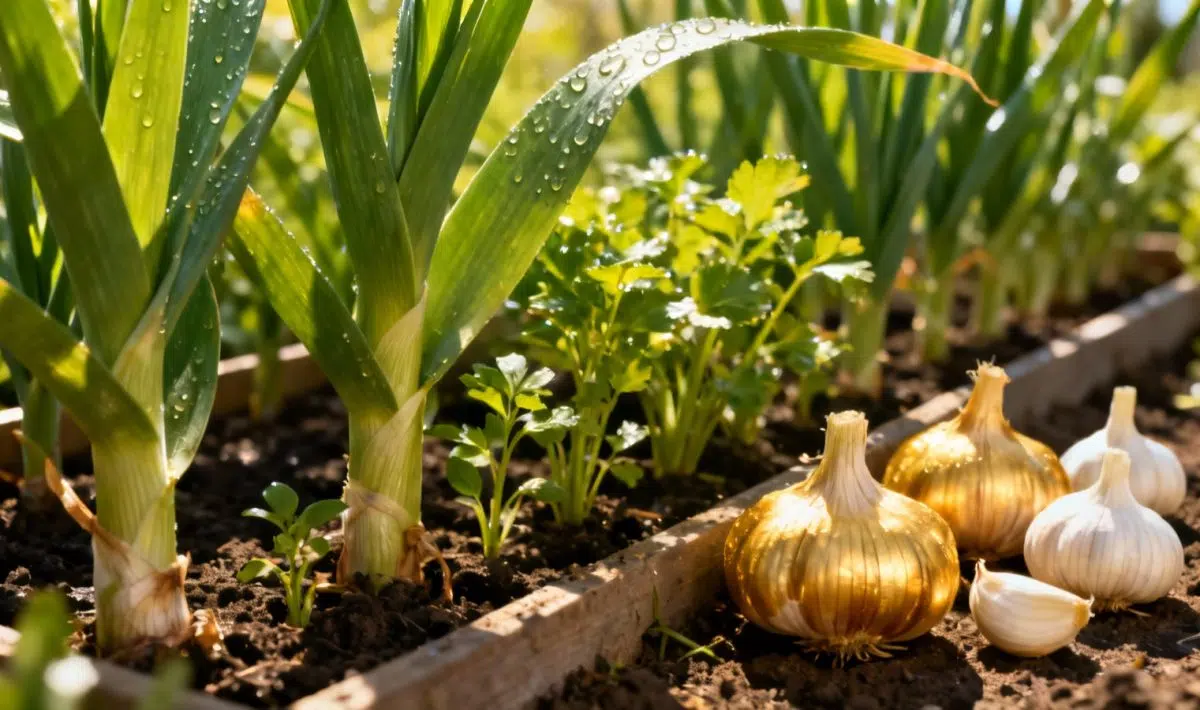
Understanding garlic’s sunlight requirements
When it comes to growing garlic successfully, sunlight plays a crucial role in determining both the quality and size of your bulbs. Garlic needs approximately 6 to 8 hours of direct sunlight daily for optimal development, particularly during the spring bulb formation phase. Without adequate light exposure, you’ll notice significantly smaller bulbs and reduced flavor intensity in your harvest.
The relationship between light and garlic production is quite straightforward. During photosynthesis, garlic plants convert sunlight into energy that directly supports bulb development. Plants receiving less than 6 hours of daily sun often produce bulbs that are 30% smaller than those grown in optimal conditions. This dramatic difference makes proper light planning essential for any successful garlic crop.
Temperature also affects how garlic uses sunlight. While the plant thrives in full sun, excessive heat combined with intense light can stress the plant and reduce quality. The sweet spot lies between adequate sunlight exposure and maintaining reasonable soil temperature, typically achieved through proper timing and variety selection.
Different garlic varieties and their light needs
Not all garlic types have identical sunlight requirements, though most share similar basic needs. Spring garlic varieties, often called artichoke types, perform best with 6 to 8 hours of full sunlight daily. These varieties are particularly well-suited for temperate climates where consistent sun exposure is available throughout the growing season.
Winter garlic varieties, including porcelain types, can tolerate slightly less direct sunlight, typically requiring 5 to 7 hours daily. These hardy varieties often perform well in regions with partial shade conditions, making them perfect for gardeners with limited sun exposure. Much like how sycamore trees prefer sunny locations, most garlic varieties show their best performance when given ample light throughout the day.
For container gardening enthusiasts, compact garlic varieties need about 4 to 6 hours of morning sunlight. These plants can thrive on patios or balconies where full-day sun isn’t available. The key is ensuring they receive the most intense light during the morning hours when photosynthesis is most active.
Black garlic and specialty varieties
Black garlic, while typically produced through post-harvest processing, starts with fresh garlic that requires the same sunlight conditions as standard varieties. The quality of the original bulbs directly impacts the final black garlic product, making proper sun exposure during growth essential for achieving the best flavor and texture in the finished product.
When growing garlic for black garlic production, focus on varieties that develop intense flavor profiles under full sun conditions. These typically include hardneck varieties that benefit from the temperature fluctuations and bright light exposure found in many regions.
Optimal planting conditions for maximum sun exposure
Choosing the right location for your garlic is crucial for ensuring adequate sunlight throughout the growing season. Select areas that receive morning sun first, as this helps dry dew quickly and reduces disease pressure while providing essential early-day energy for photosynthesis.
Avoid planting garlic near structures or plants that will shade the area as the season progresses. Trees that leaf out in spring can significantly reduce light availability just when your garlic needs it most for bulb development. Similar to how cucumbers thrive in full sunlight, garlic performs best when given unobstructed access to direct sun throughout the day.
Soil preparation also affects how well garlic uses available sunlight. Well-draining soil prevents waterlogged conditions that can stress plants and reduce their ability to efficiently process light energy. Dark, rich soil absorbs and retains heat better, creating optimal root zone conditions that support healthy top growth and efficient light utilization.
Seasonal considerations for light exposure
During autumn planting, position garlic where it will receive maximum winter and spring sun exposure. Remember that the sun’s angle changes dramatically between seasons, and areas that seem sunny in fall may become shaded in spring when bulb formation occurs.
Spring-planted garlic requires immediate access to strong sunlight since it has a shorter growing season. These plants must quickly establish themselves and begin active bulb development, making consistent daily light exposure absolutely critical for success.
Signs of inadequate sunlight and solutions
Recognizing when your garlic isn’t receiving enough sunlight helps you take corrective action before harvest time. Plants grown in insufficient light often develop tall, spindly growth as they stretch toward available light sources. The leaves may appear lighter green than those grown in full sun, indicating reduced chlorophyll production.
Poor bulb development is the most obvious sign of inadequate sunlight. Bulbs may remain small, fail to separate into distinct cloves, or develop loose, poorly formed structure. Just as elephant ear needs ample sunlight for proper leaf development, garlic requires consistent light for proper bulb formation.
If you notice these issues early in the season, consider relocating container-grown garlic to sunnier spots. For in-ground plants, pruning nearby vegetation or removing temporary shade sources can help improve light availability. However, major changes should be made carefully to avoid shocking the plants.
Maximizing available light
Reflective mulches can help increase light availability for garlic plants in partially shaded conditions. Light-colored materials placed around plants reflect additional sunlight onto the lower leaves, improving overall photosynthesis efficiency without requiring relocation.
Companion planting with low-growing herbs that don’t compete for light can also help. Avoid tall companions that might shade garlic plants, much like how riverbank grapes need plenty of sunshine and don’t perform well when overshadowed by larger plants.
Timing your garlic harvest for best results
Proper timing of harvest relies heavily on how well your garlic has utilized available sunlight throughout the growing season. Plants that received adequate light will show clear signs when ready for harvest, including browning of the lower leaves while upper leaves remain green.
The bulb wrapper should feel papery and tight when garlic is ready for harvest. Plants grown with insufficient sunlight may not develop this characteristic wrapper properly, making timing more difficult to judge. Well-lit plants typically produce more reliable harvest indicators.
Store harvested garlic properly to preserve the quality you’ve achieved through proper sunlight management. Cure bulbs in a warm, dry, well-ventilated area for several weeks before long-term storage. High-quality bulbs from well-lit plants generally store better and maintain their flavor longer than those grown in suboptimal conditions.
Planning for next season’s success
Use this season’s observations to plan improvements for next year’s garlic crop. Note which areas of your garden provided the best light exposure and adjust your planting plan accordingly. Consider how changing vegetation or new structures might affect sunlight availability.
Keep records of variety performance in different light conditions. Some cultivars may surprise you with their adaptability to less-than-ideal conditions, while others may require perfect light exposure to produce quality bulbs. Much like how bottlebrush plants love sunny spots, finding the right match between variety and location is key to consistent success.
Remember that successful garlic production combines proper sunlight exposure with good soil preparation, adequate nutrition, and appropriate variety selection. While sunlight is crucial, it works best when all growing conditions are optimized together. Similar to how cinquefoil flourishes in bright light, garlic reaches its full potential when given the complete package of ideal growing conditions, with sunlight serving as the foundation for healthy, flavorful bulb development.

Allan is a lifelong gardening enthusiast who still gets excited when the first seedlings pop up in spring. With a deep love for nature and a hands-in-the-soil approach, he shares practical tips, plant discoveries, and clever tricks picked up over years of digging, planting, and observing. Whether you’re a new gardener or have a shed full of tools, Allan writes like a neighbor who’s always happy to swap cuttings and stories over the fence.
You can find more about Allan’s work on Malt or connect with him on LinkedIn.


