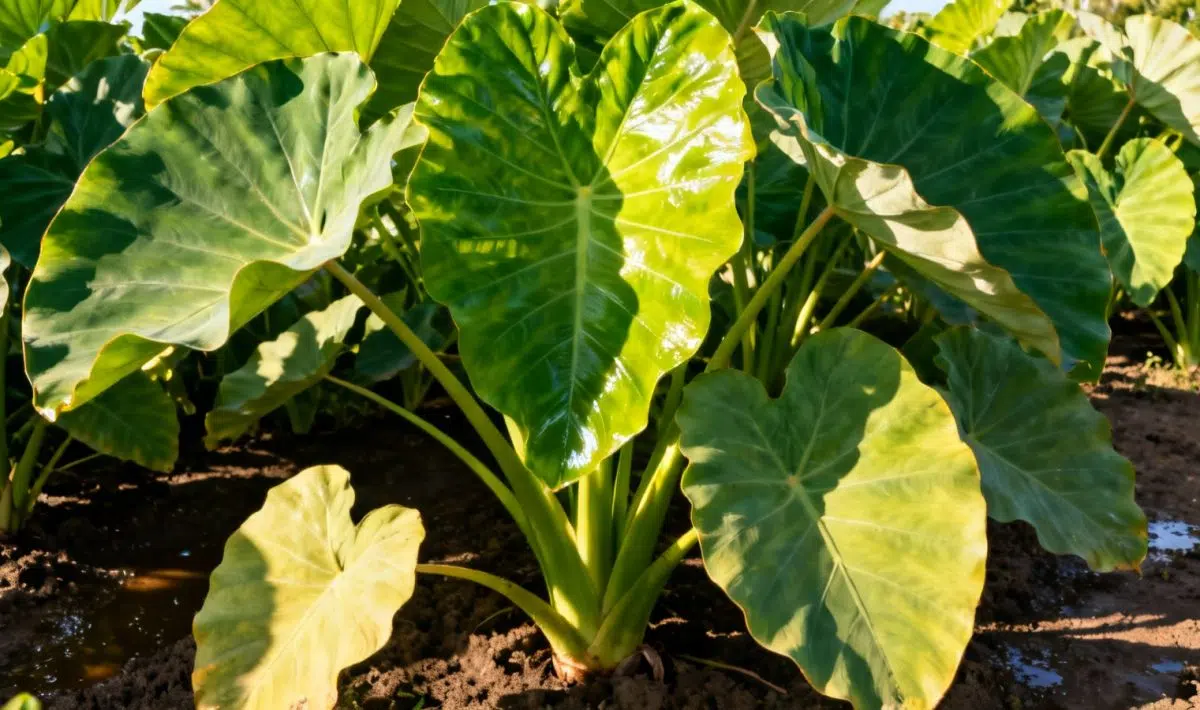
Giant taro (Alocasia macrorrhizos) has captured the hearts of plant enthusiasts worldwide with its magnificent elephant-ear leaves. This tropical species originated in the humid forest understories, where dappled sunlight filters through dense canopy layers. Understanding how much sunlight Giant taro needs is crucial for successful cultivation, whether you’re growing them indoors or in your garden.
These remarkable plants have adapted to thrive in environments with filtered light rather than harsh, direct exposure. The natural habitat of Giant taro provides important clues about their light preferences – they’re accustomed to receiving gentle, consistent illumination throughout the day rather than intense bursts of sunlight.
Optimal sunlight requirements for Giant taro plants
Giant taro plants perform best with 3 to 6 hours of bright, indirect light daily. This tropical species can tolerate a wide range of lighting conditions, from partial shade to bright filtered light, making them surprisingly adaptable for home cultivation. The key is providing consistent, gentle illumination rather than harsh direct exposure.
For indoor cultivation, position your Giant taro near east or north-facing windows where they can receive steady morning light without afternoon intensity. Many growers successfully cultivate these plants under artificial lighting, using LED grow lights positioned 12-18 inches above the foliage during winter months when natural light diminishes.
Light intensity and duration specifics
The optimal light intensity for Giant taro reaches approximately 50,000 lux, though these adaptable plants can function well in much lower conditions. Indoor plants typically receive between 1,000-3,000 lux near windows, which is sufficient for healthy growth when supplemented with proper care.
Duration matters as much as intensity – consistent 12-14 hour photoperiods work well for indoor specimens. Much like how sunlight requirements for pineapple plants vary based on growing conditions, Giant taro adapts its metabolism according to available light resources.
Seasonal lighting adjustments
During spring and summer months, Giant taro can handle slightly more direct light, especially morning sun. However, protect them from intense afternoon rays which can scorch their broad leaves. Position outdoor plants where they receive morning sunlight but are shielded from harsh midday exposure.
Winter cultivation requires different strategies, particularly in temperate zones. Supplement natural light with grow lights, maintaining consistent photoperiods to prevent dormancy. This approach ensures continuous growth throughout shorter daylight periods.
Signs of improper lighting conditions
Recognizing lighting problems early helps maintain healthy Giant taro plants. Too little light manifests as elongated stems, pale green coloration, and smaller leaves than normal. Plants stretching toward light sources indicate insufficient illumination levels.
Conversely, excessive light exposure causes leaf edges to brown, yellowing of older foliage, and stunted growth. Direct afternoon sun can create brown patches on leaves, particularly damaging the plant’s photosynthetic capacity. Monitor your plant’s response and adjust positioning accordingly.
Indoor positioning strategies
Place Giant taro 3-6 feet from bright windows to ensure adequate light without overwhelming intensity. Rotate plants weekly to promote even growth patterns and prevent leaning toward light sources. Consider using sheer curtains to filter harsh sunlight while maintaining brightness levels.
For basement or low-light areas, full-spectrum LED lights provide excellent alternatives. Position lights 12-18 inches above the plant canopy, running them 12-14 hours daily. This setup mimics natural lighting patterns while accommodating indoor growing constraints.
Balancing light with other growing conditions
Light requirements interconnect with humidity, temperature, and soil moisture levels. Giant taro plants receiving adequate light can process nutrients more efficiently, requiring slightly more frequent watering and feeding schedules. Proper lighting enhances the plant’s ability to utilize available resources effectively.
Temperature control becomes crucial when providing optimal lighting. Similar to how optimal sunlight for growing watermelon requires heat management, Giant taro benefits from temperatures between 65-80°F alongside proper illumination.
Companion planting considerations
When grouping plants together, consider their combined lighting needs. Giant taro pairs well with other shade-tolerant tropicals like pothos or peace lilies. This arrangement creates beneficial microclimates while maximizing available light resources.
Avoid placing light-hungry plants directly beside Giant taro, as competition for optimal positioning may compromise both plants’ health. Instead, create layered arrangements with varying height and light requirements to optimize space utilization.
Troubleshooting common lighting issues
When Giant taro fails to thrive despite proper care, lighting often proves the culprit. Measure actual light levels using smartphone apps or light meters to determine if your plant receives adequate illumination. Many indoor spaces provide less light than gardeners estimate.
Adjustment strategies include relocating plants seasonally, adding reflective surfaces to increase available light, or investing in supplemental lighting systems. Just as sunlight needs of spearmint plants require specific attention, Giant taro responds positively to thoughtful lighting management.
Artificial lighting solutions
LED grow lights offer energy-efficient alternatives for insufficient natural light situations. Choose full-spectrum options that provide both blue and red wavelengths essential for healthy growth. Position lights to cover the entire plant canopy evenly, avoiding hot spots that might damage foliage.
Timer-controlled lighting systems ensure consistent photoperiods while reducing energy consumption. Set timers for 12-14 hour cycles, adjusting intensity based on seasonal changes and plant response. This automated approach maintains optimal conditions year-round.
Outdoor cultivation considerations
Outdoor Giant taro cultivation requires careful site selection to provide appropriate light conditions. Choose locations offering morning sun with afternoon shade, particularly in regions with intense summer heat. Eastern exposures typically provide ideal lighting patterns for these tropical plants.
Protection from wind and extreme weather becomes important when growing outdoors. Unlike hardy natives such as those requiring healthy growth conditions for hackberry, Giant taro needs sheltered positions that maintain consistent environmental conditions.
Climate zone adaptations
In tropical and subtropical zones, Giant taro can tolerate slightly more direct sunlight due to higher humidity levels. However, even in ideal climates, protection from intense midday sun prevents stress and maintains optimal growth rates.
Temperate zone cultivation typically requires container growing with seasonal relocation. Move plants indoors before temperatures drop below 60°F, maintaining consistent lighting conditions through winter months. This approach extends growing seasons while protecting valuable specimens.
Maximizing growth through proper light management
Successful Giant taro cultivation depends on understanding that these plants evolved in forest understories where consistent, filtered light provided optimal growing conditions. Replicating these conditions in home environments requires attention to positioning, duration, and intensity factors.
Regular monitoring and adjustment ensure your Giant taro receives appropriate illumination throughout changing seasons. Much like managing ribwort plantain sunlight requirements, success comes through observing plant responses and making necessary modifications.
Remember that lighting represents just one component of comprehensive Giant taro care. Combining proper illumination with appropriate humidity, temperature, and nutrition creates conditions where these magnificent tropical plants can truly flourish in your home or garden space.
Allan is a lifelong gardening enthusiast who still gets excited when the first seedlings pop up in spring. With a deep love for nature and a hands-in-the-soil approach, he shares practical tips, plant discoveries, and clever tricks picked up over years of digging, planting, and observing. Whether you’re a new gardener or have a shed full of tools, Allan writes like a neighbor who’s always happy to swap cuttings and stories over the fence.
You can find more about Allan’s work on Malt or connect with him on LinkedIn.