
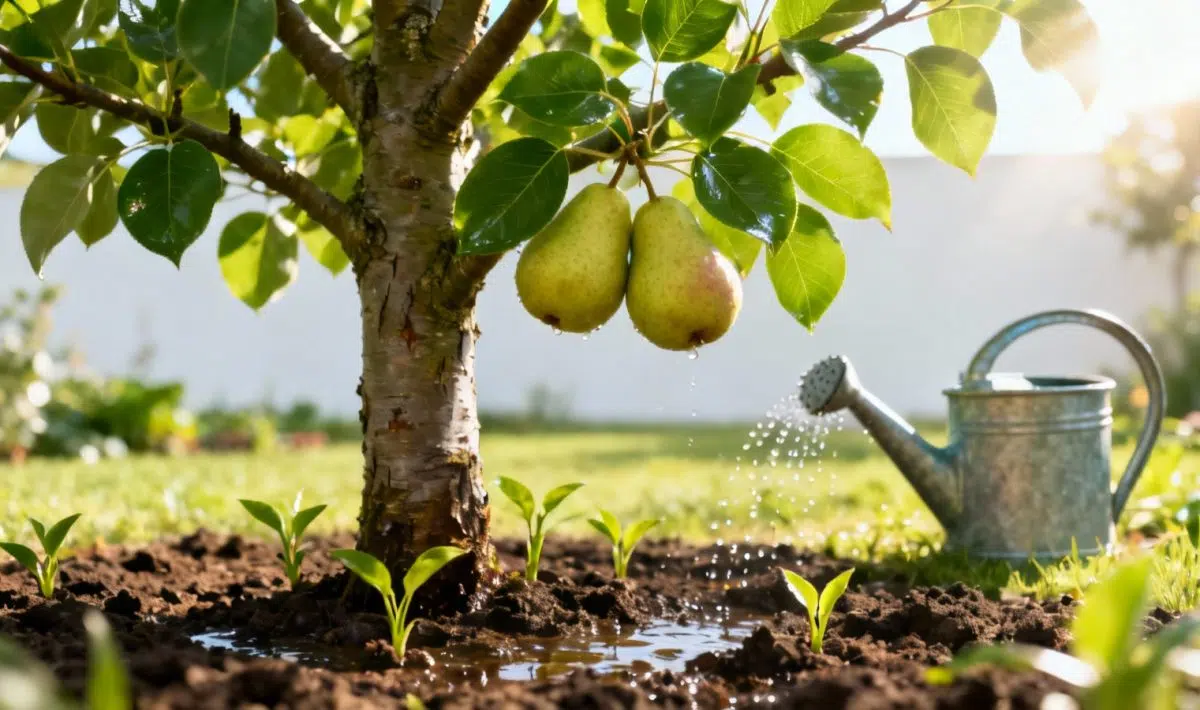
Growing a thriving common pear tree requires more than just planting and hoping for the best. The key to success lies in understanding your tree’s water needs, which change throughout its growth cycle. Just like you wouldn’t water a delicate houseplant the same way you’d water a drought-resistant succulent, your pear tree has specific requirements that demand attention.
Understanding your pear tree’s water requirements
Your common pear tree’s thirst varies dramatically based on several factors. During the first three years after planting, when the root system is still establishing, you’ll need to water more frequently than with a mature tree. Young trees require consistent moisture to develop strong foundations, while established trees can handle brief dry periods.
Climate plays a crucial role in determining how often you should water. In hot, dry conditions, your tree will need more frequent watering, while cool, humid weather reduces water demands. Soil type matters too – sandy soils drain quickly and require more frequent watering, while clay soils retain moisture longer but can become waterlogged if you overdo it.
Signs that your pear tree needs water include wilting leaves, especially during morning hours when they should be turgid. However, don’t wait for these stress signals. Proactive watering based on soil moisture is what separates successful growers from those who struggle with poor fruit production.
Seasonal watering patterns for optimal growth
Spring marks the beginning of active growth when your tree emerges from winter dormancy. During this period, water approximately once per week with deep, thorough soakings rather than frequent light sprinklings. This encourages deep root development and prepares your tree for the growing season ahead.
Summer brings the most critical watering period, especially when fruits are forming. From May through August, you should water twice weekly if natural rainfall is insufficient. The tree’s water needs peak during fruit development – inadequate moisture at this stage results in smaller, lower-quality pears that may drop prematurely.
Fall watering gradually decreases as temperatures cool and growth slows. However, don’t completely stop watering until the tree enters dormancy. A well-hydrated tree enters winter in better condition and suffers less stress from freezing temperatures.
How often should you water your common pear based on tree age
Newly planted trees demand the most attention during their first growing season. Water these young trees every 3-4 days, providing approximately 15 liters per watering session. Create a shallow basin around the base to prevent runoff and ensure water penetrates the root zone effectively.
Trees aged 2-5 years need watering twice weekly during active growth periods. As the root system expands, you can water less frequently but should increase the volume. Mature trees (over 5 years) typically require weekly watering during dry spells, though they’re more tolerant of occasional drought stress.
Like other plants that require careful moisture management, understanding when to adjust your watering schedule is crucial. For example, you might want to water your common mallow properly using similar deep watering principles that work well for fruit trees.
Best watering techniques for pear trees
The timing of your watering sessions affects their effectiveness significantly. Early morning watering is ideal because it allows plants to absorb moisture before heat stress begins, while evening watering can promote fungal diseases if foliage remains wet overnight.
Drip irrigation systems provide the most efficient water delivery, applying moisture slowly and directly to the root zone. Soaker hoses offer a more affordable alternative that achieves similar results. Both methods minimize water waste and reduce the risk of foliar diseases.
When hand-watering, use a slow, steady stream directed at the soil rather than the leaves. Apply water in a circle extending from the trunk to just beyond the drip line, where most feeder roots are located. This ensures even distribution and prevents dry spots that can stress the tree.
Recognizing and preventing common watering mistakes
Overwatering causes just as many problems as underwatering, yet it’s surprisingly common among well-intentioned gardeners. Symptoms include yellowing leaves, poor fruit set, and increased susceptibility to root rot diseases. Waterlogged soil prevents proper oxygen exchange at the root level, essentially suffocating your tree.
Shallow, frequent watering encourages surface root development, making trees more vulnerable to drought stress. Instead of daily light sprinklings, choose deep, less frequent watering sessions that encourage roots to grow downward where soil moisture is more stable.
Inconsistent watering creates stress that affects fruit quality and tree health. Establishing a regular schedule helps your tree adapt and thrive, though you should always adjust based on weather conditions and soil moisture levels.
Supporting your pear tree beyond basic watering
While proper watering forms the foundation of good pear tree care, other factors contribute to optimal health and fruit production. Mulching around the base helps retain soil moisture, reduces competition from weeds, and moderates soil temperature fluctuations throughout the growing season.
Soil drainage is equally important as watering frequency. Poor drainage can negate even the most careful watering schedule, so ensure your planting site doesn’t collect standing water. If drainage is problematic, consider raised beds or soil amendments to improve conditions.
Just as you might ensure healthy blooms for peonies through proper care techniques, your pear tree benefits from comprehensive attention that goes beyond watering alone. Regular pruning, appropriate fertilization, and pest management all contribute to a healthy, productive tree.
Monitoring soil moisture effectively
Learning to assess soil moisture accurately prevents both under and overwatering problems. Insert a long screwdriver or soil probe 6-8 inches deep near your tree. If it penetrates easily, soil moisture is adequate; resistance indicates dry conditions that require watering.
Digital moisture meters provide more precise readings, though they’re not essential for successful growing. Many experienced gardeners rely on visual cues and feel, developing an intuitive sense for when their trees need water based on years of observation.
The “finger test” works well for smaller trees – simply dig down 2-3 inches near the root zone. If soil feels dry at this depth, it’s time to water. This method helps you avoid the common mistake of watering based solely on surface appearance, which can be misleading.
Adapting to seasonal changes and weather patterns
Weather patterns vary from year to year, requiring flexible watering approaches rather than rigid schedules. Unusually hot, dry summers may demand more frequent watering, while cool, wet periods require reduced irrigation to prevent problems.
Rainy spells don’t automatically eliminate watering needs. Heavy downpours often run off quickly without penetrating deeply, while light, steady rains may provide better soil moisture than initially apparent. Monitor conditions rather than assuming precipitation meets all water requirements.
Similarly, understanding the watering needs of other plants in your garden can provide valuable insights. For instance, learning about optimal growth for common dandelions helps you recognize how different plants respond to moisture levels, improving your overall gardening skills.
When pear trees show signs of stress despite regular watering, the problem often lies in technique rather than frequency. Runoff from sloped terrain prevents proper water infiltration, while compacted soil around the base can create similar issues even on level ground.
Root competition from nearby plants can steal moisture intended for your tree. Large trees, especially those with extensive root systems, may outcompete younger pear trees for available water. Consider this when planning your landscape and adjust watering accordingly.
Disease problems sometimes masquerade as watering issues. Fire blight, a common pear tree disease, can cause sudden wilting that resembles drought stress. Learning to distinguish between water stress and disease symptoms helps you choose appropriate treatment strategies.
Remember that other plants in your garden may have different water requirements. For example, herbs like those requiring techniques similar to how you care for your asparagus fern need different moisture levels than fruit trees, so plan your watering zones accordingly.
Success with pear trees comes from consistent attention to their water needs throughout the growing season. By understanding these requirements and adapting your care routine to match changing conditions, you’ll enjoy healthier trees and better fruit harvests year after year. The investment in proper watering technique pays dividends in the form of abundant, high-quality pears that make all your efforts worthwhile.

Allan is a lifelong gardening enthusiast who still gets excited when the first seedlings pop up in spring. With a deep love for nature and a hands-in-the-soil approach, he shares practical tips, plant discoveries, and clever tricks picked up over years of digging, planting, and observing. Whether you’re a new gardener or have a shed full of tools, Allan writes like a neighbor who’s always happy to swap cuttings and stories over the fence.
You can find more about Allan’s work on Malt or connect with him on LinkedIn.


