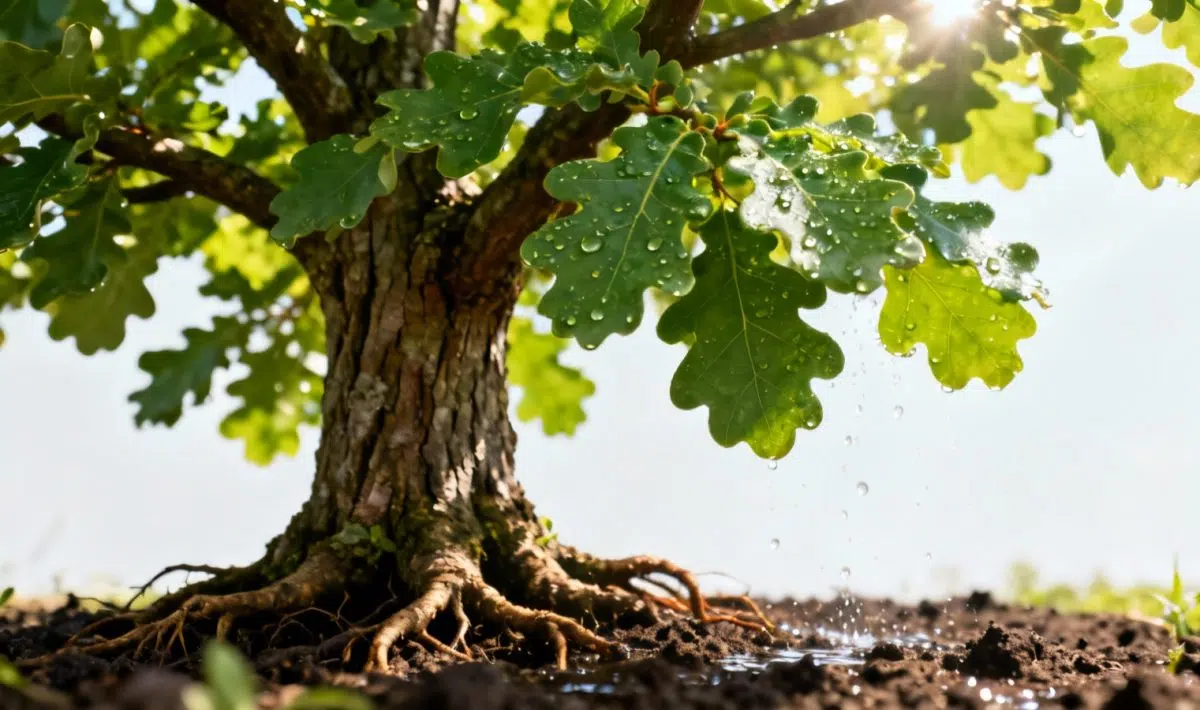
How often should you water your english oak for healthy growth
Caring for an english oak tree starts with understanding its unique watering needs. While mature oaks are remarkably drought-resistant, young trees require careful attention to establish strong root systems. The key lies in balancing moisture levels without overwhelming your tree’s natural development.
English oaks (Quercus robur) are naturally hardy trees, but their watering requirements change dramatically with age and season. Young trees need consistent moisture to develop deep roots, while established oaks can survive extended dry periods. Getting this balance right ensures your tree will thrive for decades to come.
Poor watering practices can stress your oak, making it vulnerable to diseases and pests. Too much water causes root rot, while too little stunts growth and weakens the tree’s natural defenses. Understanding these basics helps you provide the best care for your oak.
The effects of inappropriate watering often appear months later, making it crucial to establish good habits from the start. A well-watered young oak will develop the strong foundation needed to become a majestic mature tree.
How often should you water your english oak throughout the year
The frequency depends on several key factors that work together to determine your tree’s needs. Soil type plays a major role – sandy soils drain quickly and require more frequent watering, while clay soils hold moisture longer but can become waterlogged.
Age significantly influences watering schedules. Newly planted oaks need water every few days during their first growing season, gradually reducing to weekly watering in year two. By year three, most oaks only need supplemental water during extended dry periods.
Climate conditions override general rules. Hot, windy weather increases water loss, while cool, humid conditions reduce watering needs. Even with proper planning, you should adjust your schedule based on current weather patterns.
Spring watering approach
Spring marks the beginning of active growth for your english oak. This season requires moderate but consistent watering as new leaves emerge and roots expand. Water deeply once or twice weekly, providing about 5-10 liters per session for young trees.
Monitor soil moisture regularly during spring rains. Natural precipitation often provides sufficient water, but dry spells require immediate attention. The goal is maintaining consistent soil moisture without creating soggy conditions.
Summer watering strategy
Summer presents the greatest watering challenge for english oaks. Young trees need at least 2-3 deep watering sessions per week during hot periods. Established trees typically require weekly watering only during extended drought conditions.
Early morning watering works best, allowing roots to absorb moisture before the day’s heat begins. This timing also reduces water loss through evaporation and helps prevent fungal issues that can develop with evening watering.
Autumn watering gradually decreases as temperatures cool and leaves begin to fall. Continue regular watering until the first frost, then reduce frequency significantly. Winter watering is rarely necessary except during unusually warm, dry periods.
This dormant season allows you to focus on other garden plants that might need more attention, such as understanding optimal watering for spearmint plants that continue growing in cooler weather.
Effective watering techniques for optimal results
Deep, infrequent watering encourages strong root development better than frequent shallow watering. Apply water slowly around the tree’s drip line, where feeder roots concentrate. This area extends roughly to the outer edge of the canopy.
Soaker hoses work excellently for young oaks, providing steady moisture over several hours. Drip irrigation systems also deliver consistent results with minimal water waste. Avoid overhead sprinklers that wet leaves unnecessarily and waste water through evaporation.
Mulching around your oak helps retain soil moisture and reduces watering frequency. Apply a 3-4 inch layer of organic mulch, keeping it several inches away from the trunk to prevent pest problems.
Using rainwater effectively
Rainwater provides ideal moisture for your english oak, being naturally soft and free of chemicals. Collect rainwater in barrels during wet periods for use during drier times. This approach saves money while providing your tree with the best possible water source.
Even a moderate rainfall of about one inch provides substantial water for most trees. However, light drizzles rarely penetrate deep enough to benefit root systems, so supplemental watering may still be necessary.
Managing drought conditions
Extended dry periods require special attention to prevent permanent damage to your oak. Increase watering frequency while maintaining deep watering principles. Young trees may need water every other day during severe drought conditions.
This intensive care approach differs from other plants – for instance, watering needs of loquat trees vary significantly during drought stress periods.
Determining when your oak needs water
Check soil moisture by inserting a long screwdriver or soil probe 6-8 inches deep near the tree. If the tool meets resistance or comes up dry, it’s time to water. This simple test provides more accurate information than surface observations.
Visual signs of water stress include wilting leaves, premature leaf drop, and stunted new growth. However, these symptoms often appear after damage has occurred, making regular soil testing essential for proactive care.
Leaf color changes can indicate watering issues. Yellowing leaves might signal overwatering, while brown, crispy edges suggest drought stress. Learning to read these signs helps you adjust your watering schedule appropriately.
Common watering mistakes to avoid
Overwatering ranks among the most serious errors in oak care. Soggy soil prevents proper root function and encourages disease development. Always allow soil to dry slightly between watering sessions, especially for mature trees.
Frequent shallow watering creates weak, surface root systems that cannot support the tree during dry periods. Deep, less frequent watering encourages roots to grow downward, creating a more stable foundation.
Watering during the hottest part of the day wastes water through evaporation and can actually stress your tree. Just as how to water rosemary effectively requires timing consideration, oaks benefit from early morning or evening watering sessions.
Long-term care considerations
As your english oak matures, its watering needs will continue to evolve. What starts as intensive care for a young tree gradually transitions to minimal intervention for an established specimen. This natural progression reflects the oak’s developing resilience and deep root system.
Keep records of your watering schedule and your tree’s response to different approaches. This information helps you refine your technique and provides valuable data for future growing seasons. Good record-keeping also helps identify patterns and potential problems before they become serious.
Remember that proper watering is just one aspect of oak care. Combined with appropriate fertilization, pruning, and pest management, consistent watering helps your english oak reach its full potential as a magnificent landscape centerpiece for generations to come.
Allan is a lifelong gardening enthusiast who still gets excited when the first seedlings pop up in spring. With a deep love for nature and a hands-in-the-soil approach, he shares practical tips, plant discoveries, and clever tricks picked up over years of digging, planting, and observing. Whether you’re a new gardener or have a shed full of tools, Allan writes like a neighbor who’s always happy to swap cuttings and stories over the fence.
You can find more about Allan’s work on Malt or connect with him on LinkedIn.