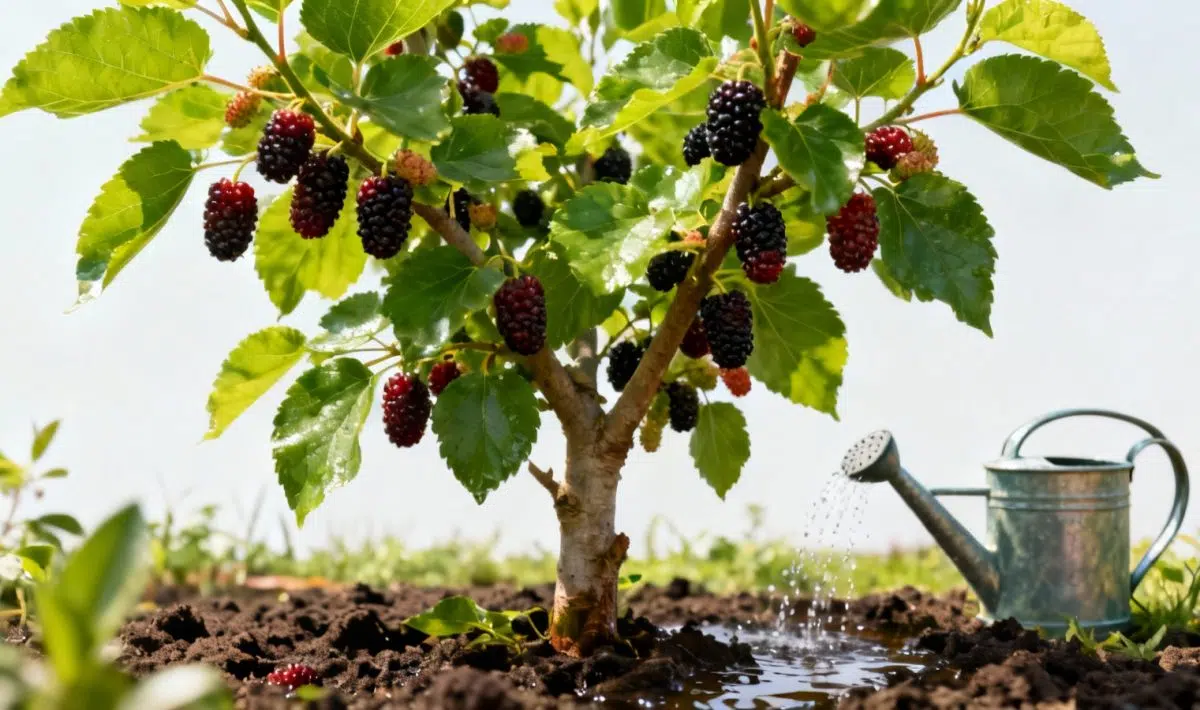
Knowing how often should you water your mulberry is essential for creating a thriving garden centerpiece. These remarkable trees, including popular varieties like Morus alba and other organic cultivars, have specific hydration requirements that change throughout their growth cycle. The key lies in understanding that mulberry trees are naturally drought-tolerant once established, but they need consistent moisture during their formative years.
Different mulberry varieties have varying water preferences, much like how you might consider the frequency of watering cabbages in your vegetable garden. The beautiful alba variety, prized for its elegant feuilles and reliable fruit production, typically requires more attention during its first three seasons of growth.
Watering schedule based on tree age
Young mulberry trees demand the most attention when it comes to watering frequency. During the first three years after planting your graines or seedlings, consistent moisture is crucial for establishing a robust root system. Water every 2-3 days from June through September, adjusting based on your local climate and soil conditions.
Mature mûriers become remarkably self-sufficient, thanks to their extensive root networks that can reach deep water sources. Once established, these resilient trees may only need supplemental watering during prolonged dry spells or when you notice specific stress signals.
Seasonal watering patterns
Spring marks the beginning of active growth when your mulberry awakens from winter dormancy. Increase watering frequency as temperatures rise and new growth appears. This saison is critical for flower development and eventual fruit set.
Summer represents peak water demand, especially during fruit development. A weekly deep watering session typically suffices for established trees, while younger specimens may need more frequent attention. Consider the warm weather’s impact on soil moisture retention and adjust accordingly.
Signs your mulberry needs water
Rather than following a rigid schedule, learning to read your tree’s signals proves more effective. Watch for feuilles that begin to droop or appear slightly wilted during the warmest part of the day. These naturally occurring indicators are far more reliable than any predetermined timing.
Soil inspection offers another valuable assessment method. Insert your finger 2-3 inches into the soil near the tree’s base. If it feels dry at this depth, it’s time to water. This technique works similarly to monitoring other garden plants, such as understanding the watering needs for tansy ragwort in your landscape.
Soil type considerations
Clay soils retain moisture longer but can become waterlogged if overwatered. Sandy soils drain quickly and may require more frequent watering sessions. Understanding your soil’s characteristics helps determine the optimal watering frequency for your specific growing conditions.
Organic matter incorporation improves water retention in all soil types. Adding compost or well-rotted manure around your mûrier creates a healthy, water-efficient growing environment.
Best watering techniques for mulberry trees
Deep, infrequent watering encourages robust root development and drought tolerance. Apply water slowly at the tree’s base, allowing it to penetrate deeply rather than running off the surface. This method promotes downward root growth and reduces dependency on frequent watering.
Drip irrigation systems offer excellent water efficiency and consistent moisture delivery. These systems can be particularly beneficial during hot summer months when manual watering becomes challenging. Much like maintaining proper moisture for watering kikuyu grass effectively, consistent delivery matters more than quantity.
Mulching benefits
Applying a 3-4 inch layer of organic mulch around your tree conserves soil moisture and reduces watering frequency. Keep mulch several inches away from the trunk to prevent pest and disease issues. This simple practice can reduce water needs by up to 50% during dry periods.
Quality organic mulches include shredded bark, compost, or leaf mold. These materials break down over time, improving soil structure and water retention capabilities.
Common watering mistakes to avoid
Overwatering ranks as the most frequent error in mulberry care. Excessive moisture can lead to root rot, fungal diseases, and poor fruit production. Allow soil to dry slightly between watering sessions, especially for mature trees.
Shallow, frequent watering creates weak surface roots that struggle during dry periods. Instead, train your tree’s roots to grow deep by providing thorough but less frequent irrigation. This approach builds long-term resilience and reduces maintenance requirements.
Water quality considerations
While mulberries tolerate various water sources, avoid heavily chlorinated or softened water when possible. Rainwater collection provides an excellent alternative that your tree will appreciate. The natural mineral content and pH balance make rainwater ideal for promoting healthy growth.
Temperature also matters when watering. Cold water can shock roots during warm weather, while lukewarm water is readily absorbed. Early morning watering allows plants to utilize moisture before heat stress occurs, similar to timing considerations for optimal watering for common zinnias in your garden beds.
Troubleshooting water-related problems
Yellowing feuilles may indicate either overwatering or underwatering. Check soil moisture levels and adjust your watering routine accordingly. Healthy mulberry trees should display vibrant green foliage throughout the growing season.
Poor fruit production often stems from inconsistent watering during flower and fruit development. Maintain steady moisture levels during these critical periods to ensure good yields. Stressed trees may drop fruit prematurely or produce smaller, less flavorful berries.
Recovery from water stress
If your mulberry shows signs of severe water stress, gradually increase watering rather than flooding the root zone. Sudden changes can shock the plant and delay recovery. Consistent, moderate increases in moisture will help your tree bounce back naturally.
Monitor new growth as an indicator of recovery progress. Healthy new shoots and expanding feuilles signal that your watering adjustments are working effectively.
Allan is a lifelong gardening enthusiast who still gets excited when the first seedlings pop up in spring. With a deep love for nature and a hands-in-the-soil approach, he shares practical tips, plant discoveries, and clever tricks picked up over years of digging, planting, and observing. Whether you’re a new gardener or have a shed full of tools, Allan writes like a neighbor who’s always happy to swap cuttings and stories over the fence.
You can find more about Allan’s work on Malt or connect with him on LinkedIn.