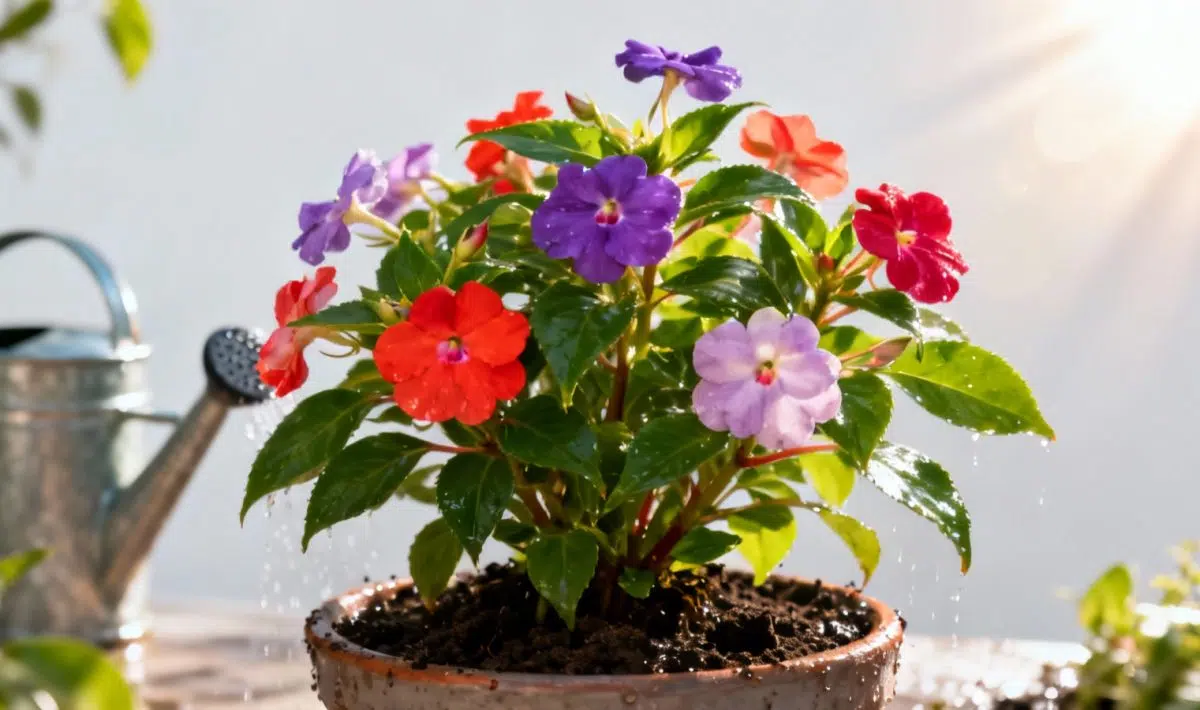
How often should you water your New guinea impatiens for thriving blooms
New Guinea impatiens are stunning flowering plants that will brighten up any garden space with their vibrant purple, pink, and green foliage. When you first start caring for these beautiful plants, understanding their water needs becomes crucial for maintaining those gorgeous flowers throughout the growing season.
Understanding your New Guinea impatiens water requirements
These tropical plants have specific water needs that differ from many other common garden flowers. Your New Guinea impatiens will thrive when the soil remains consistently moist but never waterlogged. The key is finding that perfect balance where the plant can access water when it needs it, while avoiding the root rot that can occur with excessive moisture.
During hot summer weather, you will notice that these plants are particularly thirsty. They have large leaves that lose moisture quickly in sunny conditions, which means they need more frequent watering than some other flowering plants. When the weather turns dry, the first signs of stress will appear in the leaves, which may start to droop or look less vibrant.
The purple and green varieties are especially sensitive to drought stress. If you spot the soil pulling away from the edges of your pot or notice the top inch feels completely dry, it’s time to water. Just like how you might water your arborvitae for healthy growth, consistency is key with these flowering beauties.
How often should you water your New guinea impatiens in different conditions
The frequency of watering will depend largely on where you place your plants and the time of year. For plants in pots or containers, you will typically need to water 2-3 times per week during the growing season. When summer heat reaches its peak, daily watering may become necessary, especially for plants in full sun spots.
Indoor plants have different requirements entirely. During winter months, you can reduce watering to once weekly or even less, as the plants will not be actively growing and the indoor environment typically has lower light levels. The key is to check the soil moisture regularly rather than following a strict schedule.
Container gardening requires more attention than planting in garden beds. Pots dry out faster than ground soil, so your potted impatiens will need water more frequently. This is similar to how you need to be more attentive when you keep your coriander fresh and healthy in containers.
Seasonal watering adjustments
Spring and summer are when your New Guinea impatiens will be most active. During these months, the combination of warm weather, longer days, and active growth means the plants will consume water quickly. You should check the soil daily and water when the top inch feels dry to the touch.
As autumn approaches and temperatures start to drop, you can begin reducing the watering frequency. The plants will naturally slow their growth, and cooler weather means less evaporation from the soil surface. Winter care involves minimal watering, just enough to prevent the soil from becoming bone dry.
Best watering techniques for healthy blooms
The timing of your watering can make a significant difference in plant health. Early morning is the ideal time to water your New Guinea impatiens, as this allows the plants to absorb moisture before the day gets hot. Evening watering can work too, but morning is preferable as it gives any excess water time to evaporate before nightfall.
When you water, focus on the soil rather than the leaves and flowers. Direct the water to the base of the plant, allowing it to soak into the root zone where it’s needed most. This technique helps prevent fungal problems that can develop when water sits on the foliage for extended periods.
For those growing herbs alongside their flowers, you’ll find that many plants benefit from similar careful watering approaches. For instance, when you ensuring healthy growth of chives, the same gentle, targeted watering method works wonderfully.
Container and pot considerations
The type of pot you choose can significantly impact your watering schedule. Clay and terracotta pots allow moisture to evaporate through the walls, which means you’ll need to water more frequently. Plastic and glazed ceramic pots retain moisture longer, so you can space out watering sessions.
Always ensure your pots have drainage holes at the bottom. Standing water in the bottom of containers can quickly lead to root problems, even with plants that like consistent moisture. If you notice water pooling in saucers under your pots, empty them after watering to prevent waterlogging.
Recognizing when your plants need water
Learning to read your plants is one of the most valuable skills you can develop as a gardener. New Guinea impatiens will give you clear signals when they need water. The leaves may start to look slightly wilted, lose their glossy appearance, or feel less firm to the touch.
The soil test is your most reliable indicator. Stick your finger about an inch into the soil near the plant. If it feels dry at that depth, it’s time to water. If it still feels moist, you can wait another day or two before checking again.
Color changes in the leaves can also indicate water stress. When plants are consistently well-watered, the green foliage remains vibrant and the flowers maintain their bright colors. Stressed plants may develop yellowing leaves or flowers that fade more quickly than they should.
Many gardeners find that observing multiple plant species helps them develop better intuition about watering needs. The same attention to detail you’d use to water your treasure flower for blooms applies to caring for your impatiens.
Troubleshooting common watering problems
Overwatering is just as problematic as underwatering for New Guinea impatiens. Signs of too much water include yellowing leaves, soft or mushy stems, and a general decline in plant vigor. If you suspect overwatering, reduce the frequency immediately and improve drainage if possible.
Underwatered plants will show drooping leaves, dry soil that pulls away from pot edges, and flowers that wilt or drop prematurely. The good news is that these plants usually recover quickly once you resume proper watering.
Environmental factors like wind, humidity, and temperature fluctuations can affect how quickly your plants use water. On particularly windy or hot days, you may need to water more frequently than usual. Conversely, cool, humid days may allow you to extend the time between watering sessions.
Maintaining optimal growing conditions
Beyond watering frequency, the overall growing environment plays a crucial role in how much water your New Guinea impatiens will need. Plants in sunny spots will require more frequent watering than those in partial shade. However, these flowers do appreciate bright light for the best blooming performance.
Soil quality affects water retention and drainage. A good potting mix for containers should hold moisture while still allowing excess water to drain away. Adding organic matter like compost can improve both water retention and drainage in garden beds.
Consider grouping your moisture-loving plants together to create a more humid microenvironment. This technique works well whether you’re growing flowering plants or when you keep your oxeye daisy blooming healthily alongside your impatiens.
Regular feeding with a balanced fertilizer will help your plants make the most of the water you provide. Well-fed plants are more resilient and better able to handle slight variations in watering schedule. Apply fertilizer according to package directions, typically every 2-3 weeks during the growing season.
Temperature management is another important factor. In extremely hot weather, you might need to provide some afternoon shade to reduce water stress on your plants. This is particularly important for container plants, which heat up faster than those planted directly in the ground.
The same careful observation skills that help you optimal growth for garlic mustard plants will serve you well with your New Guinea impatiens. Each plant is slightly different, and learning to read their individual needs takes practice but leads to much more successful gardening.
With consistent care and proper watering techniques, your New Guinea impatiens will reward you with months of beautiful blooms. Remember that these plants prefer steady moisture over feast-or-famine watering cycles, so aim for consistency in your care routine. Take time to observe your plants daily, and they’ll quickly become some of the most rewarding flowers in your garden collection.
Allan is a lifelong gardening enthusiast who still gets excited when the first seedlings pop up in spring. With a deep love for nature and a hands-in-the-soil approach, he shares practical tips, plant discoveries, and clever tricks picked up over years of digging, planting, and observing. Whether you’re a new gardener or have a shed full of tools, Allan writes like a neighbor who’s always happy to swap cuttings and stories over the fence.
You can find more about Allan’s work on Malt or connect with him on LinkedIn.