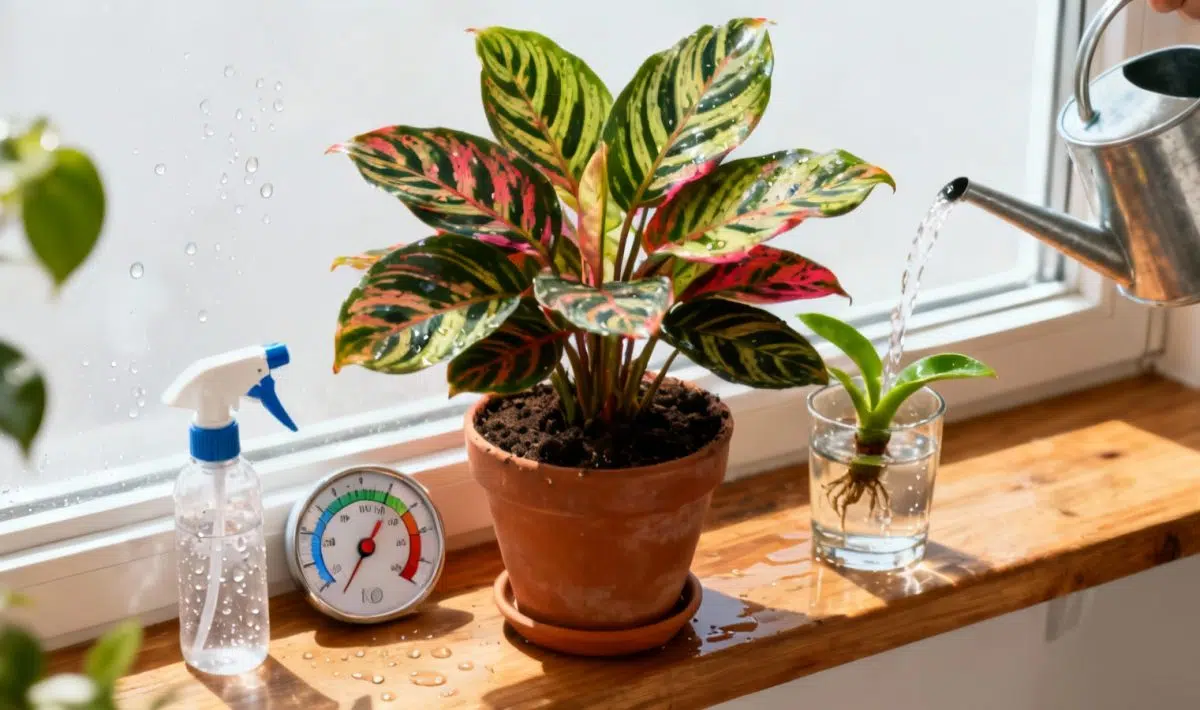
Prayer plant care: light, humidity, watering and propagation essentials
Today I’m excited to share everything you need to know about caring for the stunning Prayer plant, or Maranta leuconeura. This gorgeous tropical houseplant has captured hearts worldwide with its beautifully patterned leaves that fold up at night, resembling hands in prayer. Whether you’re a beginner or experienced plant parent, this charming plant offers the perfect balance of visual appeal and manageable care requirements.
The Prayer plant stands out among houseplants for its unique leaf movement and striking foliage patterns. Native to the Brazilian rainforest, this beauty brings a touch of the tropics to any indoor space while being surprisingly forgiving to new plant enthusiasts.
The most captivating feature of Maranta leuconeura is undoubtedly its leaves. These broad, oval-shaped beauties showcase vibrant green backgrounds adorned with dark green patches and prominent red veins. The leaves typically measure 4-5 inches long and display a velvety texture that’s simply irresistible to touch.
What makes this plant truly special is its nyctinastic movement – the leaves fold upward at night and open again during the day. This natural behavior earned the plant its common name and creates a delightful daily rhythm in your home. The movement is completely normal and indicates a healthy, responsive plant.
Popular varieties and their unique features
Several stunning varieties of Maranta leuconeura are available, each with distinct leaf patterns. The ‘Kerchoveana’ variety displays dark spots along the leaf edges, while ‘Erythroneura’ features bold red veining. The ‘Massangeana’ variety showcases silvery-white patterns that create an almost metallic appearance under the right lighting conditions.
These different cultivars allow plant enthusiasts to create diverse collections while maintaining similar care requirements. Like how you might learn about Ti plant care for tropical variety, each Maranta variety thrives under consistent conditions.
Essential light and placement requirements
Prayer plants absolutely love bright, indirect light but can suffer serious damage from direct sunlight. Position your plant near a north or east-facing window where it receives gentle morning light, or place it a few feet back from a south-facing window. Direct afternoon sun can quickly scorch those beautiful leaves, leaving brown patches that won’t recover.
If you notice your plant’s leaves losing their vibrant colors or becoming pale, it’s likely receiving too much light. Conversely, if growth slows dramatically or leaves become smaller, your plant might need a brighter location. The sweet spot creates that perfect environment where leaves maintain their rich colors and patterns.
Indoor environments work wonderfully for Prayer plants, as they naturally prefer the filtered light found under rainforest canopies. A humidifier nearby can help replicate their native habitat conditions.
Mastering humidity and temperature needs
High humidity is absolutely crucial for thriving Prayer plants. Aim for humidity levels between 50-60%, which can be challenging in typical home environments. Several effective methods can boost humidity around your plant: grouping plants together, using a humidifier, or placing the pot on a pebble tray filled with water.
Temperature consistency matters just as much as humidity. Keep your Prayer plant in temperatures between 65-75°F (18-24°C) throughout the year. Avoid placing the plant near heating vents, air conditioning units, or drafty windows, as sudden temperature changes can stress the plant and cause leaf curling or browning.
During winter months, indoor heating can significantly reduce humidity levels. This is when you’ll need to be most vigilant about maintaining proper moisture in the air around your plant.
Watering techniques and soil requirements
Proper watering technique makes the difference between a thriving Prayer plant and a struggling one. Water when the top inch of soil feels dry to the touch, typically every 1-2 weeks depending on your home’s conditions. Use filtered or distilled water when possible, as Prayer plants can be sensitive to chemicals found in tap water.
When you do water, water thoroughly until excess drains from the bottom holes. Never let your plant sit in standing water, as this quickly leads to root rot. Empty drainage trays within 30 minutes of watering to prevent waterlogged conditions.
Choosing the perfect soil mix
Prayer plants thrive in well-draining, slightly acidic soil with a pH between 5.5-6.0. A high-quality potting mix combined with perlite or bark creates the ideal growing medium. The soil should retain some moisture while allowing excess water to drain freely.
Avoid heavy, clay-based soils that hold too much water. Instead, look for mixes that include ingredients like peat moss, vermiculite, and organic matter. These components provide the right balance of drainage and moisture retention that Prayer plants crave.
Propagation methods for expanding your collection
Propagating Prayer plants is surprisingly straightforward and rewarding. The most reliable method involves division during repotting season, typically in spring. Gently separate the plant at natural division points, ensuring each section has healthy roots and several leaves.
Stem cuttings also work well for propagation. Cut a healthy stem with at least one node and place it in water or moist potting mix. Keep the cutting in warm, humid conditions with bright, indirect light. Roots typically develop within 2-4 weeks, similar to techniques you might use when following pothos care techniques for water propagation.
Caring for new plants
Newly propagated Prayer plants need extra attention during their establishment period. Keep soil consistently moist but not waterlogged, and maintain high humidity around the young plants. Avoid fertilizing for the first month to allow roots to develop properly.
Young plants benefit from slightly warmer conditions and protection from any environmental stress. Once established, they can gradually adapt to normal household conditions.
Fertilizing and seasonal care
During growing season (spring and summer), feed your Prayer plant monthly with a balanced, diluted liquid fertilizer. Use fertilizer at quarter strength to avoid burning the sensitive roots. Winter feeding isn’t necessary, as plant growth naturally slows during shorter daylight hours.
Seasonal care adjustments help maintain plant health year-round. Summer might require more frequent watering and increased humidity, while winter care focuses on maintaining consistent conditions despite heating systems. Just as tips for caring for persimmons vary by season, Prayer plants benefit from adjusted care routines.
Troubleshooting common problems
Brown leaf tips usually indicate low humidity or water quality issues. Increase humidity and switch to filtered water to resolve this problem. Yellow leaves often signal overwatering, while curled leaves typically mean too much light or low humidity.
Spider mites can become problematic in dry conditions. Regular misting and maintaining proper humidity levels help prevent these pests. If you notice fine webbing or tiny moving spots on leaves, treat immediately with insecticidal soap.
Leaf drop is normal to some extent, especially on older leaves. However, sudden or excessive leaf loss usually indicates stress from watering issues, temperature changes, or inadequate humidity.
Where to find and select healthy plants
When shopping for Prayer plants, look for specimens with vibrant, unblemished leaves and strong, upright growth. Avoid plants with brown tips, yellowing leaves, or signs of pest damage. Local nurseries often carry healthier specimens than big box stores, though online retailers can offer interesting varieties.
Prices typically range from $15-40 depending on size and variety. Larger, more mature plants cost more but establish faster in your home. Much like exploring catnip cultivation tips for herb gardens, investing in quality plants from reputable sources pays off long-term.
Seasonal availability affects both price and selection. Spring typically offers the best selection and healthiest plants, as this coincides with their natural growing season.
Creating the ideal environment
Prayer plants thrive when their environment mimics their native tropical habitat. This means consistent warmth, high humidity, filtered light, and protection from drafts. Bathrooms with windows often provide ideal conditions, combining natural humidity from showers with appropriate lighting.
Grouping Prayer plants with other tropical houseplants creates a beneficial microclimate where plants help maintain each other’s humidity needs. Consider pairing them with plants that have similar requirements for a thriving indoor jungle effect. Following guidelines for lantana care can also complement your understanding of tropical plant needs.
Remember that Prayer plants are sensitive to their environment, so consistency in care routines produces the best results. With proper attention to their needs for humidity, indirect light, and regular watering, these stunning plants will reward you with years of beautiful foliage and that fascinating daily leaf movement that makes them so special.
Allan is a lifelong gardening enthusiast who still gets excited when the first seedlings pop up in spring. With a deep love for nature and a hands-in-the-soil approach, he shares practical tips, plant discoveries, and clever tricks picked up over years of digging, planting, and observing. Whether you’re a new gardener or have a shed full of tools, Allan writes like a neighbor who’s always happy to swap cuttings and stories over the fence.
You can find more about Allan’s work on Malt or connect with him on LinkedIn.