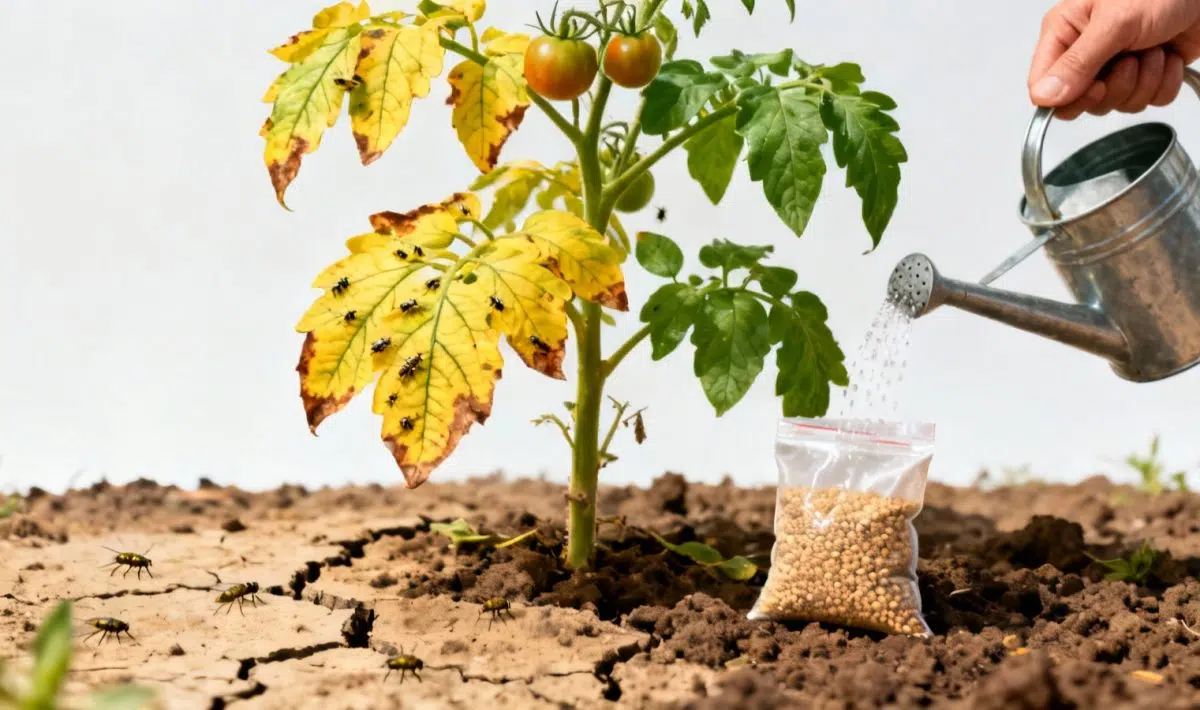
Why are my tomato leaves turning yellow – causes and solutions
Nothing’s more frustrating than seeing your beautiful tomato plants suddenly develop yellow leaves. Trust me, I’ve been there – one day everything looks perfect, and the next you’re staring at patches of yellow spreading across your precious plants. But here’s the good news: yellowing leaves on tomatoes are usually fixable once you identify the root cause.
Today, I’m sharing everything I’ve learned about this common gardening challenge. We’ll explore the main causes behind yellow leaves, practical solutions you can implement right away, and prevention strategies to keep your plants healthy all season long.
Yellow leaves on tomato plants act like warning signals from your garden. However, the key is understanding what your plants are trying to tell you. The causes range from simple watering issues to more complex problems like diseases or nutrient deficiencies.
Most gardeners panic when they first notice yellow leaves, but the reality is that some yellowing is completely natural. Older leaves at the bottom of mature plants often turn yellow as part of their normal lifecycle. Nevertheless, widespread yellowing across multiple leaves signals an underlying issue that needs attention.
✅ Quick Checklist
Is the soil too wet or too dry?
Is the plant getting 6+ hours of sunlight daily?
Have you fertilized in the last 2 months?
Are there visible pests under the leaves?
Does the pot have adequate drainage?
🔥 FREE
📱
Diagnose your plant in one click!
AI instant diagnosis • Personalized solutions • 50,000+ species
Irregular watering is one of the most common culprits behind yellow leaves. When your plants don’t receive consistent moisture, they respond by dropping older leaves to conserve energy for new growth. This stress response often shows up as yellowing from the bottom of the plant upward.
The solution involves establishing a regular watering schedule. Check soil moisture daily by inserting your finger about two inches deep. Water deeply when the top inch feels dry, ensuring water reaches the root zone rather than just wetting the surface.
Overwatering symptoms and fixes
Too much water creates equally serious problems. Waterlogged soil prevents roots from accessing oxygen, leading to root rot and yellowing leaves. Plants suffering from overwatering often display wilted yellow leaves despite moist soil.
Improve drainage immediately if you suspect overwatering. Add compost or perlite to heavy soils, ensure containers have adequate drainage holes, and reduce watering frequency until the soil dries out properly.
Common diseases affecting tomato plants
Fungal infections and their symptoms
Several fungal diseases target tomato plants, causing distinctive yellowing patterns. Early blight creates brown spots with yellow halos on lower leaves, while late blight produces yellow patches that quickly turn brown and spread upward.
Septoria leaf spot appears as small brown spots surrounded by yellow rings, typically starting on older leaves. These diseases thrive in humid conditions and spread rapidly if left untreated. Similar to how reasons for yellowing honeysuckle leaves can indicate fungal problems, tomato leaf yellowing often signals the presence of harmful fungi.
Treatment involves removing affected leaves immediately, improving air circulation around plants, and applying organic fungicides like copper sulfate or neem oil. Always water at soil level rather than on leaves to reduce moisture on foliage.
Bacterial diseases to watch for
Bacterial diseases like bacterial canker and bacterial speck also cause yellowing leaves. These infections often start as small dark spots that expand and become surrounded by yellow tissue. Unlike fungal problems, bacterial diseases don’t respond to fungicide treatments.
Prevention remains the best approach for bacterial diseases. Use certified disease-free seeds, avoid working with wet plants, and maintain proper spacing for good air circulation.
Nutrient deficiencies and fertilizer management
Essential nutrients for healthy tomatoes
Nutrient deficiencies frequently cause yellowing in specific patterns. Nitrogen deficiency shows up as overall yellowing starting with older leaves, while magnesium deficiency creates yellow leaves with green veins. Potassium deficiency causes yellowing around leaf edges.
Each nutrient plays a crucial role in plant health. Nitrogen supports leafy growth, phosphorus aids root development and fruit production, and potassium helps with overall plant vigor and disease resistance.
Choosing the right fertilizer approach
Balanced fertilizers work well for most tomato varieties during the growing season. Look for ratios like 10-10-10 or 14-14-14 for general feeding. However, once fruits begin forming, switch to lower nitrogen formulations to encourage fruit development over excessive leaf growth.
Organic options include compost, fish emulsion, and bone meal. These release nutrients slowly and improve soil structure over time. Just like understanding causes of yellowing pomegranate leaves helps with fruit tree care, knowing proper tomato nutrition prevents many yellowing issues.
✅ Quick Checklist
Is the soil too wet or too dry?
Is the plant getting 6+ hours of sunlight daily?
Have you fertilized in the last 2 months?
Are there visible pests under the leaves?
Does the pot have adequate drainage?
🔥 FREE
📱
Diagnose your plant in one click!
AI instant diagnosis • Personalized solutions • 50,000+ species
Extreme temperature fluctuations stress tomato plants and trigger yellowing leaves. When temperatures drop below 50°F (10°C) or exceed 90°F (32°C) consistently, plants struggle to maintain normal processes. This temperature stress often manifests as yellowing starting with older leaves.
Protect plants from temperature extremes using row covers, shade cloth, or temporary structures. In containers, move plants to more protected locations during extreme weather. Consistent temperatures between 65-75°F (18-24°C) promote optimal growth and prevent stress-related yellowing.
Light requirements and positioning
Insufficient sunlight weakens tomato plants and leads to pale, yellowing leaves. Most varieties require at least six hours of direct sunlight daily for healthy growth. Plants grown in shady areas often develop spindly growth with yellowing lower leaves.
Evaluate your garden’s light conditions throughout the day. If natural light is limited, consider relocating plants or pruning nearby vegetation to increase sun exposure. For container growers, moving plants to sunnier locations can dramatically improve leaf color and overall health.
Variety-specific considerations
Understanding different tomato types
Different tomato varieties show varying susceptibility to yellowing leaves. Determinate varieties tend to yellow naturally as they reach maturity and focus energy on ripening fruits. Indeterminate varieties may show yellowing lower leaves as they continue growing upward throughout the season.
Heirloom varieties often display more natural leaf variation compared to hybrid types bred for uniform appearance. Some varieties naturally have lighter green or slightly yellowish leaves, which shouldn’t cause concern unless accompanied by other symptoms.
Prevention strategies for healthy plants
The best approach to preventing yellow leaves involves consistent care practices. Start with quality soil that drains well but retains moisture. Regular soil testing helps identify potential nutrient deficiencies before they affect plant health.
Establish routines for watering, feeding, and monitoring your plants. Weekly inspections allow you to catch problems early when solutions are most effective. Remove any yellowing or diseased leaves promptly to prevent spread and maintain plant energy for healthy growth.
Remember, some yellowing is normal as plants age and redirect energy toward fruit production. Focus on overall plant health rather than perfection, and your tomato plants will reward you with abundant, delicious fruits throughout the growing season.
Allan is a lifelong gardening enthusiast who still gets excited when the first seedlings pop up in spring. With a deep love for nature and a hands-in-the-soil approach, he shares practical tips, plant discoveries, and clever tricks picked up over years of digging, planting, and observing. Whether you’re a new gardener or have a shed full of tools, Allan writes like a neighbor who’s always happy to swap cuttings and stories over the fence.
You can find more about Allan’s work on Malt or connect with him on LinkedIn.