Fringed willowherb – Epilobium ciliatum: care, characteristics, culture, propagation
Fringed willowherb, scientifically known as Epilobium ciliatum, stands out as one of Canada’s most adaptable native flora species. This perennial herb from the Onagraceae family has carved its niche across diverse habitats throughout North America. While many gardeners appreciate its delicate pink to purple flowers, understanding its complete botanical profile helps both cultivators and those managing unwanted weed populations make informed decisions.
Originally native to North America, this plant has demonstrated remarkable resilience in various climates. However, its vigorous growth habits and efficient seed dispersal mechanisms have earned it recognition as both a valuable native species and, in some contexts, a challenging weed to manage.
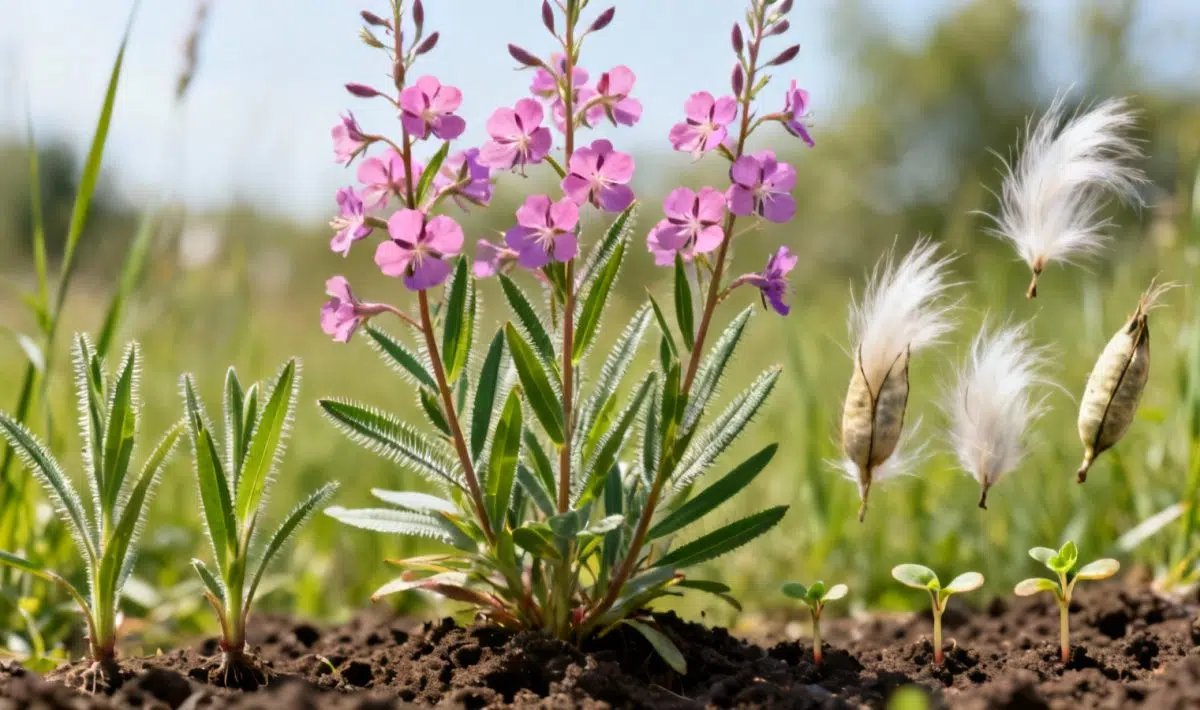
The fringed willowherb typically reaches heights of 30 to 100 centimeters, developing sturdy, upright stems that support its distinctive foliage. The leaves measure approximately 30-100 mm in length and 10-30 mm in width, displaying a characteristic lanceolate shape. These leaves appear in opposite arrangements along the stem, with notable differences in texture between upper and lower surfaces.
During the flowering season from June through October, the plant produces clusters of small pink to purple blooms. Each flower develops into elongated seed pods that can extend up to 10 centimeters in length. The seeds themselves are tiny, measuring just 1.5 mm, but feature distinctive white tufts that enable wind dispersal across considerable distances.
The botanical structure reveals interesting adaptations. Lower leaves typically appear smooth, while upper foliage develops fine hairs that can be either straight or curved. Some gardeners exploring diverse plant care might find similarities with other moisture-loving species, much like those described in care tips for Japanese pieris which also thrives in specific soil conditions.
Natural habitat and growing conditions
This versatile plant demonstrates remarkable adaptability to various environmental conditions. In its natural state, fringed willowherb colonizes prairies, riverbanks, marshes, swamps, and forest edges. It tolerates everything from partial shade to full sun exposure, making it suitable for diverse garden applications or naturalized areas.
Soil preferences lean toward medium to moist conditions, though the plant can withstand occasional flooding. This moisture tolerance makes it particularly valuable in areas where drainage might be challenging. The species has established itself successfully across Quebec and throughout Canada, becoming an integral part of the regional flora.
Understanding these natural preferences helps gardeners recreate optimal growing conditions. The plant’s ability to thrive in various light conditions makes it suitable for transitional garden areas where other species might struggle.
Cultivation and care techniques
Successfully growing fringed willowherb requires attention to its moisture requirements and soil preparation. Begin by selecting a location that receives at least partial sunlight, though full sun exposure produces more robust flowering. Soil should retain moisture without becoming waterlogged, similar to conditions preferred by many other adaptable houseplants like those detailed in learn about Dieffenbachia care.
Prepare the planting area by incorporating organic matter to improve soil structure and water retention. A mixture of compost or well-rotted manure enhances the growing medium significantly. The plant responds well to consistent moisture levels, particularly during establishment periods.
Regular maintenance involves monitoring for optimal growth conditions. Unlike some finicky species, fringed willowherb proves relatively low-maintenance once established. However, gardeners should remain aware of its spreading tendencies and manage growth accordingly to prevent unwanted colonization of adjacent areas.
Fertilization requirements remain minimal, as excessive nutrients can promote overly vigorous growth. A balanced, slow-release fertilizer applied in early spring typically provides adequate nutrition for the growing season.
Propagation methods and techniques
Propagating fringed willowherb can be accomplished through several effective methods. Seed propagation represents the most common approach, taking advantage of the plant’s prolific seed production. Collect mature seeds when pods begin splitting naturally, typically in late summer or early fall.
For seed starting, sow directly in prepared garden beds during spring after the last frost danger passes. Seeds require light for germination, so barely cover them with fine soil or compost. Maintain consistent moisture during the germination period, which typically occurs within two to three weeks under favorable conditions.
Division offers another reliable propagation method, particularly for established clumps. Perform divisions in early spring before new growth emerges or in fall after flowering completes. Carefully separate root sections ensuring each division contains adequate root mass and growing points.
Root cuttings can also succeed, though this method requires more attention to environmental conditions. For gardeners interested in expanding their propagation skills with various plant types, techniques similar to those used for growing common persimmon effectively can provide valuable insights into successful plant multiplication.
Managing growth and potential challenges
While fringed willowherb offers numerous benefits as a native plant, its vigorous spreading habits require thoughtful management. The species can become aggressive in favorable conditions, particularly in nursery settings or cultivated areas where competition is limited.
Implement containment strategies if space limitations are a concern. Installing root barriers or choosing container cultivation can help control spread while still enjoying the plant’s attractive features. Regular deadheading before seed formation significantly reduces unwanted self-seeding.
For those dealing with unwanted populations, understanding the plant’s growth cycle enables more effective control measures. The species responds well to repeated cutting during the growing season, which eventually exhausts root reserves.
Integrated approaches often prove most successful. Combining physical removal with improved drainage in areas where the plant is unwanted can shift conditions to favor desired species instead. This approach works well for many garden management situations, similar to strategies employed when essential golden pothos care tips address growth control in indoor settings.
Ecological value and garden applications
Fringed willowherb provides significant ecological benefits within its native range. The flowers attract various pollinators, including bees, butterflies, and other beneficial insects. This pollinator support makes it valuable for wildlife gardens or naturalized areas where supporting local ecosystems is a priority.
In garden applications, the plant works well in rain gardens, bog gardens, or areas with seasonal moisture variations. Its upright growth habit and extended flowering period provide vertical interest and color throughout much of the growing season.
Consider pairing fringed willowherb with other moisture-loving native species to create cohesive plantings. Plants with complementary growing habits can help create balanced ecosystems while providing visual interest. Some gardeners successfully combine it with aromatic herbs, much like the approaches described in growing catnip successfully for diverse garden applications.
Seasonal care and maintenance
Seasonal care requirements remain straightforward for established fringed willowherb plantings. Spring tasks include removing any winter-damaged foliage and applying organic mulch around established plants to retain moisture and suppress weeds.
During the growing season, maintain consistent moisture levels through dry periods. While the plant tolerates some drought once established, optimal flowering and growth occur with regular water availability. Monitor for any signs of stress during extended dry spells.
Fall maintenance involves deciding whether to allow natural seed dispersal or prevent self-seeding through deadheading. Cut back spent foliage after the first hard frost, or leave seed heads if supporting wildlife through winter months is desired.
Winter preparation in colder regions simply involves ensuring adequate drainage to prevent ice damage to root systems. The plant’s natural hardiness makes extensive winter protection unnecessary in most of its native range.
Understanding these care principles helps gardeners successfully incorporate fringed willowherb into diverse landscape applications. Whether managing it as a desired native species or controlling unwanted populations, knowledge of its biology and growing requirements enables more effective outcomes. For those exploring similar care approaches with other colorful flowering plants, techniques outlined in care strategies for common lantana offer additional insights into successful plant management.
Allan is a lifelong gardening enthusiast who still gets excited when the first seedlings pop up in spring. With a deep love for nature and a hands-in-the-soil approach, he shares practical tips, plant discoveries, and clever tricks picked up over years of digging, planting, and observing. Whether you’re a new gardener or have a shed full of tools, Allan writes like a neighbor who’s always happy to swap cuttings and stories over the fence.
You can find more about Allan’s work on Malt or connect with him on LinkedIn.