
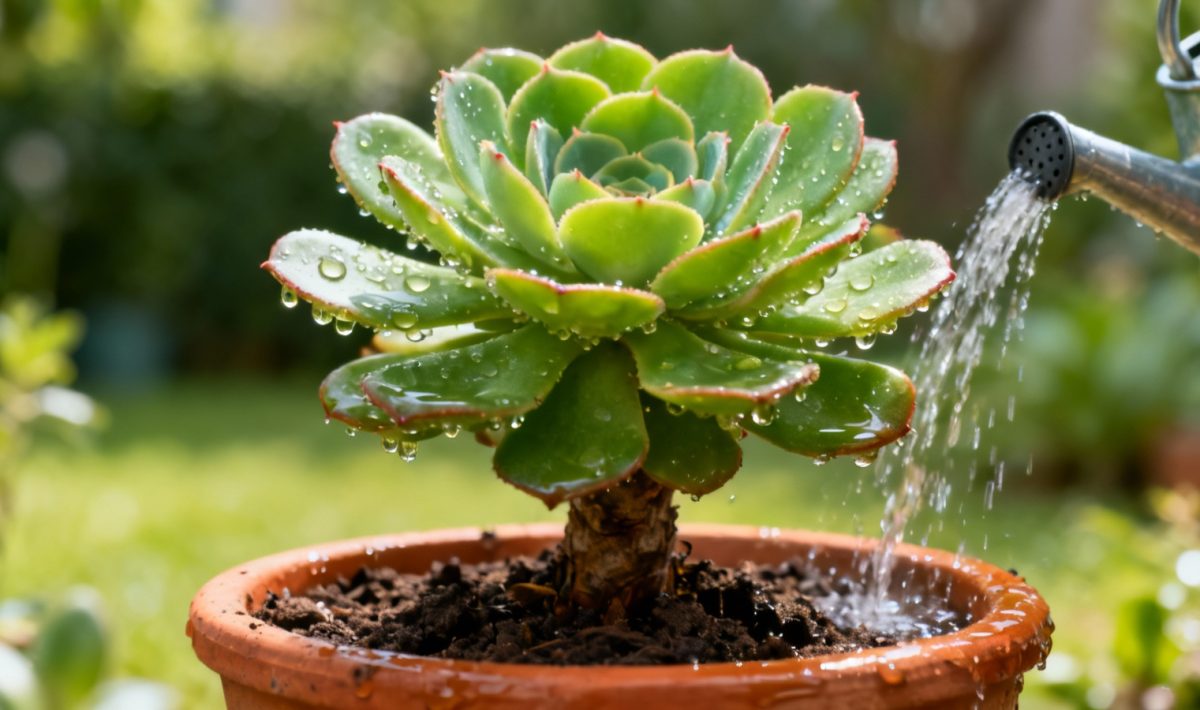
Tree aeonium, scientifically known as Aeonium arboreum, is a stunning succulent that has captured the hearts of plant enthusiasts worldwide. How often should you water your tree aeonium? This beautiful plant requires a careful balance when it comes to watering, and getting it right is essential for its health and growth. Understanding the proper watering schedule will help you maintain a thriving aeonium that displays its characteristic rosette formation and vibrant colors.
Understanding tree aeonium watering needs
Tree aeonium originates from the Canary Islands, where it has adapted to survive in dry conditions with infrequent rainfall. This natural habitat gives us valuable insight into how we should care for these plants. The succulent stores water in its thick, fleshy leaves, which means it can tolerate periods of drought much better than constant moisture.
The key principle for watering aeonium is simple: always allow the soil to dry completely between waterings. This approach prevents the most common problem that affects these plants – root rot. When you understand this fundamental rule, you’ll be well on your way to successful aeonium care.
Seasonal watering schedule for optimal growth
During spring and summer, when your tree aeonium is in its active growing phase, you should water approximately every 10-15 days. This is the time when the plant will show the most growth and may require slightly more frequent watering. However, always check the soil moisture before adding water – the top two inches should be completely dry.
In fall and winter, your aeonium enters a dormant period. During these months, reduce watering to once every 3-4 weeks, or even less frequently if temperatures are particularly cool. Some gardeners find that monthly watering is sufficient during the dormant season, especially for indoor plants.
Factors that influence watering frequency
Several environmental factors will affect how often you need to water your aeonium. Temperature plays a crucial role – higher temperatures increase water evaporation from both the soil and the plant itself. Humidity levels also matter, as dry air will cause the soil to dry out more quickly than humid conditions.
The type of container and drainage setup you use is equally important. Plants in terracotta pots will dry out faster than those in plastic containers. Similarly, plants with excellent drainage will need more frequent watering than those in containers that retain moisture. For those interested in understanding watering needs across different plant types, you might find our watering tips for common pear trees helpful for comparison.
Signs your aeonium needs water
Learning to read your plant’s signals is one of the most valuable skills you can develop. When an aeonium needs water, its lower leaves may become slightly softer and less plump than usual. The rosettes might also appear less tightly packed, and the leaves could take on a slightly wrinkled appearance.
However, be careful not to confuse these signs with overwatering symptoms. Overwatered aeoniums will have mushy, yellowing leaves that may fall off easily. The stem base might also become soft or discolored, indicating the beginning of root rot.
Proper watering technique
When you do water your aeonium, do it thoroughly. Water should flow freely from the drainage holes, ensuring that the entire root system receives moisture. This deep watering encourages healthy root development and mimics the natural rainfall patterns the plant would experience in its native habitat.
Always water in the early morning or late afternoon to minimize evaporation loss. Avoid getting water on the leaves themselves, as this can lead to fungal issues, especially in humid conditions. Instead, direct the water to the soil around the base of the plant.
Caring for aeonium cuttings
If you’re propagating tree aeonium from cuttings, the watering approach differs slightly. Newly planted cuttings should not be watered immediately – instead, allow them to sit in dry soil for about a week to let any cut surfaces callus over. This prevents rot from setting in before the cutting has had a chance to develop new roots.
Once you begin watering newly planted cuttings, use a very light hand. Mist the soil surface lightly every few days rather than giving deep waterings. This approach provides just enough moisture to encourage root development without overwhelming the vulnerable cutting. Much like understanding specific needs for different plants, such as care advice for cabbage trees, each plant type has its unique requirements.
Establishing healthy watering habits
Creating a consistent monitoring routine will help you develop an intuitive sense for when your aeonium needs water. Check your plants weekly, even if you don’t plan to water them. This regular observation will help you notice changes in growth patterns, leaf condition, and soil moisture levels.
Keep a simple watering log for the first few months while you’re learning your plant’s needs. Note the date of each watering, the current weather conditions, and how dry the soil felt. Over time, you’ll develop a reliable schedule that works for your specific growing conditions. Just as gardeners caring for fruit trees need specific schedules, such as understanding loquat watering guidelines, succulent care requires attention to detail.
Common watering mistakes to avoid
One of the most frequent errors is watering on a strict calendar schedule without checking soil conditions. Environmental factors change throughout the year, and a rigid schedule doesn’t account for seasonal variations in temperature, humidity, and daylight hours.
Another common mistake is using saucers or cache pots that don’t allow excess water to drain away. Standing water around the roots is a sure way to cause rot problems. If you must use decorative containers without drainage, consider using them as outer pots with a properly draining inner pot that can be removed for watering.
Adjusting for different growing conditions
Indoor aeoniums typically need less frequent watering than those grown outdoors, especially during winter when heating systems create dry indoor air. Outdoor plants exposed to wind and direct sunlight will dry out more quickly and may need more frequent attention during hot weather.
Plants grown in full sun require different care than those in partial shade. Sun-exposed aeoniums will show more dramatic color changes and may need slightly more frequent watering during peak growing season. However, they’re also more tolerant of drying out completely between waterings. This principle applies to many plants, including herbs like those discussed in rosemary care and watering recommendations.
Soil and drainage considerations
The growing medium you choose significantly impacts watering frequency. A well-draining succulent mix that contains perlite, coarse sand, or pumice will dry out more quickly than regular potting soil. This faster drying is actually beneficial for aeoniums, as it reduces the risk of root rot while still providing adequate moisture during watering.
You can create your own aeonium-friendly soil mix by combining equal parts regular potting soil, coarse sand, and perlite. This mixture provides good drainage while still retaining enough moisture for the roots to absorb what they need. Consider the contrast with evergreen trees that need consistent moisture, such as understanding watering requirements for arborvitae for comparison.
Monitoring plant health through watering practices
Your aeonium’s response to your watering routine is one of the best indicators of overall plant health. A healthy, properly watered aeonium will maintain firm, plump leaves with good color. The rosettes should be tight and symmetrical, and new growth should appear regularly during the growing season.
If you notice any signs of stress, such as leaf drop, color changes, or soft spots on the stem, review your watering practices first. Most aeonium problems can be traced back to watering issues, either too much or too little. Remember that these plants are remarkably resilient and will often recover quickly once their water needs are properly met, unlike more sensitive herbs such as coriander watering frequency advice suggests for leafy plants.
Conclusion
Mastering the art of watering tree aeonium comes down to understanding the plant’s natural preferences and adapting them to your growing conditions. Remember that these beautiful succulents prefer to dry out completely between waterings, with frequency adjusted for seasonal changes and environmental factors. By observing your plant closely and avoiding the temptation to overwater, you’ll be rewarded with a healthy, vibrant aeonium that will be a stunning addition to your plant collection for years to come.

Allan is a lifelong gardening enthusiast who still gets excited when the first seedlings pop up in spring. With a deep love for nature and a hands-in-the-soil approach, he shares practical tips, plant discoveries, and clever tricks picked up over years of digging, planting, and observing. Whether you’re a new gardener or have a shed full of tools, Allan writes like a neighbor who’s always happy to swap cuttings and stories over the fence.
You can find more about Allan’s work on Malt or connect with him on LinkedIn.


