
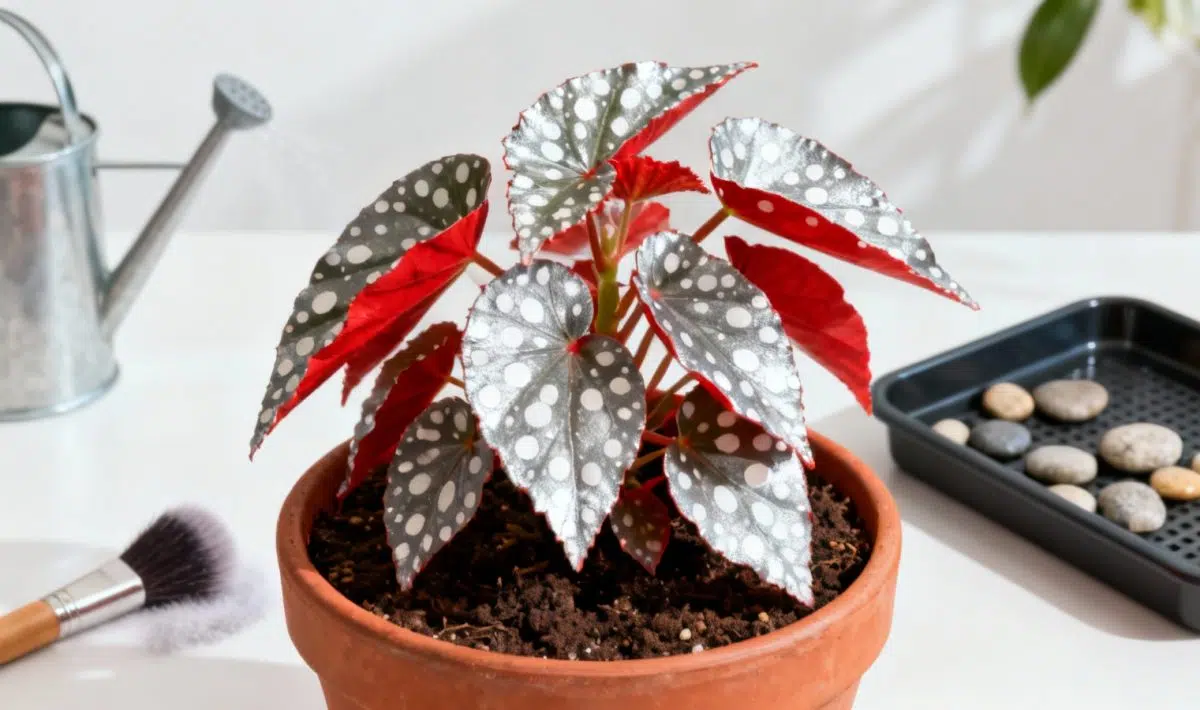
The polka dot begonia (Begonia maculata) has become an absolute favorite among houseplant enthusiasts, and honestly, I can see why. With its stunning green leaves adorned with white spots and burgundy undersides, this Brazilian beauty brings a touch of tropical elegance to any home. Today, I’m sharing everything you need to know to keep your begonia maculata thriving and looking its absolute best.
Understanding your polka dot begonia characteristics
This remarkable plante stands out from the crowd with its distinctive asymmetrical leaves that can reach 20-30 cm in length. The feuilles display a glossy dark green surface decorated with silvery-white spots, while the undersides reveal a beautiful burgundy red color. The contrast is simply striking and makes this bégonia an instant conversation starter.
The tiges of your plant are equally fascinating, featuring a bamboo-like appearance with visible joints. These sturdy stems support the impressive foliage and can help your begonia reach heights of 60-90 cm when grown indoors. During warmer months, you might even be treated to delicate clusters of small pink or white flowers that add another layer of beauty to this already gorgeous plante.
However, it’s important to note that this beauty comes with a warning for pet owners. The plant contains compounds that can be toxic to animaux domestiques and enfants if ingested, so placement requires some thoughtful consideration in homes with curious pets or little ones.
Creating the perfect growing conditions
Getting the lumière requirements right is absolutely crucial for your polka dot begonia’s success. These plantes thrive in bright, lumière indirecte but will quickly suffer if exposed to direct soleil. I’ve learned this the hard way – those beautiful spotted feuilles can develop unsightly brown patches when hit by harsh rays.
Place your pot near an east-facing window or a few feet back from a south-facing window where it can enjoy plenty of brightness without the intensity. If you notice the spots on the leaves becoming less pronounced or the plant stretching toward the light source, it’s telling you it needs a brighter location.
Température stability is another key factor for healthy croissance. Your bégonia maculata prefers consistent temperatures between 65-75°F (18-24°C). Avoid placing it near heating vents, air conditioning units, or drafty windows where temperature fluctuations could stress the plant and affect its overall santé.
Soil and pot requirements
The right sol mixture makes all the difference in preventing common issues like root rot. Your begonia needs a well-draining terreau that retains some moisture without becoming waterlogged. I recommend mixing standard potting soil with perlite and a small amount of bark to create the perfect balance.
Choose a pot with drainage holes – this is non-negotiable. The racines of your plant are particularly sensitive to standing water, and proper drainage helps prevent the soggy conditions that can quickly lead to root problems. A pot that’s slightly larger than the root ball works best, as oversized containers can hold too much moisture.
Mastering the watering routine
Knowing when and how to arroser your polka dot begonia is perhaps the most critical skill you’ll develop. These plantes prefer their soil to be consistently moist but never soggy. I check the top inch of soil with my finger – when it feels dry to the touch, it’s time to water.
When you do arrosez, do it thoroughly until water drains from the bottom holes, then empty any excess from the saucer after 30 minutes. This ensures the racines receive adequate hydration without sitting in standing eau. During printemps and summer when growth is most active, you’ll likely need to water every 5-7 days, while hiver watering can be reduced to every 10-14 days.
Humidité levels also play a crucial role in your plant’s wellbeing. These tropical natives appreciate humidity levels around 50-60%. If your home tends to be dry, especially during hiver months, consider using a humidifier or placing the pot on a pebble tray filled with water.
Feeding for optimal growth
Your bégonia will benefit from regular feeding during the growing season. Use a balanced, water-soluble engrais diluted to half strength every 2-3 weeks from printemps through early fall. The nutriments support healthy leaf development and help maintain those gorgeous white spots that make this plant so special.
During hiver months, reduce or eliminate fertilizing as the plant’s growth naturally slows down. Over-fertilizing during dormant periods can actually stress the plant and lead to salt buildup in the sol.
Propagation techniques that work
Multiplying your polka dot begonia is surprisingly straightforward and incredibly rewarding. The most reliable method involves taking stem cuttings during the active growing season when the plant has plenty of energy to develop new racines.
To propagate successfully, coupez a healthy tige section about 4-6 pouces long, ensuring it includes at least two nodes – those little bumps where leaves emerge. Remove the lower leaves and place the cutting in water or moist potting medium. Many plant enthusiasts, similar to those who enjoy tips for Philodendron Birkin care, find water propagation particularly satisfying as you can watch the roots develop over 2-3 weeks.
Once your cutting has developed a good root system, transplant it into a small pot with well-draining terreau. Keep the new plante in bright, lumière indirecte and maintain consistent moisture as it establishes itself in its new home.
Common propagation mistakes to avoid
The biggest mistake I see beginners make is using cuttings that are too small or don’t have enough nodes. Each cutting needs sufficient energy reserves to develop racines, so don’t be tempted to make tiny cuttings just to get more plants. Quality over quantity always wins.
Another common error is placing newly propagated plantes in conditions that are too bright or too dim. Just like mature specimens that require careful Monstera obliqua care and culture, your young begonia cuttings need consistent, gentle conditions to thrive.
Troubleshooting common issues
Even with the best care, you might encounter some challenges with your polka dot begonia. Brown leaf tips often indicate low humidité or inconsistent watering, while yellowing feuilles typically suggest overwatering or poor drainage. Adjust your care routine accordingly and remove any damaged foliage to keep the plant looking its best.
If you notice the distinctive white spots fading or becoming less prominent, your plant likely needs more lumière. Gradually move it to a brighter location, but avoid sudden changes that could shock the system. Just as care and propagation of oleander requires patience, your begonia will need time to adjust to new conditions.
Pest issues are relatively uncommon but can occur, particularly if the plant becomes stressed. Keep an eye out for spider mites or aphids, which tend to target weakened plantes. Regular inspection and maintaining proper growing conditions are your best defense against these problems.
Seasonal care adjustments
Understanding how to adapt your care routine throughout the year will help your bégonia maculata flourish in all seasons. During printemps and summer, embrace more frequent watering and regular feeding as the plant enters its peak growing period. This is also the perfect time for any necessary rempotage or propagation projects.
As hiver approaches, gradually reduce watering frequency and stop fertilizing. The plant’s growth naturally slows, and it needs less eau and nutriments. Don’t be alarmed if some older feuilles drop during this time – it’s a normal part of the plant’s seasonal cycle.
Many gardeners who appreciate diverse plant care, from Southern magnolia care and propagation to houseplants, find that keeping detailed care records helps them notice patterns and adjust their approach over time.
Creating the perfect display
The architectural beauty of your polka dot begonia makes it perfect for showcasing as a statement piece. Consider placing it where the lumière indirecte can highlight those stunning spotted feuilles – perhaps on a plant stand near a bright window or as part of a curated plant collection.
As your plant matures, you might want to provide some support for the taller tiges, especially if you’re growing it in a hanging basket or tall pot. Gentle staking can help maintain the plant’s elegant upright form while preventing damage to the delicate stems.
Whether you’re new to houseplants or experienced in growing Hardy fuchsia successfully or growing Capsicum annuum plants, the polka dot begonia offers a perfect balance of striking beauty and manageable care requirements. With consistent attention to its basic needs and a little patience, you’ll be rewarded with a stunning tropical specimen that brings joy and natural elegance to your space year-round.

Allan is a lifelong gardening enthusiast who still gets excited when the first seedlings pop up in spring. With a deep love for nature and a hands-in-the-soil approach, he shares practical tips, plant discoveries, and clever tricks picked up over years of digging, planting, and observing. Whether you’re a new gardener or have a shed full of tools, Allan writes like a neighbor who’s always happy to swap cuttings and stories over the fence.
You can find more about Allan’s work on Malt or connect with him on LinkedIn.


