
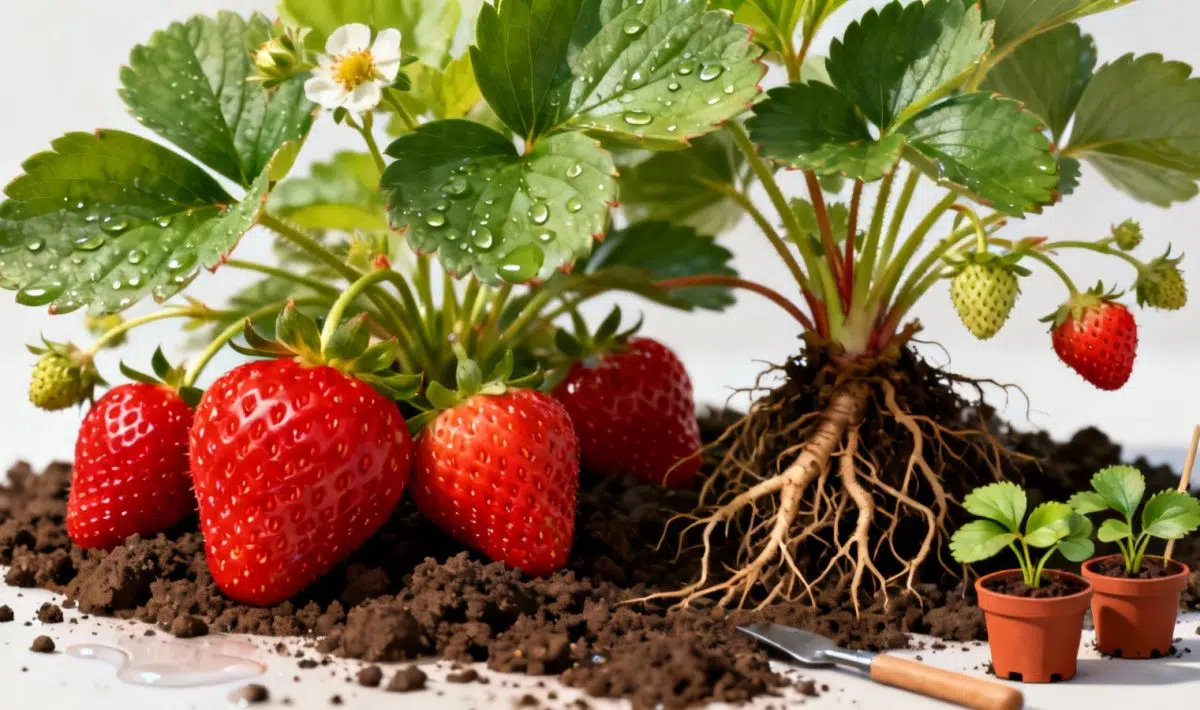
Understanding strawberry plants and their characteristics
The cultivated strawberry, scientifically known as Fragaria ananassa, stands as one of the most beloved fruits worldwide. This hybrid species emerged from crossing North and South American strawberry varieties during the 18th century, creating what we now recognize as the garden strawberry. These remarkable plants belong to the Rosaceae family and offer gardeners both ornamental beauty and delicious harvests.
Strawberry plants display distinctive characteristics that make them easily recognizable. Their trifoliate leaves grow in compact rosettes, typically reaching 20-25 cm in height with a spread of about 30 cm. The white flowers feature five petals and produce the familiar red fruits we cherish. However, botanically speaking, strawberries aren’t true berries but rather aggregate accessory fruits, with the actual fruits being the tiny seeds on their surface.
Modern strawberry varieties offer incredible diversity in flavor, size, and growing habits. From day-neutral types that produce fruit throughout the growing season to June-bearing varieties that deliver one large harvest, gardeners can choose cultivars perfectly suited to their climate and preferences. The development of new hybrides continues to expand our options, with improved disease resistance and enhanced fruit quality becoming standard features.
Essential care requirements for healthy strawberry plants
Successful strawberry cultivation begins with understanding their fundamental care needs. These plants thrive in well-draining soil with a pH between 5.5 and 6.8, enriched with organic matter. Full sun exposure ensures optimal fruit production, though plants can tolerate partial shade in hotter climates. Just as you might research care tips for mock strawberry for comparison, understanding proper strawberry care ensures successful harvests.
Water management proves crucial for strawberry health and productivity. Plants require consistent moisture, particularly during flowering and fruit development periods. Deep, infrequent watering encourages strong root systems while preventing shallow root development. During hot summer months, morning watering helps reduce disease pressure by allowing foliage to dry quickly.
Fertilization supports vigorous growth and abundant fruit production. Apply a balanced fertilizer in early spring before new growth begins, then supplement with lighter applications throughout the growing season. Avoid excessive nitrogen, which promotes leaf growth at the expense of fruit development. Regular soil testing helps determine specific nutrient needs for optimal plant performance.
Managing common diseases and pests
Strawberry plants face various challenges from diseases and pests that can significantly impact yield and plant health. Fungal diseases like gray mold, powdery mildew, and leaf spot thrive in humid conditions, making proper air circulation essential. Space plants adequately and remove damaged or diseased foliage promptly to prevent disease spread.
Integrated pest management combines multiple strategies for effective control. Row covers protect young plants from insect damage while beneficial insects help control harmful pests naturally. Regular monitoring allows early detection and intervention before problems become severe. Companion planting with aromatic herbs can help deter certain pests while attracting beneficial predators.
Strawberry propagation techniques and methods
Propagating strawberry plants offers gardeners multiple pathways to expand their growing operations or share varieties with friends. The most common method involves using stolons, the runners that naturally extend from parent plants. These stolons develop into new plants when they contact soil, creating genetic clones of the parent variety.
Vegetative propagation through stolons ensures genetic consistency, maintaining desirable characteristics from generation to generation. Allow strong, healthy runners to establish in small pots or prepared soil areas during the growing season. Once roots develop sufficiently, typically after 4-6 weeks, carefully separate new plants from their parents for transplanting to permanent locations.
Seed propagation, while less common for home gardeners, plays a crucial role in developing new varieties. This method requires patience, as plants grown from seed may not reproduce parent characteristics exactly. Professional breeders use controlled croisement techniques to develop improved cultivars with enhanced traits like disease resistance or extended shelf life.
Advanced propagation considerations
Commercial growers often employ sophisticated propagation methods including tissue culture and micropropagation. These techniques allow rapid multiplication of disease-free plant material while maintaining genetic integrity. Similarly, those interested in other ornamental plants might want to learn about ti plant care for diverse gardening knowledge.
Crown division provides another propagation option for established plants. Carefully separate healthy crowns from mature plants during dormant periods, ensuring each division contains adequate root systems. This method works particularly well for replacing aging plants while maintaining productive strawberry beds.
Cultivation techniques for maximum production
Modern strawberry culture encompasses various growing systems designed to optimize production and fruit quality. Traditional matted row systems allow plants to spread naturally through stolon production, creating dense growing areas. This method suits large-scale production but requires careful management to prevent overcrowding and disease issues.
Raised bed cultivation offers improved drainage and easier maintenance access. Construct beds 6-8 inches high with well-amended soil for optimal growing conditions. This system facilitates better pest management and harvest efficiency while reducing back strain during maintenance tasks. Many gardeners combine this approach with growing common lantana successfully in adjacent areas for colorful garden displays.
Hydroponic and soilless growing systems represent cutting-edge strawberry production methods. These controlled environment approaches allow precise nutrient management and extend growing seasons significantly. While requiring higher initial investments, such systems often produce superior fruit quality and yields compared to traditional soil-based methods.
Seasonal care and maintenance
Year-round strawberry care involves specific tasks aligned with seasonal cycles. Spring preparations include removing old foliage, applying fertilizers, and establishing new plantings. Summer focuses on harvest management, pest monitoring, and maintaining adequate moisture levels during fruit development periods.
Fall care emphasizes bed renovation and winter preparation. Remove old plants after three productive years, replacing them with young, vigorous specimens. Apply winter mulch in cold climates to protect crowns from freeze damage while allowing proper air circulation to prevent disease development.
Selecting appropriate strawberry varieties
Choosing suitable strawberry varieties requires considering local climate conditions, intended uses, and personal preferences. Day-neutral varieties like ‘Seascape’ and ‘Albion’ produce fruit continuously throughout growing seasons, making them excellent choices for fresh eating and small-scale production. June-bearing types such as ‘Chandler’ and ‘Camarosa’ concentrate their harvest into shorter periods, ideal for preserving and processing large quantities.
Climate adaptation proves crucial for successful variety selection. Northern gardeners benefit from cold-hardy cultivars that withstand harsh winters, while southern growers need heat-tolerant varieties that perform well in challenging summer conditions. Research local extension recommendations and trial different varieties to determine optimal choices for specific growing conditions.
Disease resistance characteristics significantly influence variety selection, particularly in areas prone to specific problems. Modern breeding programs continuously develop new cultivars with improved resistance to common diseases while maintaining excellent fruit quality and yield potential. Just as gardeners might discover rutabaga growing techniques for diverse crop production, exploring different strawberry varieties expands growing possibilities.
Fruit quality and harvest considerations
Harvest timing dramatically affects fruit quality and storage potential. Pick strawberries when fully colored but still firm, typically during cooler morning hours when sugar content peaks. Gentle handling prevents bruising and extends shelf life, whether fruits are destined for immediate consumption or processing applications.
Post-harvest handling requires careful attention to temperature management and storage conditions. Rapid cooling preserves fruit quality and prevents deterioration during transport or storage periods. For those interested in expanding their horticultural knowledge, exploring tips for painted-leaf begonia provides insights into caring for diverse plant species.
Understanding these comprehensive aspects of Fragaria ananassa cultivation empowers gardeners to successfully grow healthy, productive strawberry plants. From initial planting through harvest and beyond, attention to proper techniques ensures rewarding experiences and delicious results for years to come.

Allan is a lifelong gardening enthusiast who still gets excited when the first seedlings pop up in spring. With a deep love for nature and a hands-in-the-soil approach, he shares practical tips, plant discoveries, and clever tricks picked up over years of digging, planting, and observing. Whether you’re a new gardener or have a shed full of tools, Allan writes like a neighbor who’s always happy to swap cuttings and stories over the fence.
You can find more about Allan’s work on Malt or connect with him on LinkedIn.


