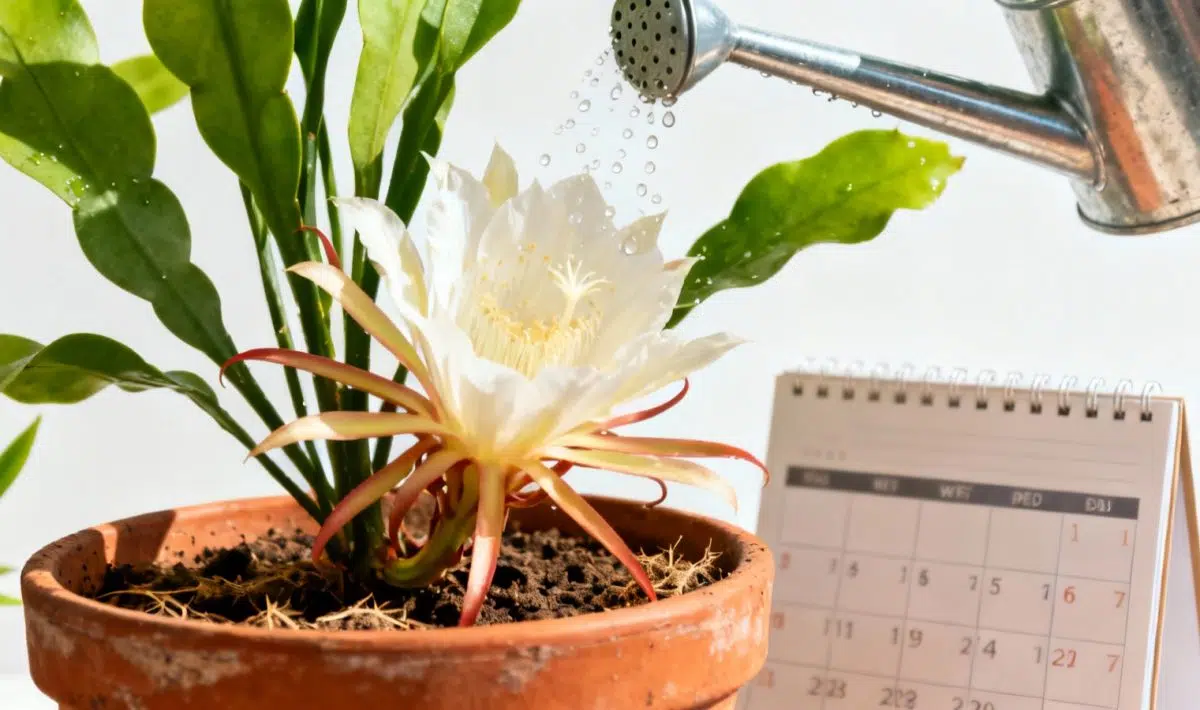
Understanding your Queen of the Night’s unique watering needs
The Queen of the Night, scientifically known as Epiphyllum oxypetalum, is not your typical cactus. This tropical epiphyte has very different water requirements from desert cacti, and understanding these needs is crucial for healthy growth. Unlike its desert cousins that store water in thick stems, this night-blooming beauty thrives with more consistent moisture, but still requires careful attention to avoid overwatering.
How often should you water your Queen of the Night depends primarily on the season and your plant’s growth cycle. During active growing periods from spring to early fall, you’ll need to water more frequently, while winter calls for a much more restrained approach. The key is learning to read your plant’s signals and adjusting accordingly.
Many plant enthusiasts struggle with this balance because they treat all cacti the same way. However, epiphytic cacti like the Queen of the Night naturally grow on trees in tropical forests, where they receive regular moisture from humidity and rain. This origin story tells us everything we need to know about their care requirements.
Seasonal watering schedules that work
From April to September, when your Queen of the Night is actively growing, aim to water one to two times per week. This is the time when your plant will show the most growth and may even prepare for its spectacular nocturnal blooming display. Check the soil moisture by inserting your finger about 2-3 inches deep – water only when it feels completely dry.
During the growing season, you should water deeply until excess water drains from the bottom of the pot. This encourages healthy root development and ensures the entire root system receives adequate moisture. The soil should drain well but retain some moisture, similar to what the plant would experience in its natural epiphytic environment.
Winter changes everything for your Queen of the Night. From October to March, reduce watering dramatically to once a month or even less. During this dormant period, the plant’s metabolism slows down significantly, and excess water can quickly lead to root rot. Some experienced growers stop watering almost entirely during the coldest months, especially if their plant is in a cool location.
Recognizing when your plant needs water
Your Queen of the Night will give you clear signals when it’s thirsty. The most obvious sign is when the normally plump, segmented stems begin to look slightly wrinkled or feel less firm to the touch. This is completely normal and indicates that the plant is using its stored water reserves.
Watch for changes in the stem segments’ color and texture. Healthy, well-hydrated stems should appear bright green and feel firm but not hard. When they start to lose their turgidity and develop a slightly softer feel, it’s time to water. However, don’t wait until the stems become severely wrinkled, as this can stress the plant unnecessarily.
Just as important is recognizing signs of overwatering. If you notice yellowing or soft, mushy areas on the stems, you’ve likely been too generous with water. Similarly, if you’re dealing with watering challenges for other plants, you might find helpful guidance when watering your Norfolk Island pine or caring for your porcelainflower, as these also require careful moisture management.
Proper watering techniques for optimal growth
The way you water is just as important as when you water. Always use room temperature water, as cold water can shock the roots and potentially damage your Queen of the Night. Fill a watering can and let it sit for at least 24 hours before use – this also allows chlorine to evaporate if you’re using tap water.
Water slowly and evenly around the base of the plant, avoiding getting water on the stems themselves. Pour water until you see it draining from the bottom holes, then stop. Never let your Queen of the Night sit in standing water, as this is one of the fastest ways to encourage root rot in these plants.
Consider the humidity needs as well. In their natural habitat, these plants receive moisture not just from their roots but also from the humid air around them. You can increase humidity by placing a humidifier nearby or setting the pot on a tray filled with pebbles and water. This extra moisture in the air can reduce how often you need to water the soil directly.
Avoiding common watering mistakes
One of the most serious mistakes is treating your Queen of the Night like a desert cactus and watering it too infrequently. While these plants can tolerate some drought, they shouldn’t be left bone dry for extended periods during their growing season. Conversely, treating them like typical houseplants and keeping the soil constantly moist will quickly lead to problems.
Seasonal timing mistakes are equally problematic. Many growers continue their summer watering schedule well into fall, not realizing that the plant’s needs have changed dramatically. As daylight hours decrease and temperatures drop, your Queen of the Night naturally slows down and requires much less water to stay healthy.
Drainage issues cause more problems than almost any other factor. Even with perfect watering timing, poor drainage will create soggy conditions that lead to root rot. Ensure your pot has adequate drainage holes and use a well-draining potting mix specifically designed for epiphytic cacti or create your own with bark, perlite, and quality potting soil.
Environmental factors that affect watering frequency
Temperature and humidity levels in your home significantly impact how often you should water your Queen of the Night. During hot summer months, the soil will dry out faster, requiring more frequent watering. Conversely, cool conditions slow evaporation and mean you can extend the time between waterings.
Air circulation also plays a role in drying out the soil. Plants near heating vents or in rooms with ceiling fans may need water more frequently than those in still air. Monitor your specific conditions and adjust accordingly rather than following a rigid schedule.
Light levels affect your plant’s water usage as well. A Queen of the Night receiving bright, indirect light will be more active and use water faster than one in lower light conditions. This is similar to how other plants like those discussed in watering tips for gladiolus plants adjust their needs based on growing conditions.
Troubleshooting watering problems
If your Queen of the Night shows signs of stress despite careful watering, consider the water quality. These plants can be sensitive to heavily chlorinated water or water with high mineral content. Using filtered water or collected rainwater often resolves mysterious health issues.
Root-bound plants may need water more frequently than expected because there’s less soil to hold moisture. Check if roots are circling the bottom of the pot or growing through drainage holes. If so, it’s time for a larger container with fresh, well-draining soil.
Sometimes watering problems are actually drainage problems in disguise. If water sits on top of the soil instead of soaking in, your potting mix may be too compacted or composed of materials that repel water. This situation requires repotting with a more suitable growing medium.
Special considerations for blooming periods
When your Queen of the Night prepares to bloom, its water needs may change slightly. During bud development, maintain consistent moisture without overwatering. The stress of irregular watering can cause flower buds to drop before they have a chance to open into those magnificent, fragrant blooms.
After blooming, some growers notice their plants seem thirstier than usual. This is normal, as producing those spectacular flowers requires significant energy and water. Monitor soil moisture more closely during the weeks following blooming and adjust your schedule if needed.
Understanding these nuances helps ensure your Queen of the Night not only survives but thrives year after year. The same attention to detail that benefits this exotic cactus also applies to other challenging plants, whether you’re focused on optimal watering for Tutsan growth or ensuring healthy spearmint growth in your garden collection.
With patience and careful observation, you’ll develop an intuitive understanding of your Queen of the Night’s water needs. This magnificent plant will reward your attention with years of healthy growth and, if you’re fortunate, those incredible nocturnal flowers that make all the careful watering worthwhile.
Allan is a lifelong gardening enthusiast who still gets excited when the first seedlings pop up in spring. With a deep love for nature and a hands-in-the-soil approach, he shares practical tips, plant discoveries, and clever tricks picked up over years of digging, planting, and observing. Whether you’re a new gardener or have a shed full of tools, Allan writes like a neighbor who’s always happy to swap cuttings and stories over the fence.
You can find more about Allan’s work on Malt or connect with him on LinkedIn.